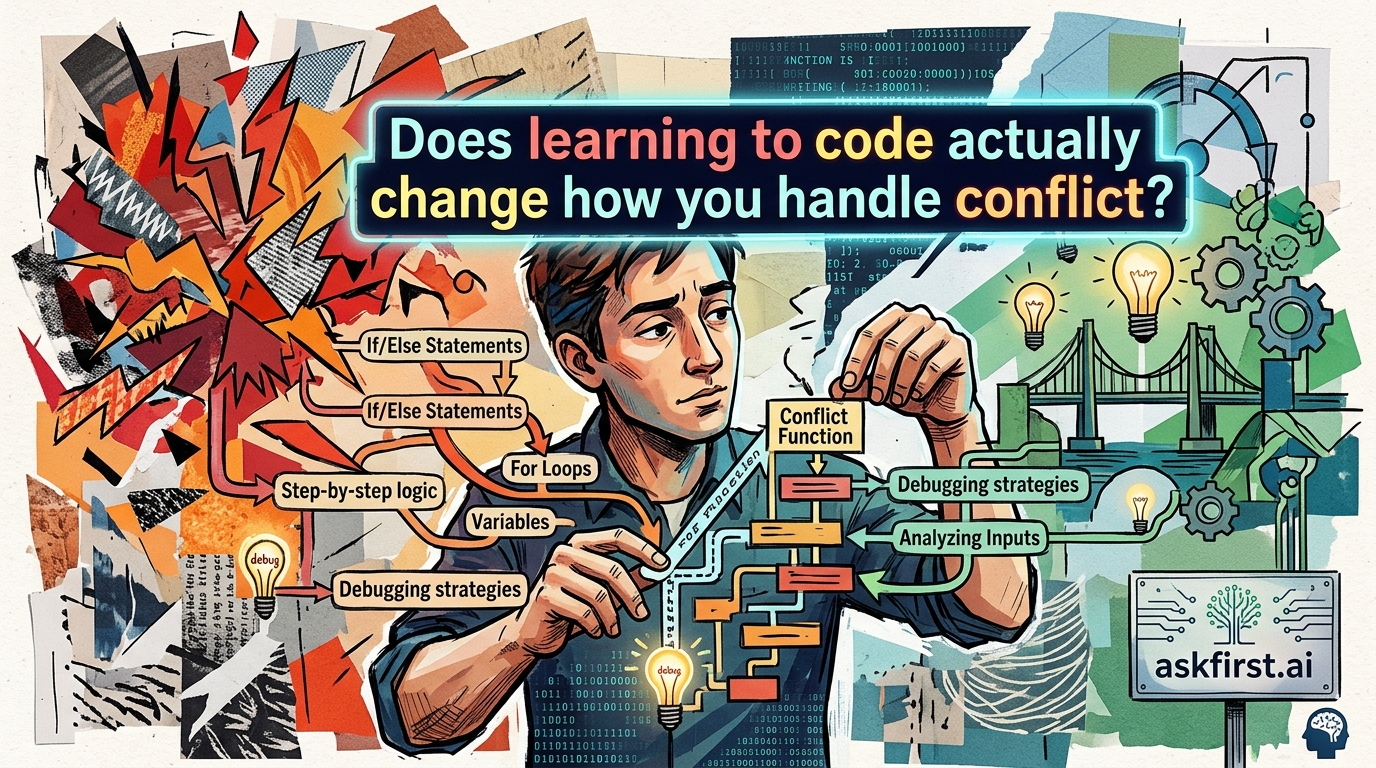
How Learning to Code Rewires Your Conflict Resolution
The Algorithmic Mind: Rewiring Conflict Resolution Through Programming
Learning to code does far more than equip an individual with the syntax of Python or JavaScript; it fundamentally alters cognitive patterns, decision-making frameworks, and emotional regulation. By internalizing the principles of computational thinking, programmers often develop a unique approach to conflict resolution that favors logic over ego and structure over chaos.
Decomposition: Breaking Down Interpersonal Friction
The primary cognitive shift occurs through the process of decomposition. In software engineering, complex systems are broken into smaller, manageable modules to resolve bugs effectively. When applied to interpersonal conflict, this methodology prevents emotional overwhelming. Instead of viewing a disagreement as a monolithic "catastrophe," a programmer mindset identifies discrete variables—misunderstandings, unmet expectations, or resource constraints. By isolating these individual modules, parties can address the root cause rather than reacting to the emotional output, much like debugging a function line-by-line rather than blaming the entire codebase.
The DRY Principle: Reducing Redundancy
Software engineers adhere to the DRY principle: "Don't Repeat Yourself." In the context of relationships and conflict, this manifests as a drive to identify recurring patterns of dysfunction. Those trained in coding learn to recognize when a specific "if-then" statement—a habitual reaction—leads to an error. By identifying these loops, individuals can consciously refactor their behavior, choosing to write a different "script" for their responses. This shift from reactive emotional firing to reflective pattern-matching reduces unnecessary friction and increases the efficiency of communication.
Handling Edge Cases and Error States
Programming demands the anticipation of edge cases—the unexpected scenarios that could break the application. This translates into a heightened ability to anticipate the perspectives of others. Rather than assuming a default path of understanding, a "code-literate" negotiator systematically tests for potential misunderstandings. They ask clarifying questions to ensure that the input matches the expected output, effectively creating a validation layer for their conversations. This reduces the "garbage in, garbage out" phenomenon where poor input leads to defensive outcomes.
Systems Thinking as an Emotional Buffer
Finally, the exposure to binary systems and clear logic gates instills a sense of detachment from binary outcomes. In coding, an error message is not a personal failure; it is simply information about the system's current state. When people apply this to their personal lives, they detach their identity from their mistakes. Conflict becomes a shared puzzle to solve collaboratively rather than a zero-sum game of "who is right." By viewing conflict as a system failure rather than a personal character attack, the temperature of an argument drops significantly, allowing for objective, solution-oriented discourse that creates lasting harmony.