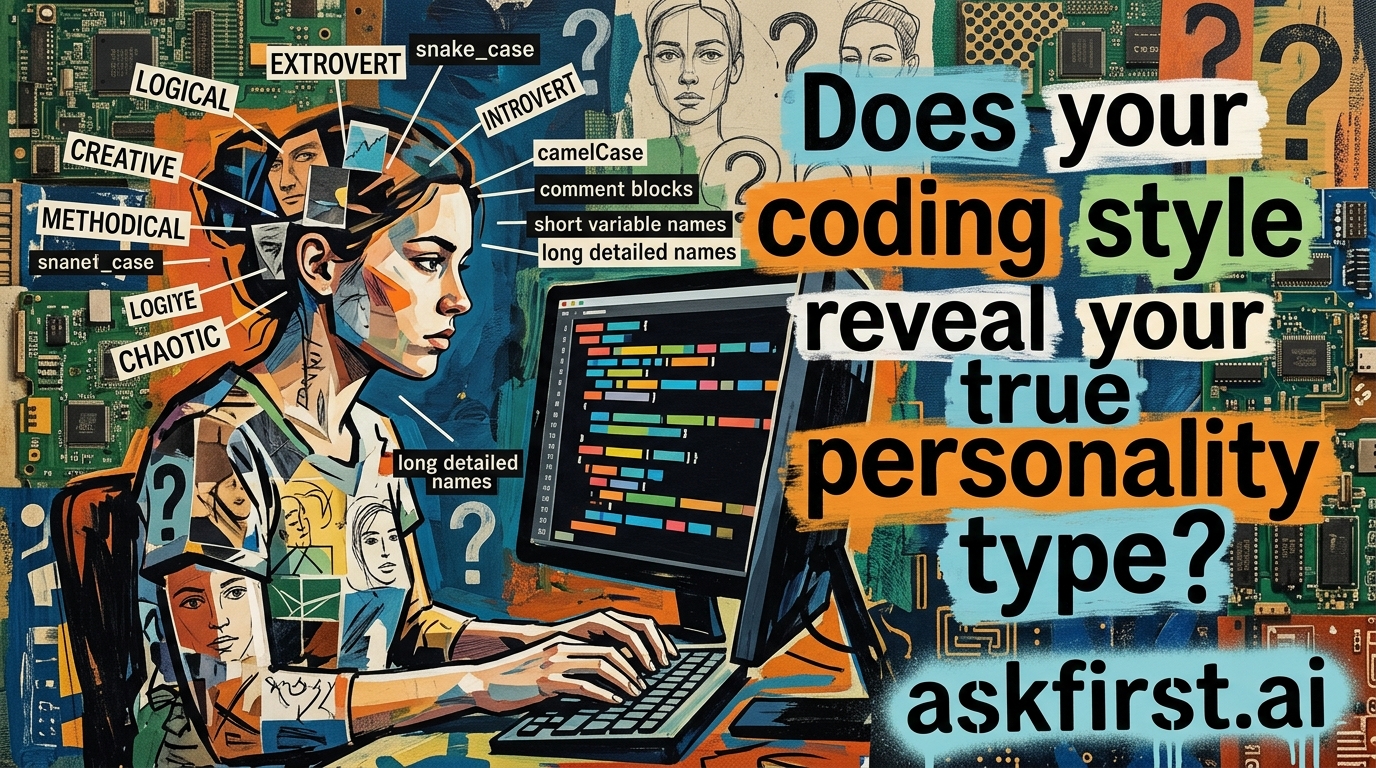
The Architecture of Identity: Does Your Coding Style Mirror Your Personality?
Software development is often viewed as a strictly logical pursuit, yet experts argue that the act of writing code is deeply idiosyncratic. Much like handwriting or artistic expression, coding style functions as a cognitive fingerprint, reflecting how a developer processes information, manages stress, and organizes complexity.
The Psychology of Syntax
Research into developer behavioral patterns suggests a strong correlation between personality traits—often mapped via the Big Five model—and the way code is structured. Developers who score high on Conscientiousness tend to produce highly modular, well-documented code with rigid naming conventions. For them, code is an extension of their desire for order and predictability. In contrast, those with high Openness often favor clever, unconventional algorithmic solutions, prioritizing innovation over standard patterns.
Indicators of Individual Differences
Several specific coding behaviors serve as proxies for psychological tendencies:
- Variable Naming: Descriptive, verbose naming conventions often correlate with high levels of Agreeableness and a desire to communicate effectively, whereas overly cryptic or shortened names may suggest a pragmatic, speed-focused approach typical of certain high-autonomy personality types.
- Complexity Management: The preference for deep nested statements versus flat, functional programming structures reveals a developer's tolerance for cognitive load. Some individuals naturally gravitate toward complex, layered abstractions to maintain mental stimulation, while others prioritize immediate readability to reduce friction.
- Commentary Habits: The amount of documentation provided within the code is not merely a technical choice but a social one. Frequent comments indicate a predisposition toward communal support and long-term project viability, highlighting an empathetic view toward future collaborators.
The Counter-Intuitive Reality: The Myth of the "Perfect Code"
One common misconception is that professional development requires the suppression of individuality in favor of uniformity. While enterprise environments mandate style guides to ensure maintainability, the intent behind the logic remains personal. Even within strict linting rules, the choice of data structure or the specific approach to a refactoring task remains a creative decision. The underlying psychological structure of the developer remains embedded in the logic flow, regardless of how strictly the syntax is formatted.
Professional Implications
Understanding these patterns is essential for team building. High-performing software teams are often composed of diverse personalities whose coding styles complement each other. By acknowledging that a developer’s style is a manifestation of their cognitive habits, engineering leads can better assign tasks—matching the detail-oriented developer to high-stakes refactoring projects while allowing the creative, high-openness developer to thrive in early-stage prototyping. Ultimately, while code is binary, the hands that type it remain fundamentally human, carrying the distinct marks of the personality that guides them through the complexity of problem-solving.