The Cognitive Mechanics of Programming
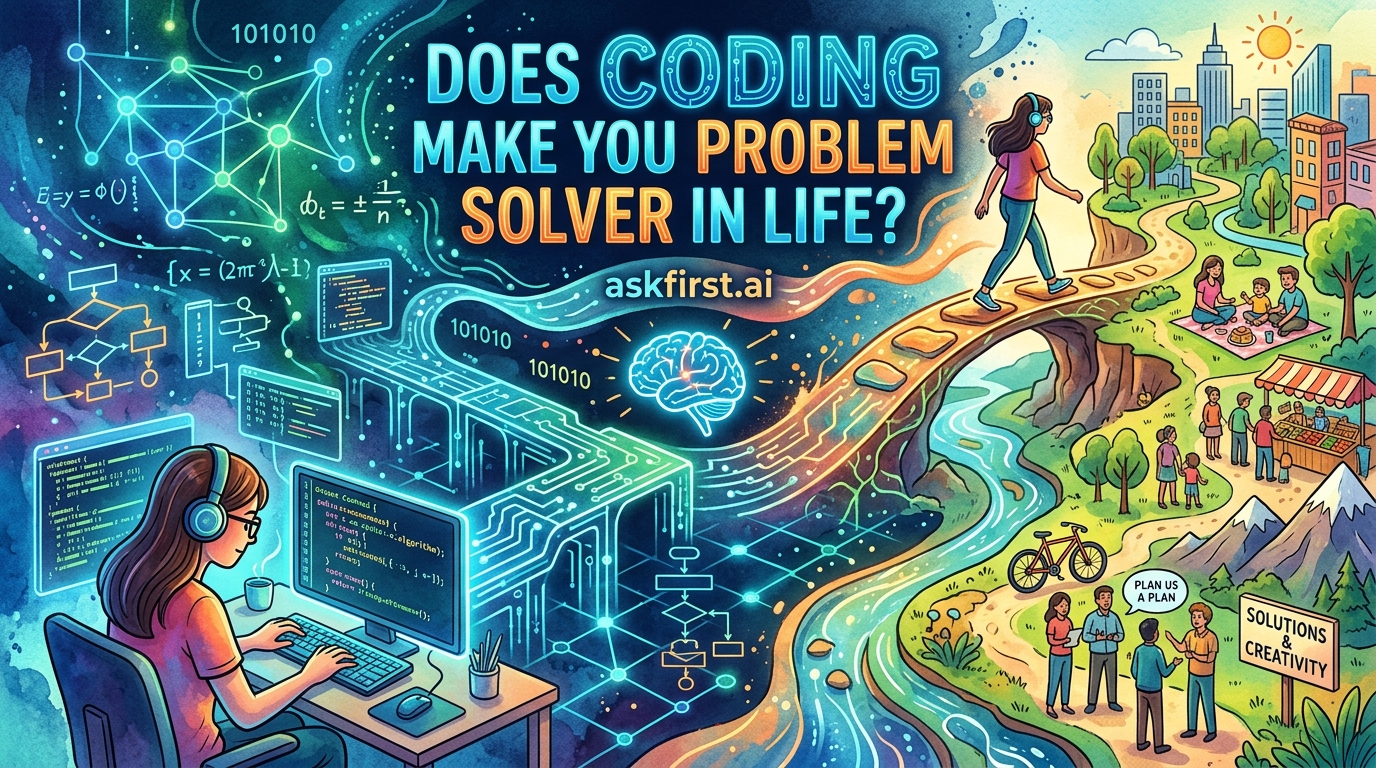
Learning to code does far more than equip an individual with the syntax of Python or JavaScript; it fundamentally reshapes the architecture of human thought. The process of programming is essentially the practice of Computational Thinking, a problem-solving methodology that breaks complex, overwhelming challenges into small, manageable, and logical components. This systematic decomposition is a cognitive skill that transcends computer screens and directly improves decision-making in personal and professional life.
Decomposition: Breaking the Unbreakable
When a programmer encounters a bug, the standard procedure is to isolate the issue. By breaking a monolithic problem into modular sub-problems, the mind learns to avoid the paralysis often associated with complex life challenges. This habit of 'Divide and Conquer' allows individuals to tackle non-technical issues, such as financial planning or relationship conflicts, with a structured approach. Instead of reacting emotionally, the 'coder mindset' encourages an analysis of the system and its inputs, leading to more rational outcomes.
Algorithmic Thinking in Daily Life
Algorithms are simply sets of instructions to achieve a specific goal. Once a brain is trained to recognize algorithmic patterns, it begins to seek efficiency in mundane activities. This manifests as:
- Pattern Recognition: Identifying recurring themes in life to predict outcomes.
- Abstraction: Focusing on the core principles of a situation while ignoring irrelevant noise.
- Debugging: Viewing failure not as an endpoint, but as a diagnostic data point that leads to improvement.
The Role of Iteration and Resilience
In coding, 'iteration' is the process of testing, failing, and refining. This constant loop of feedback cultivates extreme resilience. According to research on neuroplasticity, consistently engaging in logic-heavy tasks strengthens neural pathways associated with deductive reasoning. When a person adopts this iterative mindset, they cease to fear mistakes. Instead, they treat every 'error' in their daily life as a necessary iteration on the path to the final solution. This shifts the focus from 'why did I fail?' to 'what is the bug in my process?'
Conclusion: A Tool for Life
Coding is a unique form of 'mental weightlifting.' While not everyone needs to become a professional software engineer, the principles of programming act as a framework for logic and clarity. By training the mind to be precise, modular, and iterative, one gains an undeniable advantage in navigating a world defined by increasing complexity. Developing these skills creates a robust intellectual foundation that remains valuable, regardless of the tools or technologies that emerge in the future.