The Personality-Medication Connection: Decoding Your Biology
Recent advancements in psychopharmacology and behavioral genetics suggest that internal psychological frameworks—our personality traits—might be more than just abstract descriptions. They could be indicators of neurochemical landscapes that influence how the body and brain process pharmaceutical interventions. While traditional medicine relies heavily on weight, age, and broad physiological markers, the emerging field of personalized medicine is beginning to look closer at the "phenotypic fingerprint" of the individual.
The Neurochemical Link
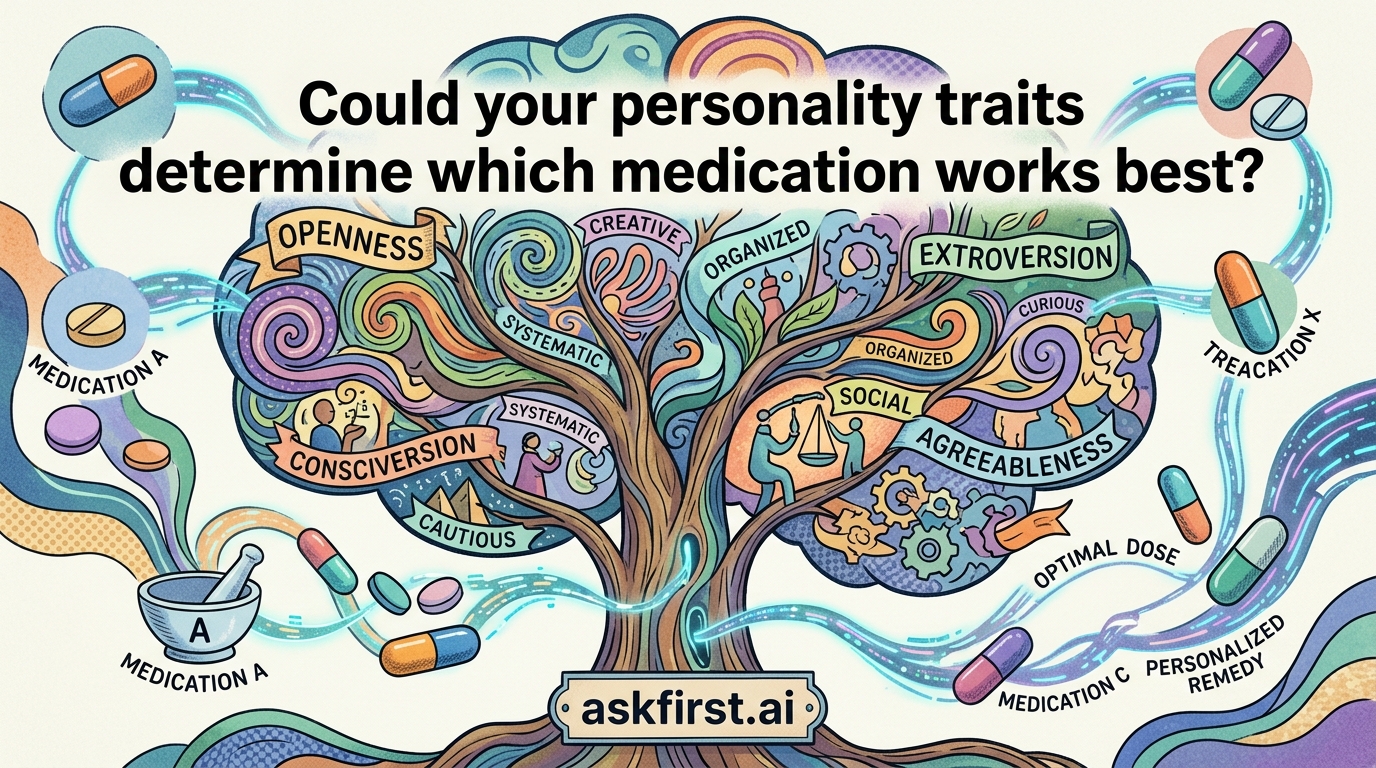
Personality traits, often categorized by the Big Five model—Openness, Conscientiousness, Extraversion, Agreeableness, and Neuroticism—are largely rooted in specific neurotransmitter pathways. For instance, traits associated with high novelty-seeking are frequently linked to dopaminergic system activity. Because many medications designed to address mood or neurological function target these exact pathways, it stands to reason that an individual's baseline personality could dictate their therapeutic threshold.
- Dopamine Sensitivity: Individuals with higher baseline novelty-seeking scores may respond differently to stimulants or mood-stabilizing medications that modulate dopamine receptors compared to those with lower baseline sensitivity.
- Serotonin Regulation: Variations in personality traits like agreeableness or emotional stability are often correlated with serotonergic function, which is the primary target for many widely prescribed antidepressants.
Why Your Personality Profile Matters
Clinical observations have shown that patients with high trait Neuroticism often present a more complex response curve to selective serotonin reuptake inhibitors (SSRIs). This is not a matter of temperament interfering with drug efficacy, but rather a reflection of the underlying neurobiological architecture that both defines the personality and mediates the drug's mechanism of action. By understanding these correlations, practitioners can theoretically refine dosage strategies or choose alternative pharmaceutical agents that align more harmoniously with the patient's biological profile.
The Future of Precision Psychiatry
As genetic testing becomes more refined, the fusion of personality assessment with genomic data offers a transformative approach to healthcare. Rather than the "trial and error" method—where a patient might cycle through several medications to find the "right" one—doctors may soon use a multi-faceted approach. This includes:
- Pharmacogenomics: Analyzing how genes influence drug metabolism.
- Psychological Phenotyping: Evaluating personality traits to predict side-effect tolerance and therapeutic response.
- Behavioral Biometrics: Using lifestyle and physiological data to adjust long-term treatment plans.
While personality remains a complex, multifactorial construct, viewing it through a clinical lens provides invaluable data points. The goal is not to label individuals but to move toward a model where medication is tailored to the unique person, acknowledging that the way a mind is "built" significantly impacts how that mind heals.