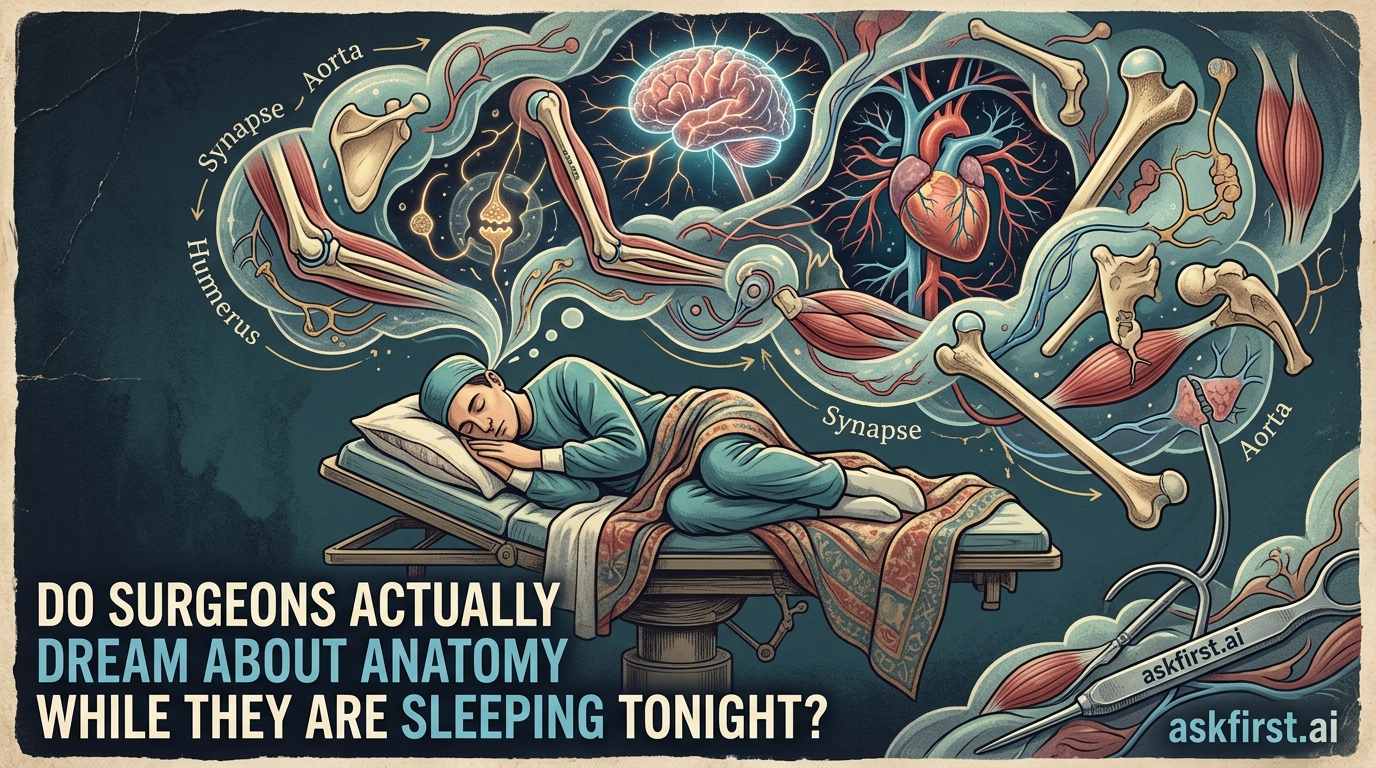
The Neurology of Surgical Dreams: Anatomy Behind the Eyes
Many individuals harbor a curiosity regarding the nocturnal mental activities of medical professionals. The phenomenon often described by surgeons as "procedural dreams" is a well-documented aspect of cognitive processing known as the Tetris Effect. This occurs when individuals spend excessive time focused on specific patterns or tasks, leading the brain to integrate these repetitive sequences into dream content.
The Mechanism of Cognitive Integration
Dreams serve as a crucial period for memory consolidation. During Rapid Eye Movement (REM) sleep, the brain reorganizes information processed throughout the day, moving it from short-term to long-term storage. For a surgeon who has spent ten hours manipulating microscopic sutures or visualizing complex vascular pathways, the brain naturally attempts to "practice" these movements while the conscious mind rests. This is not merely an obsession with anatomy, but an active neural optimization process.
Why Surgeons Dream in Technicolor Detail
Surgeons often report vivid, three-dimensional imagery during these sleep states. Research suggests that high-stress, high-precision tasks engage the hippocampus and motor cortex extensively. When these areas remain active during sleep, they replay the visual and spatial configurations encountered in the operating room. This phenomenon is supported by neuroscientific findings which indicate that repetitive tasks performed under intense focus are the most likely to surface during nocturnal resting cycles.
- Spatial Memory Mapping: Surgeons utilize "mental modeling" to rotate complex anatomy in their minds. During sleep, this mental model is often projected into dreamscapes.
- Procedural Rehearsal: The brain seeks to refine motor pathways, effectively smoothing out the physical techniques used during surgery through simulation.
- Pattern Recognition: Visualizing anatomical anomalies during the day causes the subconscious to analyze these shapes, often presenting them as symbols or complex puzzles within dreams.
Is It a Sign of Stress?
While some might interpret these dreams as anxiety-driven, psychological studies often characterize them as a form of "flow state residue." When a professional is deeply immersed in their craft, the boundary between professional activity and neural wiring blurs. Surgeons who experience these dreams often describe them not as nightmares, but as lucid, manageable rehearsals of their craft.
Ultimately, the brain is an incredibly efficient machine. Dreaming about anatomy is simply the neural hardware performing a scheduled maintenance check on the software acquired during a long shift. Far from being detrimental, these dreams represent a mind that is constantly engaged, optimizing spatial awareness and technical proficiency, ensuring that the surgeon remains at the top of their field regardless of the hour.