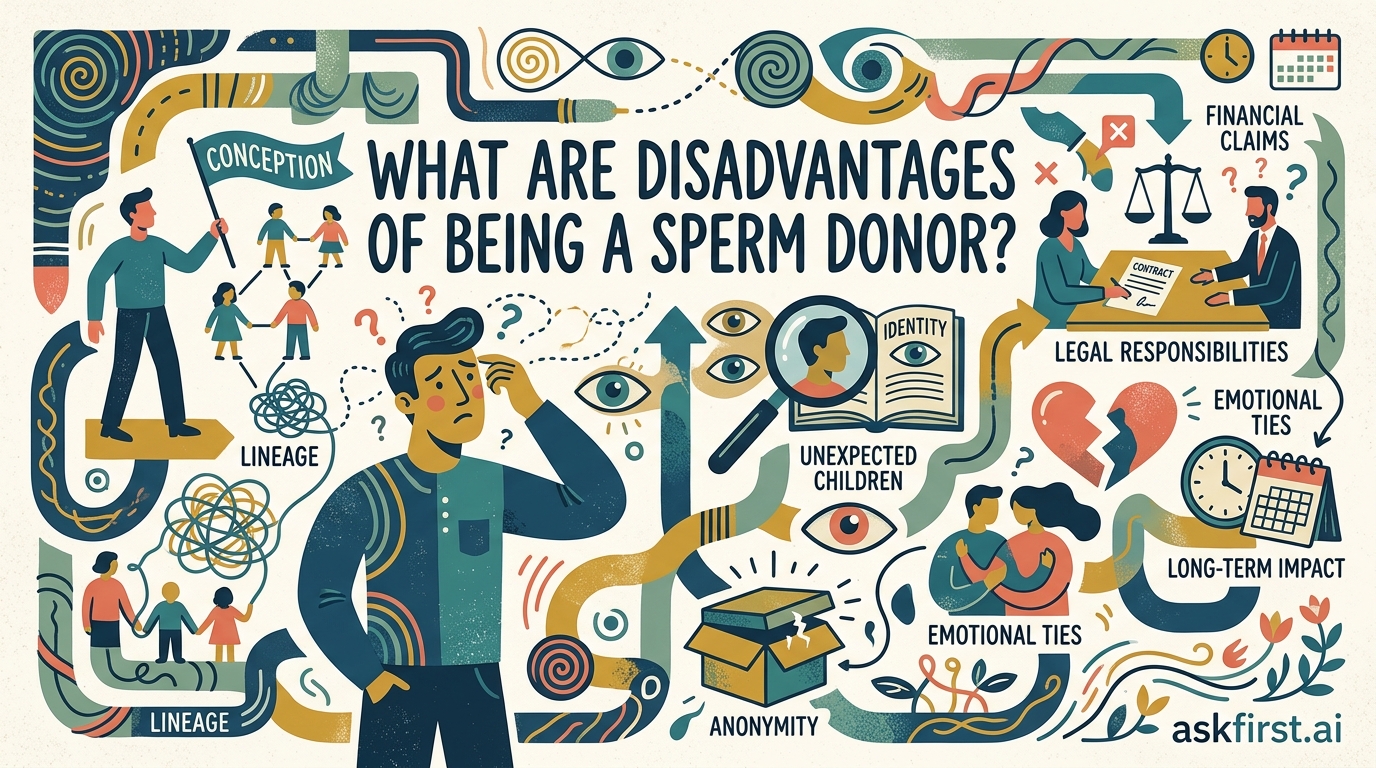
The Disadvantages and Complexities of Sperm Donation
Sperm donation is a medical process that allows individuals or couples to conceive when they otherwise could not. While it is often framed as a humanitarian act, the decision to donate involves significant legal, psychological, and personal considerations. Understanding the disadvantages is crucial for any prospective donor.
1. Legal and Financial Implications
The most significant disadvantage of sperm donation is the potential for complex legal entanglements.
- Parenthood Disputes: In many jurisdictions, laws regarding "anonymous" donation are evolving. If a donor uses a private arrangement rather than a licensed sperm bank, they may inadvertently become legally responsible for child support, regardless of any prior contracts.
- Loss of Anonymity: With the rise of commercial DNA testing services (like 23andMe or AncestryDNA), the concept of "anonymous" donation is effectively defunct. Donors must accept that they may be contacted by biological offspring in the future, which can disrupt their personal lives or family dynamics.
- Inheritance Rights: In some legal frameworks, biological children may have potential claims to inheritance if the donation process was not formally documented through a regulated clinic.
2. Psychological and Emotional Impact
The emotional weight of knowing one has biological children living elsewhere is often underestimated.
- The "Unknown Offspring" Phenomenon: Donors may struggle with the existential reality of having children they will never know. This can manifest as anxiety or a persistent curiosity that affects their mental well-being.
- Family Complexity: The existence of biological children can create friction with a donor’s current partner or future children. Disclosing this history to a spouse or children can be a source of significant interpersonal conflict.
- Identity Crisis: Some donors report feeling a sense of dissociation or emotional detachment, as they are a biological progenitor without the social role of a parent.
3. Practical and Health Risks
While sperm donation is physically non-invasive, it requires a commitment that can be burdensome.
- Rigorous Screening: The screening process is exhaustive. Donors must undergo multiple rounds of blood tests, genetic screening, and physical exams. Failing these tests—even for minor or hereditary conditions—can be a source of stress or disappointment.
- Lifestyle Restrictions: To maintain the quality of sperm, donors are often required to adhere to strict lifestyle guidelines, including abstinence from alcohol, nicotine, and certain medications, as well as maintaining a specific diet.
- Time Commitment: Donation is not a one-time event. Most clinics require a consistent schedule of visits over several months to ensure a steady supply of samples, which can interfere with professional and personal obligations.
4. Future Trends and Societal Shifts
As society moves toward "open-identity" donation, the expectation of privacy is vanishing. Prospective donors must be prepared for the possibility of a biological child seeking a relationship later in life. This requires a level of psychological readiness that many donors do not fully possess at the time of their initial application.
Summary Table: Pros vs. Cons
| Feature | Disadvantage |
|---|---|
| Privacy | Risk of future contact via DNA databases. |
| Legal | Potential for child support liabilities. |
| Emotional | Long-term psychological impact of "unknown" children. |
| Lifestyle | Strict requirements for diet and abstinence. |
In conclusion, while sperm donation provides an invaluable service to families, it is a life-altering decision. Prospective donors should consult with legal experts and mental health professionals to ensure they are fully prepared for the long-term reality of their biological legacy.