The Great Career Dilemma: Maximizing Compensation vs. Personal Autonomy
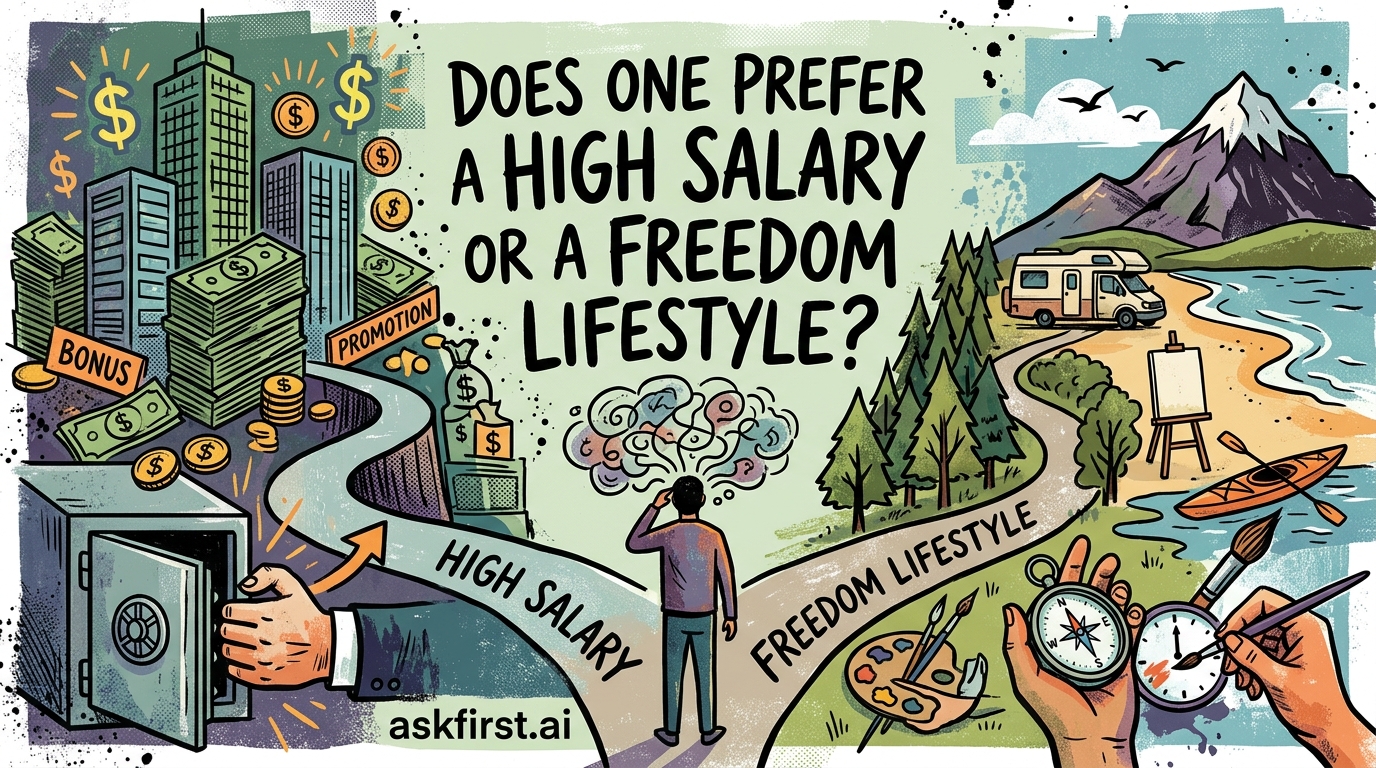
The debate between pursuing a high-salary career and prioritizing a "freedom lifestyle" is a foundational conflict in modern professional psychology. As of June 2026, shifting workplace dynamics—driven by remote work, the rise of the creator economy, and changing generational values—have made this choice more complex than ever.
The Case for the High-Salary Path
High-salary roles, typically found in sectors like finance, law, executive management, and specialized technology, offer significant structural advantages.
- Financial Security and Compounding: A high salary allows for aggressive investment, early retirement (FIRE movement), and a robust safety net. The ability to leverage compound interest early in one’s career is a mathematical advantage that "freedom" often lacks.
- Social Capital and Access: High-earning roles frequently grant access to elite networks, mentorship, and high-level decision-making power that can influence industries.
- The "Golden Handcuffs" Reality: The primary disadvantage is the loss of autonomy. High compensation is rarely a gift; it is a premium paid for the surrender of one's time, mental bandwidth, and geographical mobility.
The Case for the Freedom Lifestyle
The freedom lifestyle prioritizes autonomy—the ability to dictate where, when, and how one works. This is often pursued by digital nomads, entrepreneurs, and those in the "gig" economy.
- Psychological Well-being: Research consistently shows that once basic needs are met, additional income has diminishing returns on happiness. Autonomy is a core psychological need; having control over one's schedule significantly reduces burnout.
- Geographical and Temporal Arbitrage: By working remotely, individuals can live in low-cost-of-living areas while earning in stronger currencies, effectively increasing their purchasing power without needing a top-tier corporate salary.
- The Risks of Autonomy: The downside is the lack of institutional stability. Freedom often comes with "feast or famine" income cycles, the absence of employer-sponsored benefits (health insurance, retirement matching), and the burden of self-discipline.
Comparative Framework: Which Should You Choose?
| Feature | High-Salary Career | Freedom Lifestyle |
|---|---|---|
| Primary Driver | Wealth Accumulation | Personal Autonomy |
| Risk Profile | Low (Institutional) | High (Self-reliance) |
| Work-Life Balance | Often sacrificed | Highly customizable |
| Long-term Growth | Vertical (promotions) | Lateral (skill diversification) |
Finding the Middle Ground: The "Hybrid" Approach
Modern professionals are increasingly adopting a "staged" strategy. Many start in high-salary roles for 5–10 years to build a financial foundation, then pivot to a freedom-centric model once they have achieved "capital sufficiency."
- Phase 1 (Optimization): Maximize income while living frugally to build a "freedom fund."
- Phase 2 (Transition): Utilize professional connections to shift into freelance, consulting, or part-time senior roles.
- Phase 3 (Autonomy): Leverage the accumulated capital to sustain a lifestyle where work is a choice, not a necessity.
Conclusion: The Verdict
There is no objective "better" choice; it is a matter of your personal risk tolerance and life stage. A high salary is a tool for future freedom, whereas a freedom lifestyle is an exercise in present-day autonomy. The most successful individuals are those who view these not as permanent binary states, but as fluid variables that can be adjusted to serve their evolving goals.