The Ritual Science: How Micro-Habits Rewrite Your Brain Chemistry
Modern psychology confirms that what many cultures term "secret rituals" are, in essence, highly structured psychological anchors that modulate the nervous system. By performing specific, repeated sequences of actions, individuals can effectively shift their emotional state from chaotic reactivity to calm intentionality. This process relies on neuroplasticity and the brain's inherent love for predictability.
The Neurology of Ritualization
Rituals provide a unique psychological benefit that standard habits lack: they assign subjective importance to mundane tasks. When an action is imbued with symbolic meaning—such as a specific way of brewing coffee or a series of breathing exercises—the brain releases dopamine not just as a reward for the task completion, but as an anticipatory signal for the ritual itself. According to research published in the Journal of Experimental Psychology, rituals can mitigate anxiety by providing a sense of control over one's internal environment.
Why Rituals Outperform Simple Routines
- Cognitive Offloading: Rituals allow the prefrontal cortex to rest by automating decision-making processes.
- Meaning Injection: Unlike a chore, a ritual carries significance. This psychological framing transforms stress-inducing obligations into opportunities for mindfulness.
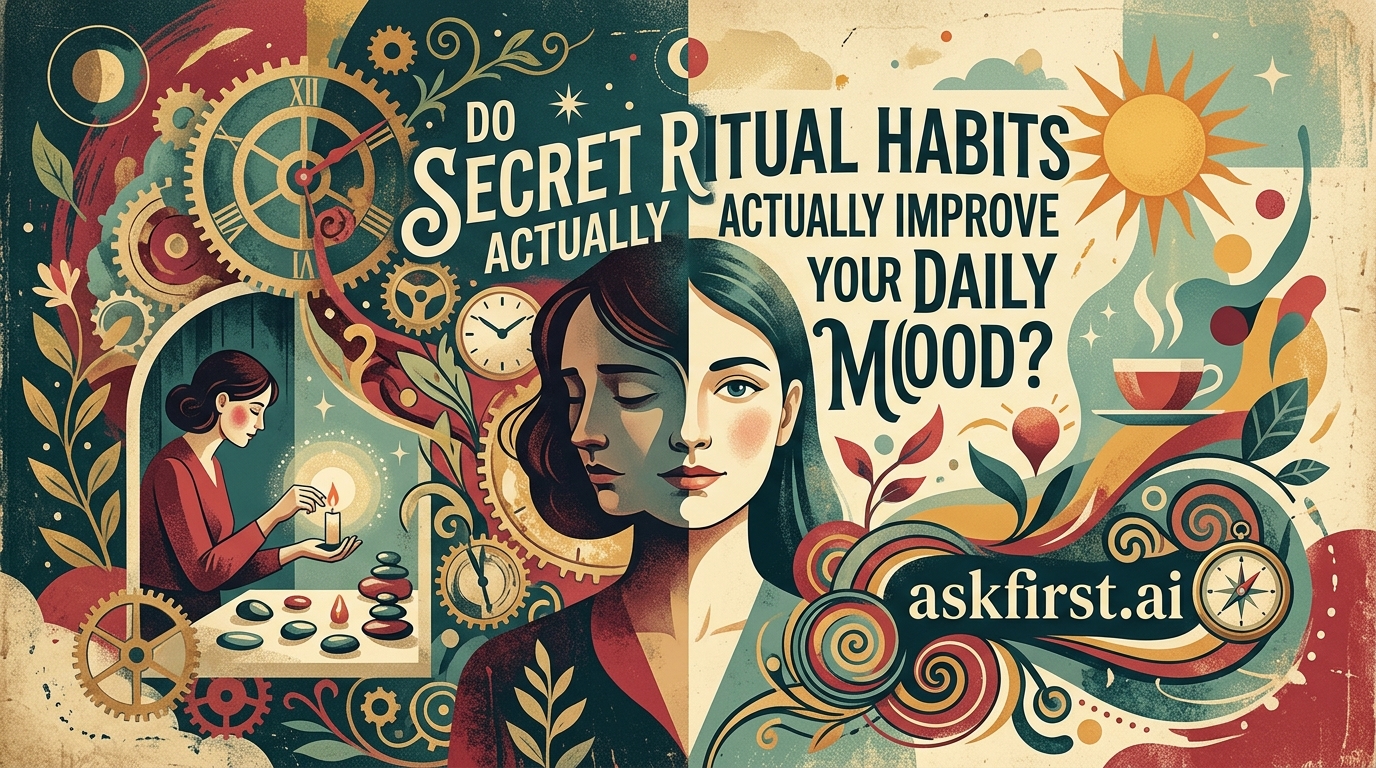
- Emotional Regulation: Sensory-heavy rituals—such as lighting a candle or organizing a workspace—act as "pattern interrupts" that snap the mind out of depressive loops or frantic thought patterns.
Structural Design of a Mood-Enhancing Ritual
To effectively harness the power of rituals, one must structure them around three core pillars: sequence, sensation, and closure. The sequence ensures the brain recognizes the start of the ritual, while sensory input (smell, touch, sound) grounds the nervous system in the present moment. Finally, closure signals to the subconscious that the emotional "reset" is complete.
Consider the "Morning Clarity Protocol." Instead of checking digital devices immediately upon waking, a person might follow this sequence: drinking a specific volume of water, opening a window to acknowledge the natural light, and reciting a short affirmation of purpose. By consistently executing this three-step sequence, the individual creates a neurological "bridge" between sleep and high-performance wakefulness, significantly stabilizing their mood for the subsequent hours.
The Compound Effect of Conscious Action
Over time, these daily rituals create a structural baseline of emotional stability. It is not necessarily the specific content of the ritual—be it journaling or tea preparation—that dictates success, but the dedication to the performance of the act itself. This commitment fosters self-efficacy. When an individual realizes they possess the power to regulate their own mood through intentional behavior, they gain a psychological buffer against external stressors. Ultimately, the "secret" to mood improvement is not found in complex esoteric practices, but in the disciplined application of intentional, rhythmic behavior that honors the biological need for order and purpose.