Mastering the Job Interview: A Comprehensive Guide
A job interview is a high-stakes performance that serves as the bridge between an applicant and a professional opportunity. Success hinges on a balance of strategic preparation, professional etiquette, and authentic communication. Below is an exhaustive breakdown of the essential "dos" and "don'ts" to navigate this process effectively.
The Essential "Dos" for Success
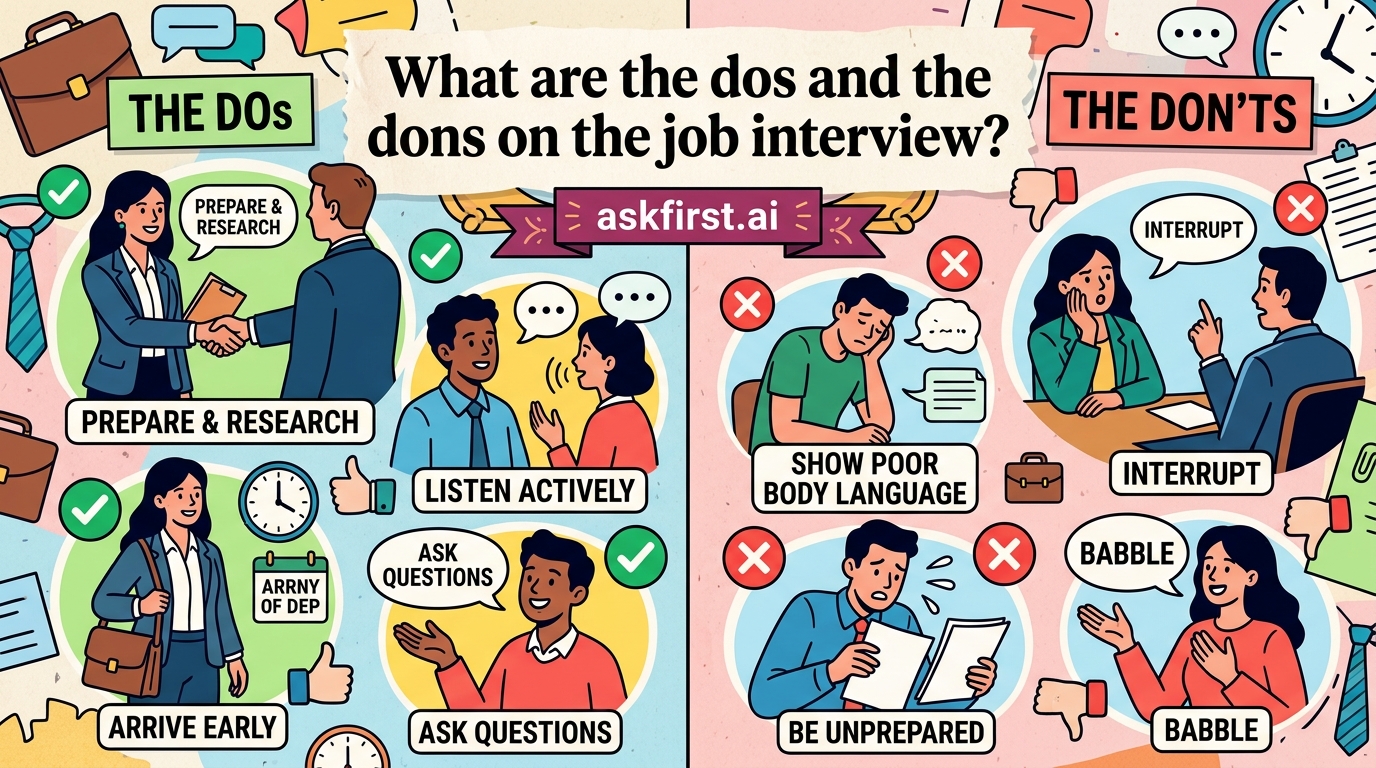
- Conduct Deep Research: Before stepping into the room, understand the organization’s mission, recent news, competitors, and culture. Use platforms like LinkedIn to research your interviewers. This allows you to tailor your answers to the company’s specific pain points.
- Practice the STAR Method: When answering behavioral questions (e.g., "Tell me about a time you failed"), use the Situation, Task, Action, and Result framework. This ensures your answers are structured, concise, and impact-driven.
- Prepare Intelligent Questions: An interview is a two-way street. Asking thoughtful questions—such as "How does the team measure success in this role?" or "What are the biggest challenges the department is currently facing?"—demonstrates genuine interest and critical thinking.
- Master Non-Verbal Communication: Maintain steady, confident eye contact, offer a firm handshake (or a professional nod in virtual settings), and practice active listening. Your body language should reflect engagement and enthusiasm.
- Send a Follow-Up: Always send a personalized thank-you email within 24 hours. Reference a specific topic discussed during the interview to reinforce your interest and leave a lasting positive impression.
The Critical "Don'ts" to Avoid
- Don’t Speak Negatively About Past Employers: Even if your previous work environment was toxic, remain professional. Focus on what you learned from the experience rather than venting grievances, as negativity is often interpreted as a lack of professional maturity.
- Don’t Be Under-Prepared: Arriving late or having no knowledge of the company suggests a lack of seriousness. Similarly, avoid being vague; quantify your achievements with data (e.g., "Increased sales by 15%") whenever possible.
- Don’t Ask About Compensation Too Early: While salary is important, bringing it up in the first five minutes of the first interview can make you seem solely focused on money rather than the value you bring to the team. Wait until the recruiter raises the subject or until the final stages.
- Don’t Lie or Exaggerate: In the age of background checks and digital footprints, honesty is non-negotiable. If you lack a specific skill, frame it as an area you are eager to develop through training.
- Don’t Ignore Cultural Fit: Technical skills get you the interview, but personality and cultural alignment get you the job. Don't be a "robot"; show your character and how you interact with others.
Statistical Context and Future Trends
Research indicates that 80% of hiring decisions are influenced by cultural fit. Furthermore, the rise of AI-driven screening means that keywords in your resume are more important than ever. Looking ahead, the trend is shifting toward "values-based interviewing," where companies prioritize emotional intelligence (EQ) and adaptability over rigid, tenure-based experience. Mastering these soft skills is the ultimate competitive advantage in the modern job market.