The Psychology of Status: Why Luxury Logos Trigger Consumption
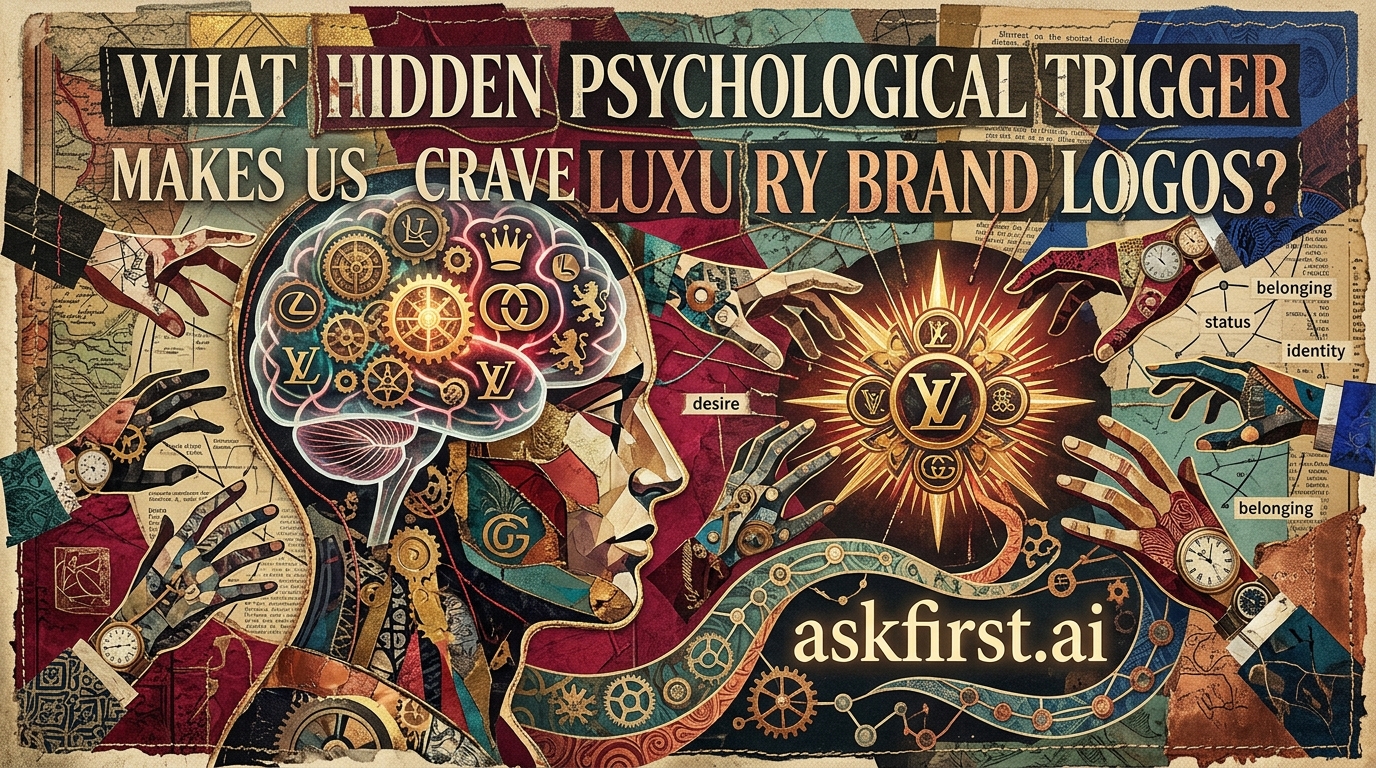
Human beings are social creatures governed by deep-seated evolutionary instincts that prioritize survival and status. Luxury logos act as sophisticated visual shorthand, triggering a specific psychological phenomenon known as signaling. When an individual dons a prominent brand mark, they are not merely wearing fabric; they are deploying a "costly signal" to their peers that they possess the resources, taste, and social capital to acquire rare items.
The Evolutionary Root of Signaling
In biological terms, the theory of costly signaling suggests that individuals display traits that are difficult to fake, demonstrating health or status to others. In the modern marketplace, luxury logos function as these signals. A logo from a heritage fashion house serves as a proxy for financial stability and social belonging. By wearing these brands, consumers communicate their membership in specific "in-groups," effectively reducing the cognitive effort required for social navigation. The brain recognizes the logo and immediately categorizes the individual, triggering a neurochemical response associated with prestige and social validation.
The Role of Dopamine and the Reward Circuit
Scientific research indicates that the display of luxury goods stimulates the brain’s reward centers, specifically the ventral striatum. This area is heavily involved in dopamine processing, which governs motivation and pleasure. Seeing a recognizable luxury logo triggers an anticipation of social reward—a sense of elevation above the baseline. Furthermore, the "Bandwagon Effect" plays a critical role; as more people desire the same logo, its perceived value increases, creating a feedback loop where the brand becomes a cultural totem rather than a mere product.
Veblen Goods and Conspicuous Consumption
The economic concept of "Veblen Goods" further explains this craving. Unlike standard commodities, the demand for Veblen goods increases as their price rises. Because the price tag itself acts as a barrier to entry, the logo becomes a badge of exclusivity. According to sociologists like Thorstein Veblen, this "conspicuous consumption" is a tactical display of wealth designed to attract admiration or envy. The human brain perceives this exclusivity as a mark of safety and success, leading to an subconscious attraction to brands that demonstrate this high-cost threshold.
The Psychology of Identity Construction
Beyond status, luxury logos serve as anchors for personal identity. Consumers use these symbols to manifest their "ideal self." If a consumer aspires to be viewed as sophisticated, wealthy, or trend-setting, they associate these traits with specific logos. Through the lens of symbolic interactionism, we define ourselves partly through the artifacts we possess. The logo serves as a bridge, connecting the individual's inner world with their perceived outer environment. Ultimately, the craving for luxury logos is less about the functionality of the product and everything to do with the psychological satisfaction of projecting one's desired status into the world.