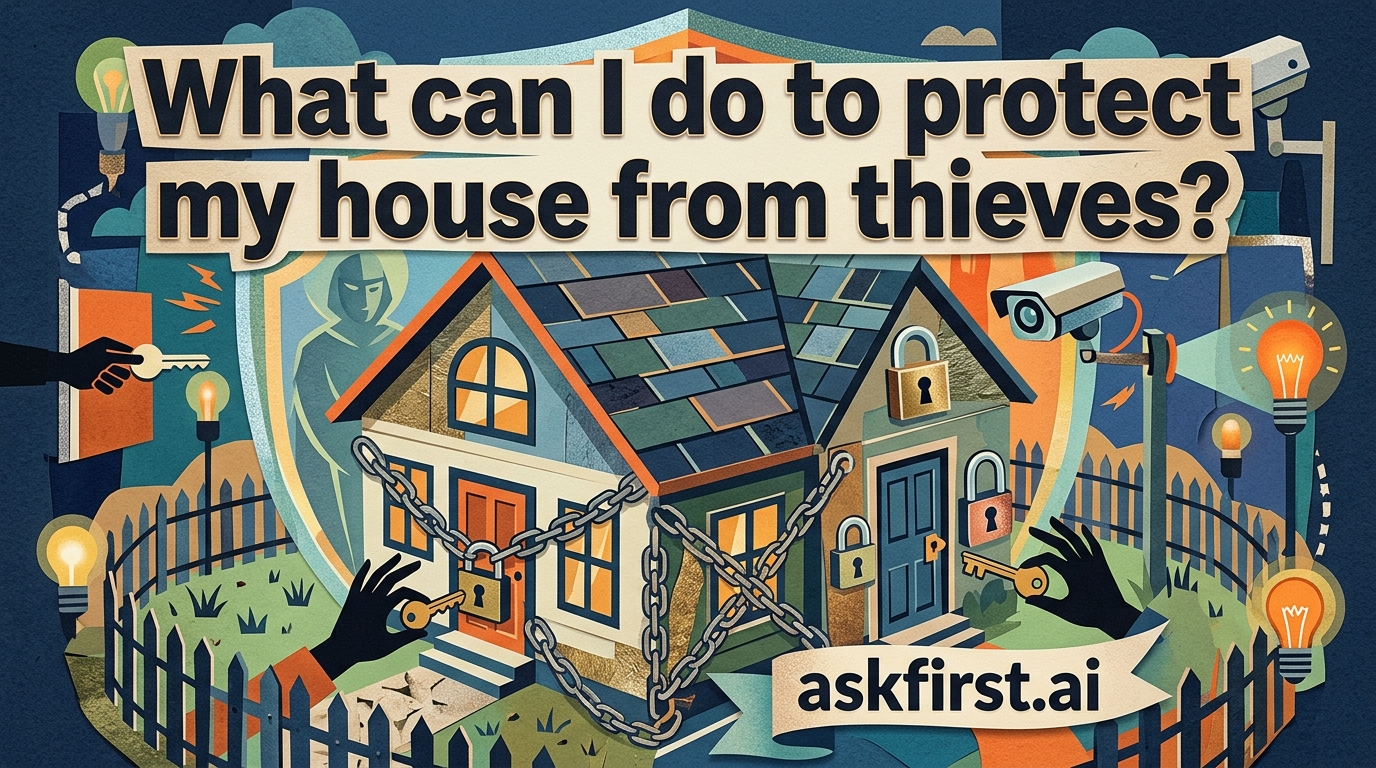
Comprehensive Guide to Residential Burglary Prevention
Protecting a home from intrusion requires a multi-layered security strategy known as "Crime Prevention Through Environmental Design" (CPTED). By hardening physical entry points, utilizing modern technology, and altering behavioral patterns, homeowners can significantly reduce the risk of becoming a target.
1. Hardening Physical Entry Points
The most effective deterrents are those that increase the time and effort required for an intruder to enter your property.
- Reinforce Doors: Replace hollow-core doors with solid-core wood or metal. Install high-quality deadbolts with at least a one-inch throw. Consider adding a strike plate reinforced with 3-inch screws to prevent the door frame from splintering during a "kick-in" attack.
- Window Security: Install secondary locking mechanisms such as window bars, security film (which prevents glass from shattering), or simple pin locks. Keep windows locked at all times, even on upper floors.
- Garage Safety: The garage is often the weakest point of entry. Ensure the door between the garage and the main house is as secure as the front door. Use a timer or a smart-home bridge to ensure the garage door is never left open.
2. Technological Integration
Modern home security has shifted from simple alarms to integrated ecosystems.
- Surveillance Systems: High-definition security cameras with night vision and motion-activated floodlights act as a strong psychological deterrent. Position cameras at eye level near high-traffic entry points.
- Smart Home Automation: Use smart plugs or automated lighting to create "lived-in" patterns while you are away. Varying light schedules is more effective than a static timer.
- Monitored Alarm Systems: Systems connected to a 24/7 monitoring center provide the fastest response time. Visible signage indicating a monitored system often causes opportunistic thieves to choose a "softer" target.
3. Environmental Design and Maintenance
Thieves prefer homes that offer concealment and clear signs of vacancy.
- Landscaping: Trim hedges and trees near windows and doors to remove hiding spots. Avoid planting dense shrubs that provide cover for intruders to work on locks unseen.
- Visibility: Ensure your house number is clearly visible from the street to assist emergency services. Use motion-sensing pathway lights to illuminate the perimeter of your home.
- Neighborhood Watch: A cohesive community is a powerful security tool. Neighbors who know each other are more likely to notice suspicious vehicles or unfamiliar individuals lurking in the area.
4. Behavioral Best Practices
Even the most expensive security systems fail if human error is present.
- The "Social Media" Trap: Avoid posting vacation photos or real-time updates while away. Burglars increasingly use social media to identify empty homes.
- Inventory Management: Keep a documented inventory of high-value items, including serial numbers and photographs. Store valuables in a fireproof, bolted-down safe.
- Key Management: Never hide spare keys under doormats or in fake rocks; these are the first places an intruder looks.
Future Trends
The future of home security lies in AI-driven behavioral analytics. Cameras are now being equipped with software that distinguishes between pets, swaying trees, and actual human intruders, reducing false alarms. Furthermore, smart locks that utilize biometric authentication (fingerprint or facial recognition) are becoming the new standard for residential security. By combining physical hardware, intelligent technology, and community awareness, you create a robust defense that discourages even the most determined intruders.