The Economics of Waste: Analyzing Discretionary Financial Pitfalls
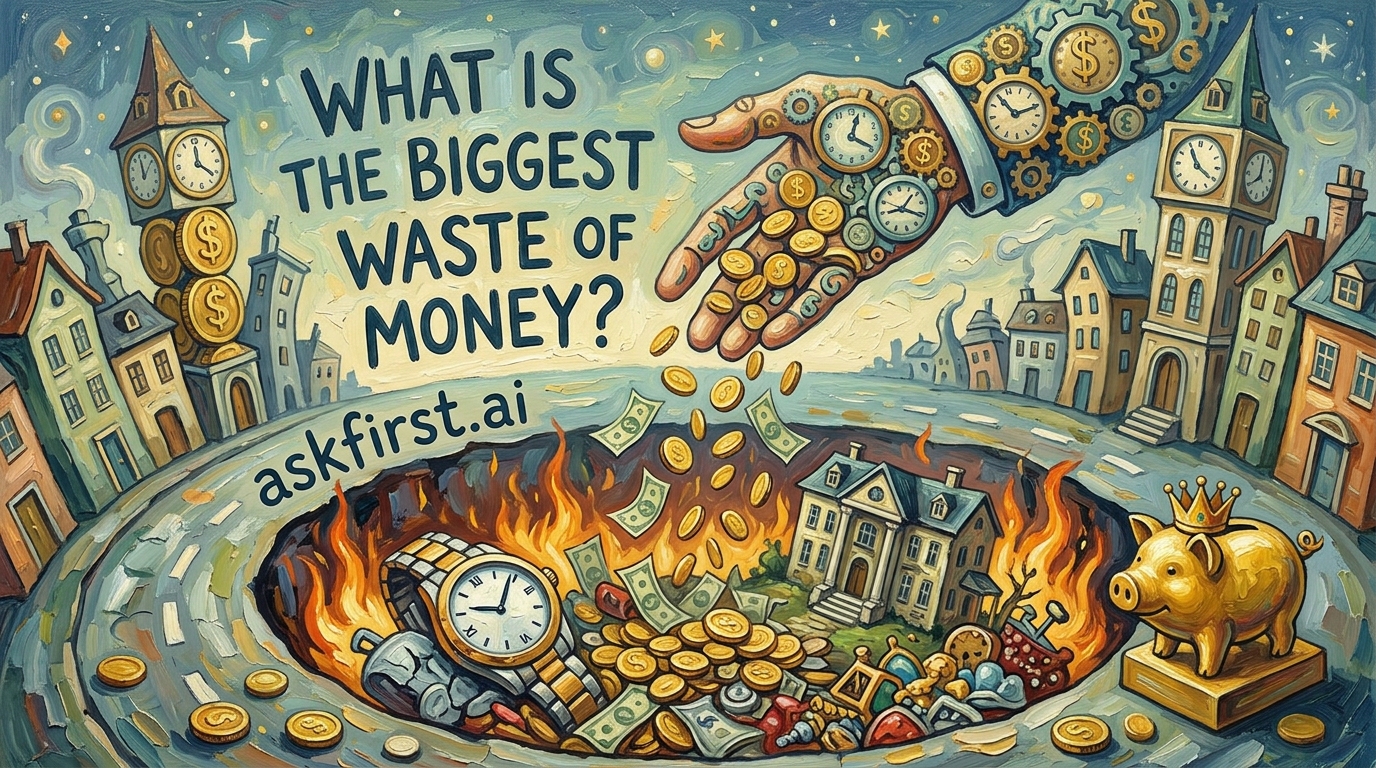
When defining the "biggest waste of money," economists and financial planners generally categorize expenditures as either depreciating assets or high-interest debt. While personal preferences vary, objective analysis points to consumer interest payments and the rapid depreciation of luxury goods as the most significant drains on individual wealth.
1. High-Interest Consumer Debt
The most universally agreed-upon "waste" of capital is paying interest on consumer debt, specifically credit cards.
- The Compounding Trap: With average APRs often exceeding 20%, carrying a balance creates a negative compounding effect. If you carry a $5,000 balance at 22% interest, you pay $1,100 annually in interest alone—wealth that evaporates without providing any tangible asset or service in return.
- Opportunity Cost: Every dollar paid in interest is a dollar that cannot be invested in an S&P 500 index fund or a retirement account. Over a 30-year horizon, $1,000 in interest payments could have theoretically grown into over $10,000, making the true cost of debt exponentially higher than the face value.
2. Rapidly Depreciating Assets: The New Vehicle Paradox
A new car is frequently cited as the single largest depreciating purchase an average consumer makes.
- The "Lot" Effect: A new vehicle typically loses 10% to 20% of its value the moment it is driven off the dealership lot. Within five years, that vehicle may retain only 40% to 60% of its original purchase price.
- The Cost of "Newness": Unless the vehicle is a specific collectible or utility-based asset essential for high-revenue work, the premium paid for a brand-new model over a three-year-old certified pre-owned vehicle is essentially "vanity capital."
3. Lifestyle Creep and "Micro-Wastes"
"Lifestyle creep" refers to the tendency for spending to increase in lockstep with income. This leads to the normalization of high-cost, low-value habits:
- Subscription Overload: The average consumer pays for multiple streaming services, gym memberships they rarely use, and app subscriptions they have forgotten. Research suggests that "zombie subscriptions" cost the average household hundreds of dollars annually.
- The "Convenience Tax": Relying on daily food delivery services or high-markup convenience store items over bulk purchasing represents a consistent drain on liquid savings.
4. How to Mitigate Financial Waste: A Practical Guide
To optimize personal wealth, one must shift from a consumption-first mindset to an investment-first mindset:
- Automate Debt Destruction: Prioritize paying off high-interest debt using the "avalanche method" (targeting the highest interest rate first).
- The 24-Hour Rule: For non-essential purchases over $100, wait 24 hours before buying. This mitigates impulsive emotional spending.
- Audit Subscriptions: Conduct a quarterly review of all recurring charges. If a service hasn't been used in 30 days, cancel it immediately.
- Prioritize Utility: When making large purchases, calculate the "cost per use." A high-quality tool used daily is a better investment than a luxury item used once a year.
Conclusion: The Future of Spending
As we move further into 2026, the rise of "Buy Now, Pay Later" (BNPL) services poses a new risk of obscured debt. By breaking large purchases into small installments, these services mask the true cost of consumption, encouraging consumers to spend money they have not yet earned. Avoiding these traps requires strict budgetary discipline and a focus on long-term wealth accumulation rather than short-term gratification.