The Paramount Financial Error: Neglecting Compounding and Retirement Planning in Your 30s
In the landscape of personal finance, the 30s are frequently identified as the "make or break" decade. While many individuals focus on immediate lifestyle inflation—such as purchasing larger homes, financing luxury vehicles, or funding expensive childcare—the most significant, long-term financial mistake made during this period is the failure to prioritize aggressive retirement savings and the resulting loss of the "compounding multiplier."
1. The Mathematics of Compounding
The primary reason this mistake is so catastrophic is the mathematical nature of compound interest. In your 30s, you possess a critical asset that no amount of wealth can replicate later in life: time.
- The Cost of Delay: If an individual invests $1,000 monthly starting at age 30 with a 7% annual return, they will have approximately $1.2 million by age 65. If that same individual waits until age 40 to start, they would need to invest roughly $2,000 monthly to reach a similar goal.
- The Opportunity Cost: By prioritizing short-term consumption over long-term investment, 30-somethings inadvertently force their future selves to work significantly longer hours for a lower quality of life.
2. The Lifestyle Inflation Trap
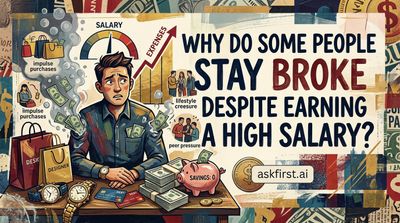
As earnings typically peak or rise significantly during the 30s, many fall into the trap of lifestyle inflation. This is the psychological phenomenon where spending increases in direct proportion to income.
- The Symptom: Upgrading from an apartment to a house with a massive mortgage, leasing premium vehicles, and adopting high-end social habits.
- The Consequence: This creates a "golden handcuff" situation where high earners become "broke" because their monthly overhead is so high that they cannot afford to save a meaningful percentage of their income.
3. Practical Steps to Correct Course
To avoid or rectify this common mistake, one must implement a disciplined financial architecture:
- Automate Savings: Direct a minimum of 15–20% of gross income into tax-advantaged accounts (such as 401(k)s, IRAs, or index funds) before any other spending occurs.
- Audit Fixed Costs: Conduct a quarterly review of recurring expenses. Eliminate "subscription creep" and aggressively pay down high-interest consumer debt.
- Prioritize Asset Allocation: Move beyond simple savings accounts. Utilize low-cost, diversified index funds that capture market growth over multiple decades.
- Emergency Fund Maintenance: Ensure 6–12 months of living expenses are held in a high-yield savings account to prevent the need to liquidate long-term investments during market downturns.
4. Pros and Cons of Aggressive Saving in Your 30s
- Pros: Financial independence becomes a mathematical certainty; lower stress levels regarding future job loss; the ability to retire early (FIRE movement).
- Cons: Reduced immediate purchasing power; the psychological difficulty of delaying gratification; potential friction in social circles that prioritize conspicuous consumption.
5. Future Trends and Outlook
As we look toward the late 2020s, economic uncertainty and the potential for shifts in social security solvency make self-funded retirement more critical than ever. The rise of "digital nomadism" and "side-hustle" culture allows 30-somethings to diversify income streams, providing more capital to deploy into investments. Ultimately, the 30s should be treated as the decade of capital accumulation, not just career progression. By shifting focus from "what I can afford today" to "what I can own tomorrow," individuals can secure their financial legacy.