The Hidden Bond: Do Prenups Actually Strengthen Marriages?
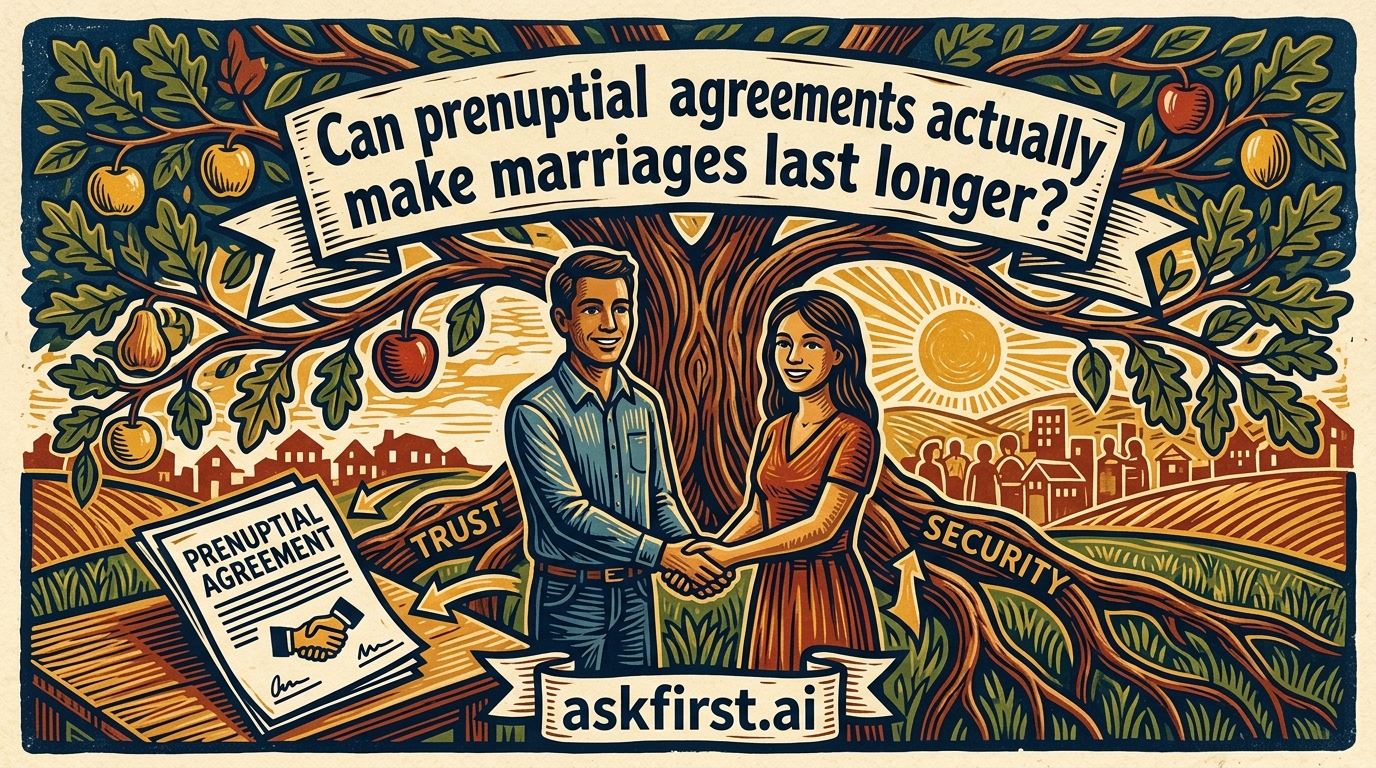
While society often views prenuptial agreements as harbingers of divorce, psychological and legal research suggests a counter-intuitive reality: the process of drafting a prenuptial agreement can act as a catalyst for marital longevity and stability. Rather than signifying a lack of trust, these contracts often provide a framework for radical transparency.
The Psychology of Financial Clarity
Financial stress is consistently ranked as a top cause of divorce. Couples frequently avoid discussing money until a crisis occurs. A prenuptial agreement forces a structured, honest conversation about:
- Debt profiles: Uncovering hidden student loans or credit card burdens.
- Spending habits: Establishing what constitutes necessary versus discretionary expenses.
- Future goals: Aligning visions for wealth accumulation, property acquisition, and philanthropic interests.
By engaging in these discussions before the wedding, couples establish a "financial blueprint." This early alignment eliminates the ambiguity that often brews into resentment over time. Studies indicate that couples who possess a shared financial vision report higher levels of marital satisfaction, as the agreement serves as a proactive strategy to avoid common pitfalls.
Reframing the Prenuptial Narrative
Many experts describe prenups as an exercise in risk management similar to buying insurance. Just as one purchases fire insurance not because they want their house to burn down, but to ensure protection in the event of a disaster, a prenup provides a security net. Knowing that specific assets are protected allows partners to enter the marriage with a "security mindset" rather than a "scarcity mindset."
When partners no longer fear the existential dread of financial ruin, they are often freer to contribute to the union with greater generosity and less defensiveness. According to family law experts, the act of negotiation—if handled with empathy and professional guidance—builds communication skills. It forces both individuals to articulate their needs and limits, which is essentially the bedrock of successful conflict resolution.
Busting the Myth of "Planning for Failure"
Critics argue that prenups assume the marriage will fail. However, sociologists suggest the opposite: effective prenuptial planning is an act of optimism. It demonstrates a commitment to resolving disagreements logically and fairly, ensuring that if life circumstances change drastically, the transition can happen without the emotional and financial devastation of drawn-out litigation. This "what-if" scenario planning can ironically make the relationship more resilient because the fear of the "unknown" has been replaced by a negotiated, mutually agreed-upon reality.
Ultimately, a marriage based on transparency is structurally superior to one built on unspoken assumptions. By defining boundaries early, couples create a foundation of safety that allows their bond to flourish, free from the shadow of future financial instability.