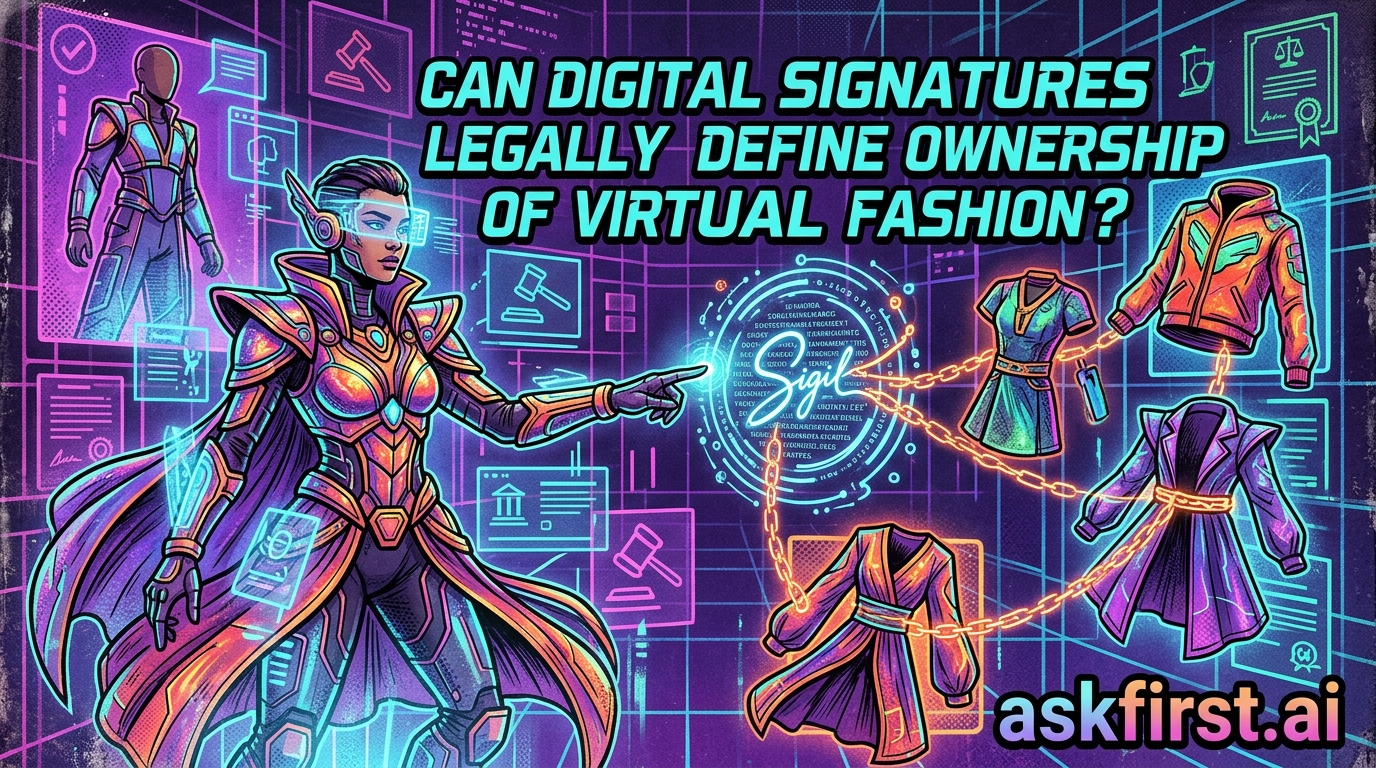
The Digital Ledger: Does Your Virtual Closet Actually Belong to You?
In the rapidly evolving landscape of digital economies, virtual fashion has transitioned from simple cosmetic items in gaming to significant digital assets. As designers and users increasingly invest in these goods, the legal frameworks surrounding ownership, authenticity, and property rights are being tested. Central to this debate is the use of digital signatures and blockchain technology to secure ownership records.
The Role of Cryptographic Signatures in Property Rights
A digital signature is a mathematical scheme that provides authenticity for digital messages or documents. Within the context of virtual fashion, a digital signature serves as a unique identifier created by the creator of the asset. When integrated with decentralized ledger technology, this signature acts as a certificate of provenance. It confirms that the virtual item originated from the specific designer and has not been tampered with since its creation.
However, while digital signatures establish provenance—the history of ownership—they do not necessarily grant full legal property rights in the same way a deed does for physical real estate. Legal ownership is a bundle of rights defined by jurisdictional law, including the rights to use, sell, modify, or license the asset.
Legal Challenges and Jurisdictional Ambiguity
Existing intellectual property (IP) laws were largely drafted before the rise of the metaverse. Consequently, there is often a disconnect between the code that tracks an item and the law that governs it.
- Licensing vs. Ownership: Most virtual fashion marketplaces operate under Terms of Service (ToS) agreements that grant users a "non-exclusive, non-transferable license" to use an item rather than true ownership. Even with a digital signature confirming possession, the underlying legal contract often overrides the technical claim.
- Jurisdictional Reach: Digital assets exist in a cloud environment that transcends borders. If a dispute occurs between a buyer in Europe and a seller in Asia regarding a virtual garment, determining which country's laws apply remains a complex hurdle.
Moving Toward Digital Asset Certainty
To bridge the gap between technical possession and legal ownership, several frameworks are emerging:
- Smart Contracts: These are self-executing contracts with the terms directly written into code. They can codify the transfer of ownership rights, but they require widespread legal recognition to be enforceable in court.
- Standardized Metadata: By including explicit usage rights within the metadata of the digital signature, designers can provide clearer terms that follow the asset wherever it is transferred.
- Legislative Adaptation: Governments are beginning to study how digital asset regulation might evolve. If legislatures codify the validity of digital signatures as proof of ownership, the legal power of these cryptographic identifiers will significantly strengthen.
In conclusion, while digital signatures are a robust tool for verifying authenticity and preventing counterfeiting in the digital fashion space, they currently act more as a "digital bill of sale" than a final court-recognized title of ownership. Until legal systems harmonize with the technical reality of blockchain assets, the distinction between possessing a digital file and legally owning a piece of virtual property will remain the subject of intense litigation and design innovation.