The Prenup Paradox: Financial Planning or Conflict Catalyst?
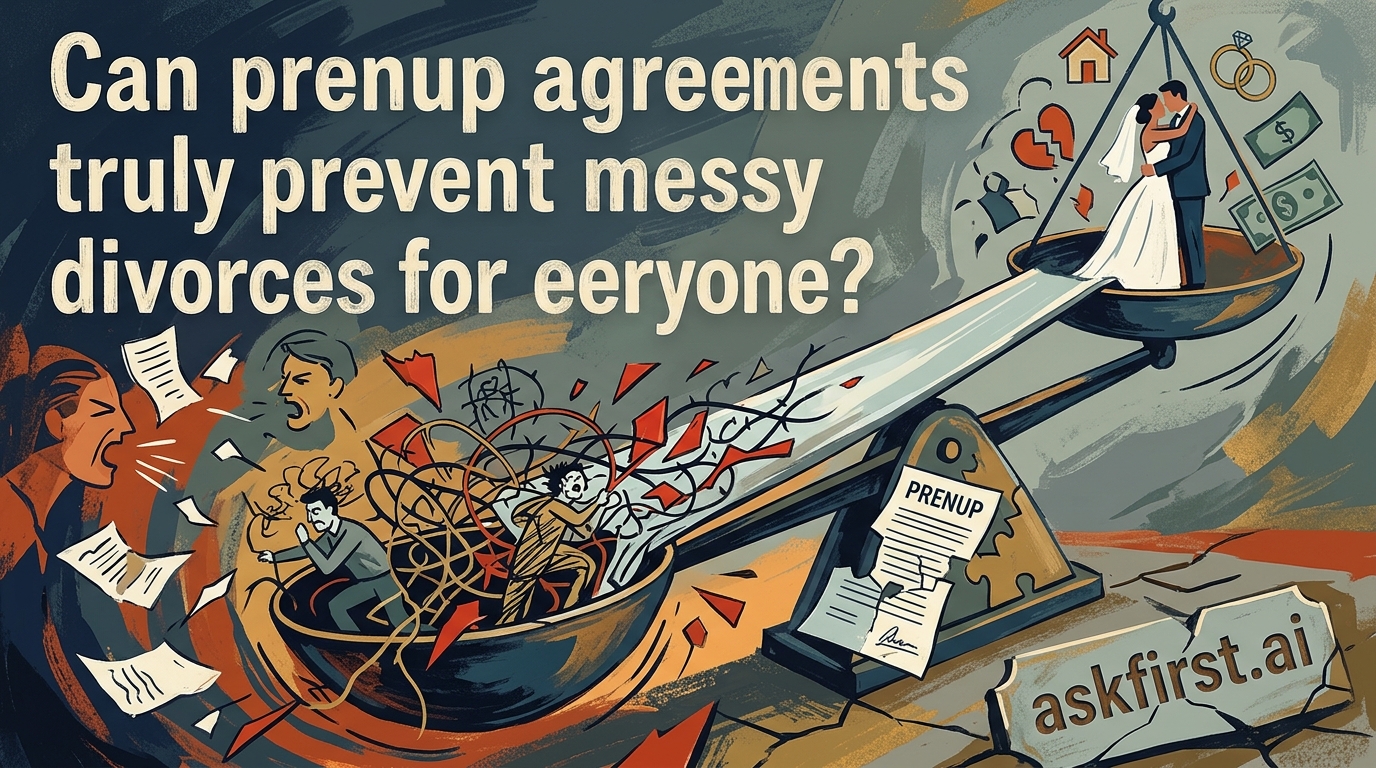
Prenuptial agreements are often heralded as the ultimate safety net for modern marriages, promising financial clarity and emotional protection. However, the assumption that these legal documents can unilaterally prevent a "messy" divorce is a common misconception that overlooks the complex psychological and procedural dynamics of human relationships.
The Legal Reality
At their core, prenuptial agreements are contractual frameworks designed to define the division of assets, debt, and spousal support in the event of a marriage dissolution. When drafted with full transparency, legal counsel for both parties, and adherence to jurisdictional requirements, they provide an objective roadmap. This clarity can indeed prevent protracted legal battles over property by replacing uncertainty with a pre-negotiated agreement. Statistics from the American Academy of Matrimonial Lawyers suggest that such agreements significantly streamline court proceedings, saving spouses time and emotional exhaustion.
Why Messy Divorces Persist
Despite their legal utility, prenups cannot neutralize the emotional volatility of a relationship breakdown. If a divorce occurs due to infidelity, abandonment, or profound irreconcilable differences, the legal document governs only the money, not the grief, resentment, or anger. A "messy" divorce is frequently defined by interpersonal conflict rather than mere asset division. In cases where one party feels pressured, coerced, or deceived during the drafting phase, the prenup itself can become a flashpoint for intense resentment, potentially inviting litigation to invalidate the contract.
Critical Factors for Success
To maximize the utility of a prenup and minimize the likelihood of future disputes, legal experts emphasize three essential pillars:
- Financial Full Disclosure: Lack of transparency is the primary driver of contract invalidation. Without full visibility into each partner's financial landscape, the agreement remains legally fragile.
- Independent Legal Counsel: It is vital for both parties to retain separate attorneys. Courts are highly suspicious of "unconscionable" agreements where one side lacked legal advocacy, which often leads to costly, messy challenges.
- Fairness and Voluntariness: Agreements that are perceived as heavily lopsided or were signed under duress lack the durability required for a peaceful separation.
The Psychological Perspective
The process of drafting a prenup can actually be a constructive exercise if approached as a form of pre-marital counseling. By forcing honest conversations about spending habits, career goals, and retirement, couples develop a higher degree of financial intimacy. When a prenup is a product of collaboration rather than a lopsided imposition, it acts as a stabilizing force. Ultimately, while a well-crafted prenup provides a robust legal shield for assets, it cannot act as an emotional panacea. It succeeds when it serves as a tool for clear communication rather than a weapon of mistrust.