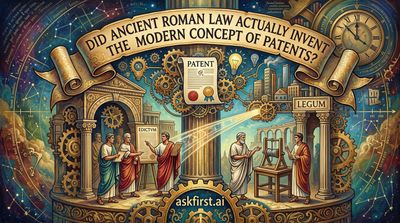
The Roman Origins of Antitrust Law: Ancient Market Regulation
While modern society often views antitrust laws as a product of the industrial revolution, the concept of restricting market dominance dates back to the Roman Empire. The Roman state held a deeply ingrained suspicion of private influence that threatened public stability, leading to sophisticated legal frameworks designed to prevent individuals from controlling essential resources. This historical precedent proves that the balance between economic liberty and state-controlled commerce has been a persistent challenge for civilizations throughout history.
The Lex Iulia de Annona
One of the most significant pieces of legislation addressing market manipulation was the Lex Iulia de Annona, introduced by Julius Caesar. This law targeted individuals who engaged in dardanarii—merchants who intentionally created artificial scarcities of food to inflate prices. By prohibiting the hoarding of grain and controlling distribution, the state effectively outlawed monopolistic practices that threatened the supply of the annona, or the grain dole essential for the survival of the urban poor. Roman authorities recognized that a single actor controlling food prices could destabilize the social order, thus justifying strict intervention.
Protecting the Public Interest
The Roman legal system differentiated between collegia (guilds) and illicit cartels. While trade associations were permitted, they were strictly regulated under the principle of utilitas publica—the public utility. If a merchant group acted to set prices or restrict supply in a way that harmed the broader Roman citizenry, the state did not hesitate to dissolve these entities. Roman jurists believed that the health of the Republic depended on fair access to goods, viewing aggressive monopolies as a form of socio-economic tyranny that undermined the collective welfare.
Lessons from Ancient Market Dynamics
Modern economists often cite the Roman approach as the primitive precursor to contemporary competition policy. The Roman perspective relied on several key pillars that echo today's legal standards:
- Prevention of Speculation: Punishing those who stockpiled essential commodities to force price hikes.
- State Oversight: Maintaining the right to seize goods or intervene in supply chains if market actors failed the public.
- Legal Deterrence: Using the power of the praetor to provide legal remedies for those harmed by unfair business practices.
Ultimately, the Roman model was less about promoting a "free market" in the neoliberal sense and more about ensuring that no private power grew strong enough to rival the state or endanger the food supply. By integrating these market controls into their broader legislative framework, the Romans maintained social equilibrium for centuries. Their commitment to curbing monopolistic tendencies remains a foundational case study in how ancient societies managed the complex relationship between private enterprise and the necessity of keeping essential resources accessible to all.