The Legal Validity of Handshake Deals: Myth vs. Reality
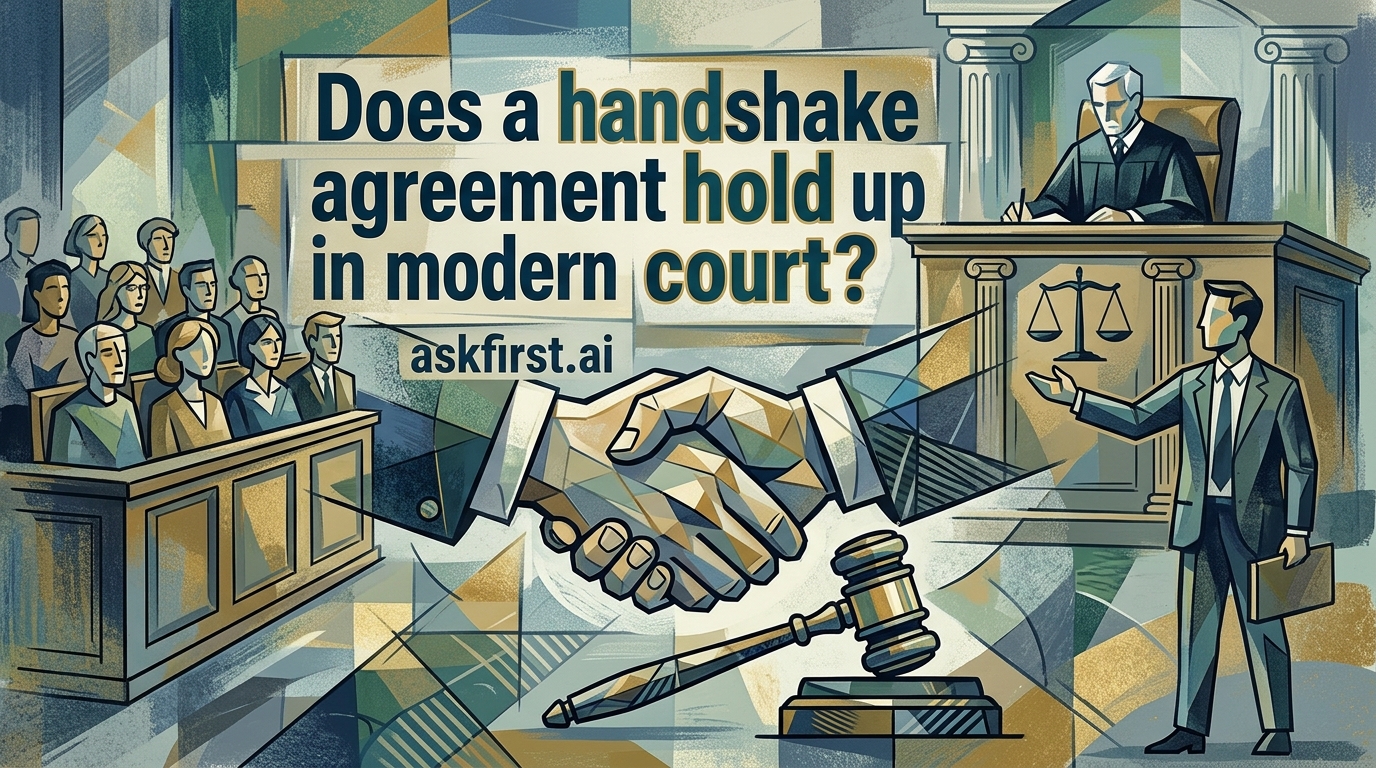
Many individuals operate under the common misconception that an oral contract, often solidified by a handshake, is legally meaningless. In reality, most jurisdictions recognize oral agreements as valid and enforceable contracts, provided they meet the fundamental requirements of contract law. A handshake is not a magic legal wand, but it serves as a symbolic act confirming mutual intent to be bound by the terms discussed.
The Anatomy of an Enforceable Oral Contract
To be considered a legally binding contract in a court of law, specific elements must be present regardless of whether the agreement was written on a napkin or merely spoken. These essential pillars include:
- Offer: One party must propose a clear and specific set of terms.
- Acceptance: The other party must agree to those terms unequivocally.
- Consideration: This is the exchange of value. Each party must provide something of value, such as money, services, or a promise to perform an action.
- Mutuality of Obligation: Both parties must understand and agree to the essential terms of the deal, creating a meeting of the minds.
The Practical Burden of Proof
While an oral agreement is legally binding in theory, the primary challenge lies in the courtroom. Without a written document, proving the existence and specific terms of the deal becomes a "he-said, she-said" scenario. Courts rely heavily on evidentiary support to establish that a contract actually existed. Evidence can take many forms, including:
- Performance Evidence: Actions taken by either party that align with the terms of the agreement, such as partial payments or delivery of goods.
- Correspondence: Emails, text messages, or voicemails that reference the agreement can serve as critical evidence.
- Witness Testimony: Third parties who overheard the conversation or were present during the deal-making process can provide essential support.
- Industry Customs: If an industry typically relies on oral agreements for standard practices, courts may factor this context into their deliberations.
When the Law Requires a Writing: The Statute of Frauds
Despite the general validity of oral contracts, specific types of agreements are legally required to be in writing under the "Statute of Frauds." If an agreement falls into one of these categories, a handshake deal will likely be found unenforceable in court. Common examples include:
- Real estate transactions or sales of interest in land.
- Contracts that cannot be performed within one year.
- Promises to pay the debt of another person (suretyships).
- Contracts for the sale of goods over a certain monetary threshold, often defined by the Uniform Commercial Code (UCC) in the United States.
In conclusion, while the law does not strictly forbid handshake agreements, reliance on them creates significant litigation risks. A written contract remains the superior method for ensuring clarity, preventing misunderstandings, and providing an ironclad foundation for legal enforcement should a dispute arise.