The Ancient Origins of the Modern Corporation: Beyond the Roman Myth
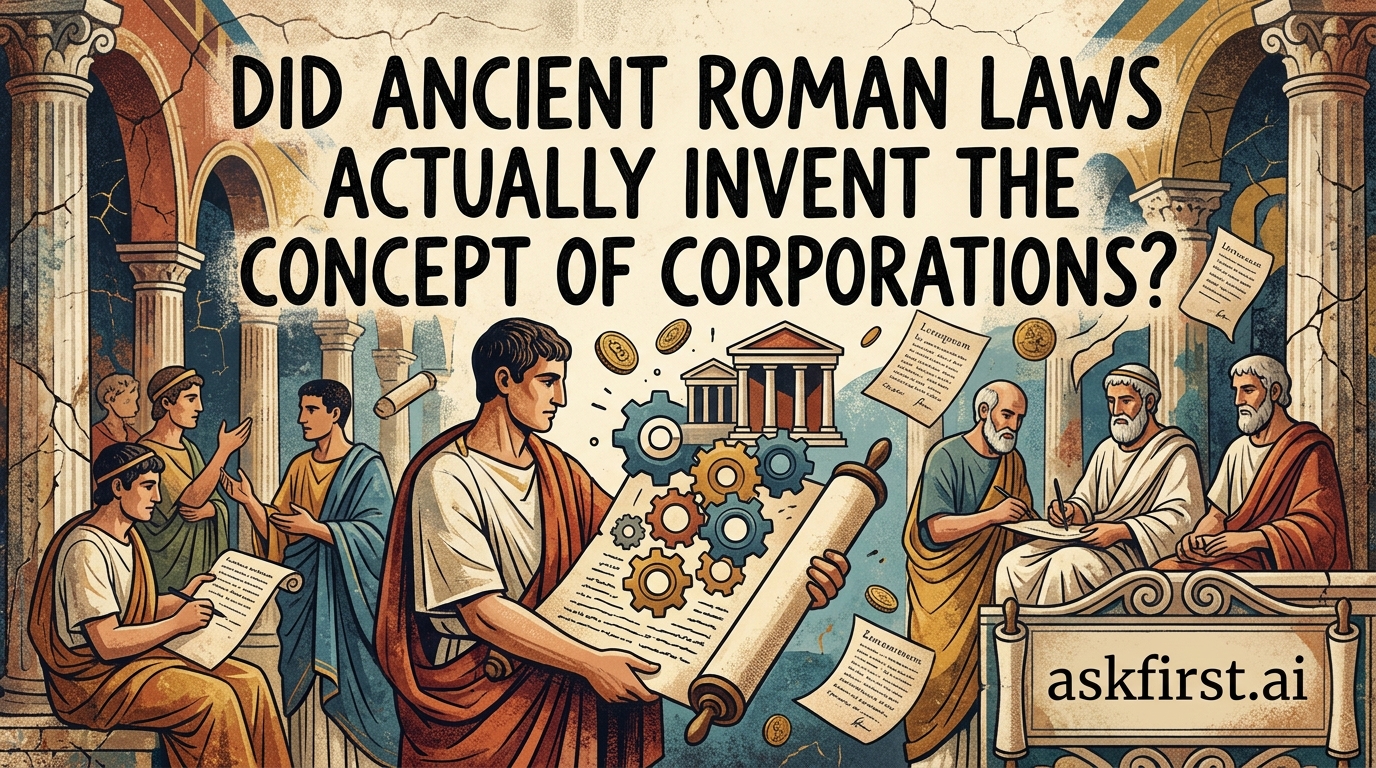
Many historians and legal scholars argue that the seed of the modern corporation was sown in the soil of Ancient Rome. However, the truth is a fascinating blend of institutional evolution rather than a single invention. While the Romans did not create "corporations" as we understand them today in the context of the New York Stock Exchange, they developed the legal architecture that made the concept possible.
The Roman 'Universitas' and 'Collegium'
At the core of Roman law lay the persona ficta, or legal personhood. Roman jurists recognized the universitas—a collective entity that functioned independently of its individual members. These included the collegia (associations of artisans or priests) and public entities like municipalities. A collegium could own property, sign contracts, and sue or be sued. Crucially, the debts of a collegium were not the debts of the individual members. This separation of "firm" assets from "personal" assets is the bedrock of modern corporate law.
The Societates Publicanorum
Perhaps the closest parallel to a modern business entity was the societates publicanorum. These were groups of contractors who bid for massive government projects, such as tax farming or road construction. To pool capital effectively, these entities issued "shares" called partes. These shares could be traded and traded with relative liquidity in the markets of the Roman Forum. Investors recognized that if a contract failed, their liability was generally limited to the amount they had invested in the partes, preventing personal bankruptcy from devastating their families.
Why They Are Not Modern Corporations
Despite these similarities, several distinct differences prevent us from calling them modern corporations:
- Lack of Perpetual Succession: While some public associations were durable, most Roman societates were fundamentally partnerships that dissolved upon the death or withdrawal of a partner. They lacked the "immortality" of modern entities that exist indefinitely regardless of who owns them.
- Regulatory Frameworks: Modern corporations rely on state-granted charters and complex bureaucratic oversight. Roman entities were often more flexible, organic agreements between private citizens or between citizens and the state.
- The Governance Gap: The complex hierarchy of CEOs, Boards of Directors, and fiduciary duties to minority shareholders was not formalized in Roman statutes. While they understood the agent-principal relationship, they did not have the statutory machinery that governs modern corporate governance.
Conclusion: An Evolutionary Legacy
Ancient Rome provided the "proof of concept" for legal personhood and limited liability. When medieval lawyers and merchants sought ways to stabilize long-distance trade, they looked to Roman legal texts—the Corpus Juris Civilis—for inspiration. Thus, while Rome did not invent the modern corporation, they provided the essential legal DNA that allowed it to eventually grow into the dominant economic structure of the modern world.