The Aura of the Immaterial
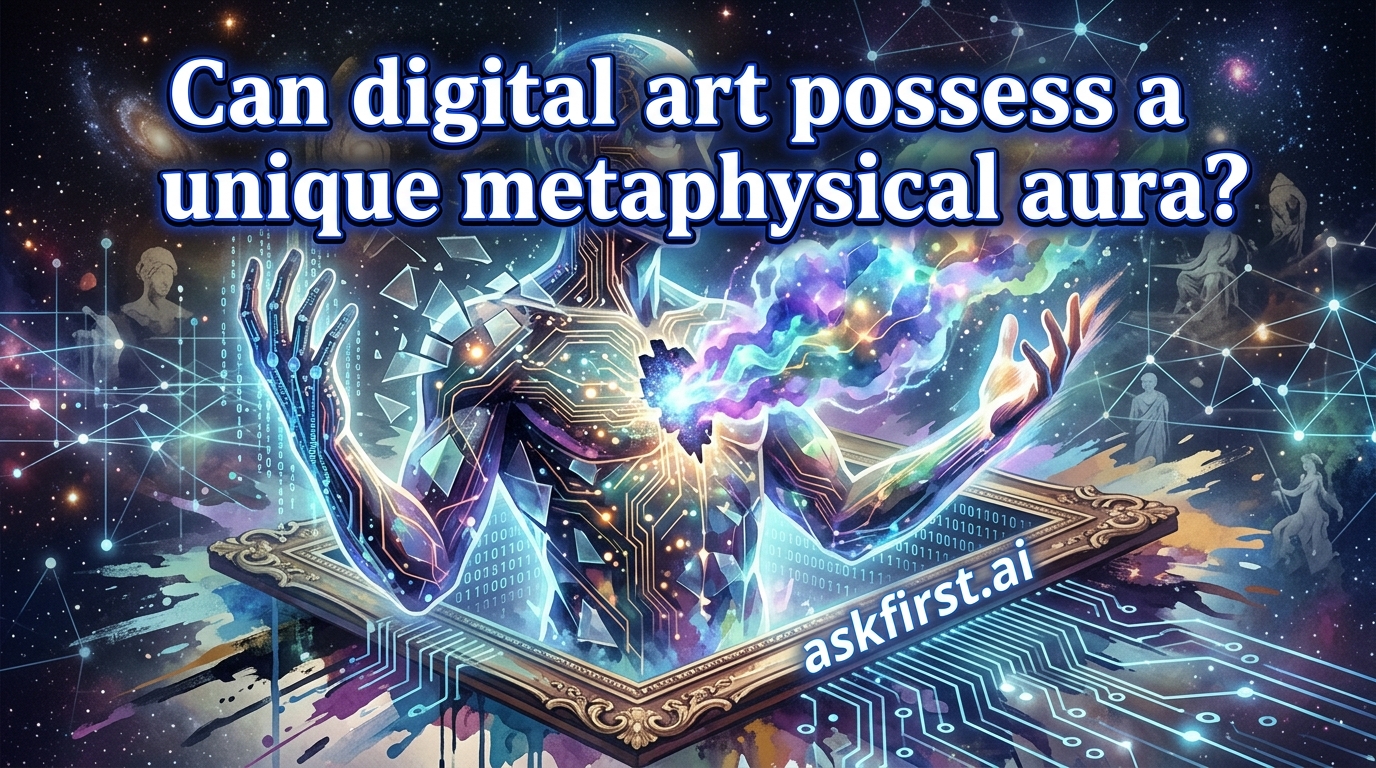
For decades, Walter Benjamin’s seminal theory regarding the 'aura' of an artwork—defined by its unique existence in time and space—served as a barrier for digital creation. Traditionally, art was valued through its physical scarcity and original provenance. However, the emergence of advanced digital ecosystems suggests that the metaphysical aura of a work is not tethered to physical atoms, but rather to the intentionality of the creator and the collective consensus of the audience.
Rethinking Digital Scarcity
The perception of 'uniqueness' has evolved from material fragility to cryptographic truth. Through blockchain technology and distributed ledger verification, a digital file can be imbued with a verifiable 'origin.' This does not change the pixel structure, but it alters the social and ontological status of the object. When an artist imbues a digital work with a specific narrative or proof of history, the artwork begins to occupy a 'psychological space' that mimics the traditional aura. It becomes an entity with a lineage rather than just a duplicable stream of binary data.
The Role of Viewer Perception
Metaphysical value is inherently subjective. If a community assigns deep meaning, history, and status to a piece of digital art, the object gains a spiritual weight. This phenomenon is closely related to the 'Danto definition' of art, where a work exists as art only within an 'artworld' of institutional and historical discourse. Digital art, when recognized by this collective consciousness, transcends its technical medium. It becomes an experiential artifact that carries the weight of the moment in which it was created, shared, and valued.
- Intentionality: The artist’s decision to limit access or encode meaning into the metadata functions as a modern 'brushstroke.'
- Consensus: The aura is a social construct; as more people agree upon the significance of a piece, its metaphysical resonance grows.
- Permanence: Digital archives that persist across decades foster a sense of history that eventually gives rise to the classic aura described by art historians.
A New Ontology of Art
In the coming years, the distinction between 'digital' and 'physical' will likely fade into irrelevance. Human beings possess a unique capacity to project significance onto symbolic objects, regardless of their substrate. Whether carved in marble or rendered in code, the 'aura' is ultimately a mirror of human curiosity and value-attribution. Digital art possesses a unique metaphysical aura because it serves as a vessel for the creator's consciousness, projected through a medium that is immune to physical decay but highly sensitive to cultural resonance. The aura is not in the material, but in the enduring dialogue between the creator and the observer.