The Origins of Boxing: Tracing the First Recorded Matches
Boxing, or pugilism, is one of the oldest combat sports in human history. While modern boxing is defined by the Marquess of Queensberry Rules, the roots of the sport stretch back to ancient civilizations. Determining the "first" match depends on how one defines the sport—whether as bare-knuckle fighting, organized competition, or modern regulated boxing.
Ancient Origins: The Sumerian and Egyptian Roots
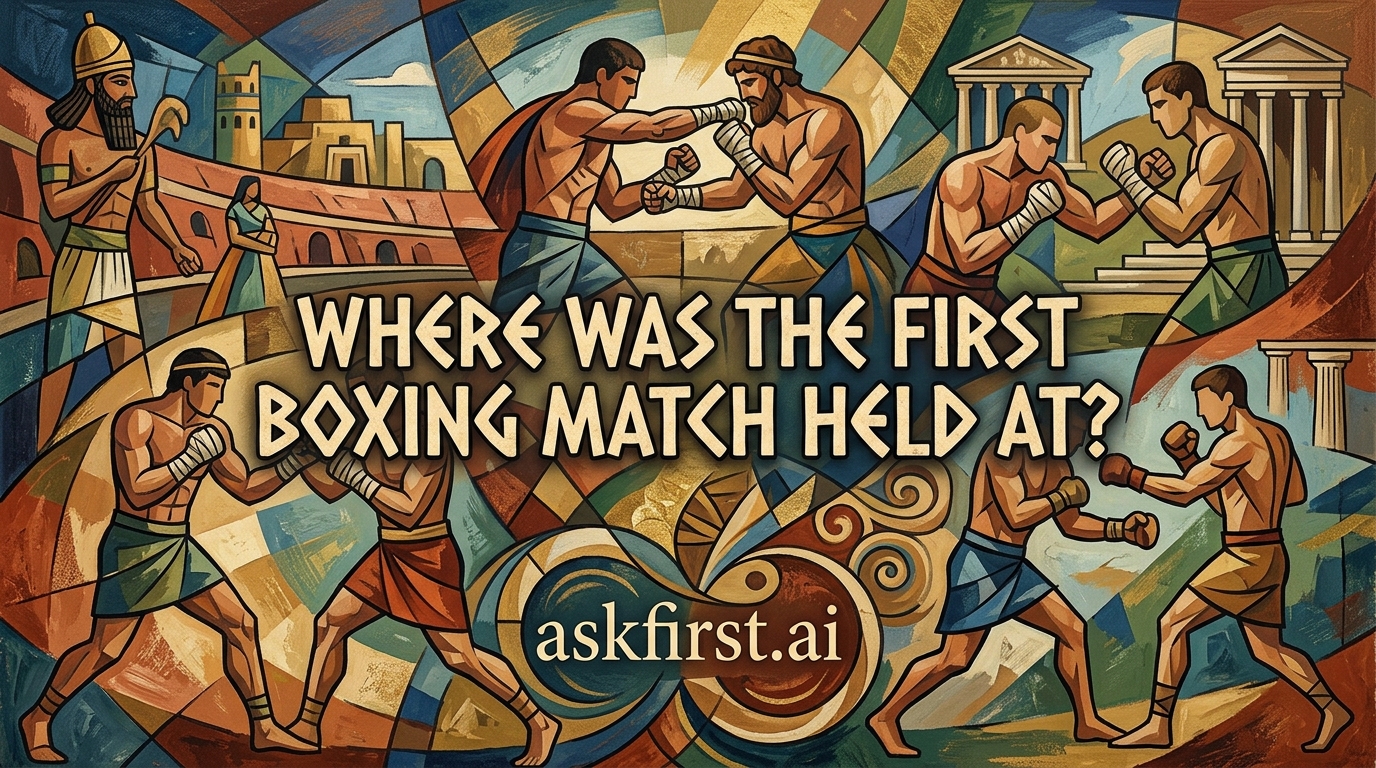
The earliest archaeological evidence of boxing dates back to the third millennium BCE. Relief carvings found in Sumerian excavations (modern-day Iraq) depict two individuals facing each other with clenched fists. Further evidence exists from Ancient Egypt (circa 2000 BCE), where wall reliefs in the tomb of Beni Hasan show men sparring with spectators watching. These early forms were likely unrefined, serving as both military training and ritualistic spectacle.
The First Documented Olympic Match
The first recorded instance of boxing as an organized, rule-based sport occurred in Ancient Greece. Boxing was introduced to the Ancient Olympic Games in 688 BCE during the 23rd Olympiad. According to historical records kept by Pausanias, Onomastus of Smyrna was crowned the first Olympic boxing champion.
In these games, there were no weight classes, no rounds, and no time limits. Fighters wore leather thongs called himantes around their hands and wrists to protect their knuckles, though these were not padded. The fight continued until one participant was knocked unconscious, raised a finger in surrender, or was unable to continue.
The Evolution of Modern Boxing
The transition from ancient brutality to the regulated sport we recognize today occurred in England during the 18th century.
1. The Bare-Knuckle Era (London Prize Ring)
In the early 1700s, James Figg, the first recognized English bare-knuckle champion, opened a boxing academy in London. The first recorded match under the "London Prize Ring Rules" took place in 1743, established by Jack Broughton. These rules were created to protect fighters from fatalities and introduced the concept of a "ring" and a 30-second count if a fighter fell.
2. The Marquess of Queensberry Rules
Modern boxing truly began in 1867 with the introduction of the Marquess of Queensberry Rules. These rules mandated the use of padded gloves, three-minute rounds, and a ten-second count for knockdowns. This shifted the focus from pure endurance and grappling to speed, technique, and tactical striking.
Pros and Cons of Modern Boxing
- Pros: Boxing is a world-class cardiovascular workout, promotes extreme physical discipline, and provides a structured environment for self-defense training.
- Cons: The sport carries high risks of concussions, chronic traumatic encephalopathy (CTE), and long-term joint or ocular damage.
Future Trends
The future of boxing is increasingly driven by technology. Wearable sensors in gloves monitor impact force, while AI-integrated training tools allow boxers to analyze their footwork and punch speed in real-time. Despite the rise of Mixed Martial Arts (MMA), boxing remains a premier global sport, with massive pay-per-view events continuing to draw millions of viewers, proving that the ancient desire for the "sweet science" of pugilism remains as potent today as it was in 688 BCE.