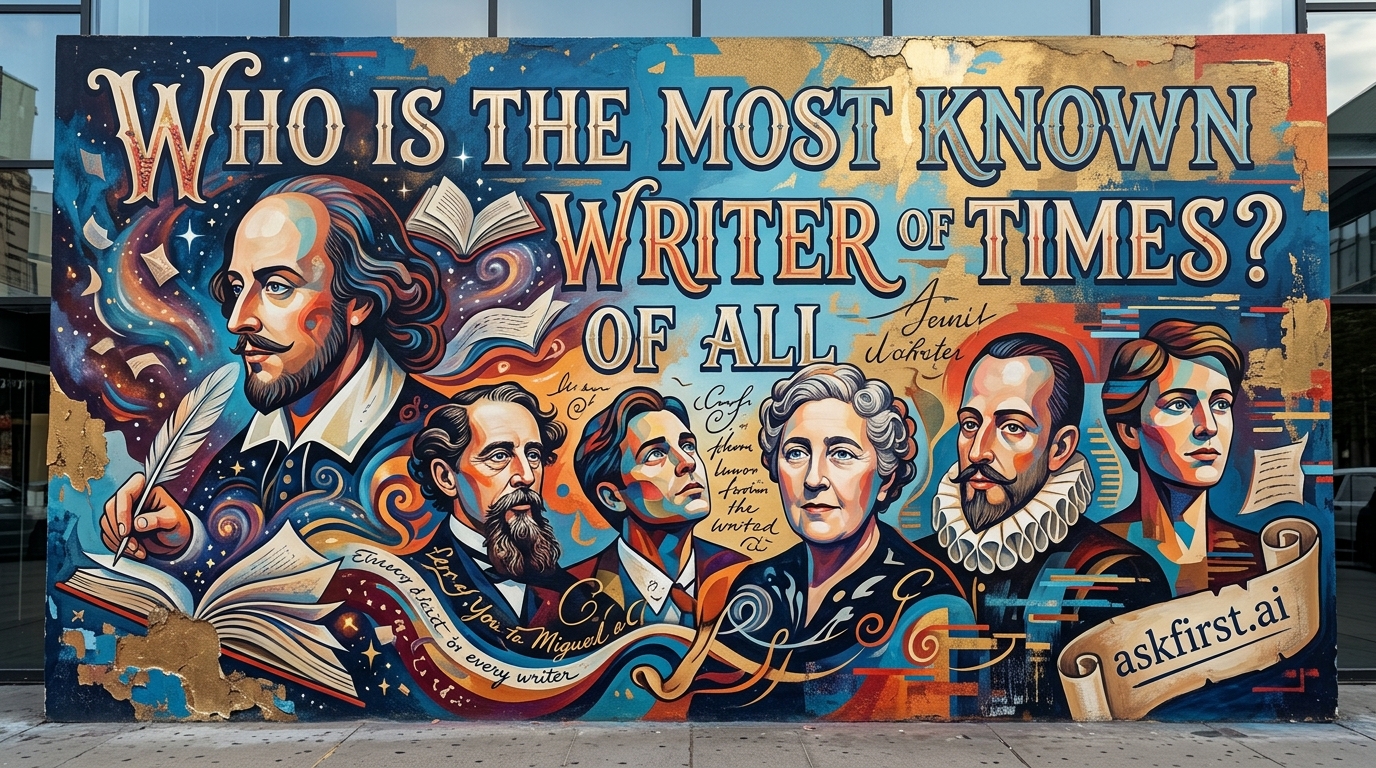
The Most Renowned Writer in History: William Shakespeare
When evaluating the most influential and widely recognized writer in human history, the consensus among literary scholars, historians, and global educational systems points decisively to William Shakespeare (1564–1616). Often referred to as the "Bard of Avon," Shakespeare’s body of work has transcended his Elizabethan origins to become a universal cornerstone of the English language and global culture.
Historical Significance and Reach
Shakespeare’s influence is unparalleled due to the sheer longevity and adaptability of his canon, which includes 39 plays, 154 sonnets, and two long narrative poems. Since the 17th century, his works have been translated into every major living language, and they are performed more frequently than those of any other playwright. His ability to capture the complexities of the human condition—ambition, jealousy, love, betrayal, and existential dread—has rendered his characters archetypal. Figures like Hamlet, Macbeth, and Romeo have become shorthand for specific human behaviors across diverse cultures.
Linguistic Impact
Shakespeare is credited with inventing or popularizing an estimated 1,700 words in the English language. By shifting nouns into verbs, changing verbs into adjectives, and connecting words never before paired, he expanded the expressive range of English. Phrases such as "break the ice," "heart of gold," and "wild-goose chase" are so integrated into modern vernacular that their origins are often forgotten. This linguistic legacy ensures that his impact is felt in every conversation, not just in academic or theatrical circles.
Practical Guide: Why Shakespeare Remains Relevant
To understand why he remains the "most known," one must look at how his works are consumed today:
- Educational Standard: Shakespeare is a mandatory component of secondary and tertiary education in most English-speaking nations, ensuring a constant stream of new readers.
- Cinematic Adaptation: From Kurosawa’s Ran (based on King Lear) to modern teen dramas like 10 Things I Hate About You (based on The Taming of the Shrew), his plots remain the gold standard for dramatic structure.
- Thematic Universality: His plays are frequently re-contextualized into contemporary settings (political, futuristic, or dystopian), proving that his observations on power and morality are timeless.
Pros and Cons of His Dominance
- Pros: His works provide a foundational understanding of Western literature; they foster deep critical thinking and provide a common cultural vocabulary.
- Cons: Critics argue that the "Shakespearean canon" can overshadow diverse, non-Western, or contemporary voices in curricula, potentially limiting the scope of literary exploration for students.
Future Trends
As we move further into the 21st century, Shakespeare’s work is being digitized and gamified. Artificial Intelligence is currently being used to analyze his meter and syntax, while virtual reality performances are bringing the Globe Theatre to global audiences. While critics may emerge to challenge his status, the infrastructure supporting his work—from the Royal Shakespeare Company to global literacy programs—ensures that William Shakespeare will remain the most recognized writer for centuries to come. His legacy is not merely one of literature, but of the very architecture of human storytelling.