How Hidden Narrative Loops Warp Your Movie Reality
The Psychological Mechanics of Cinematic Loops
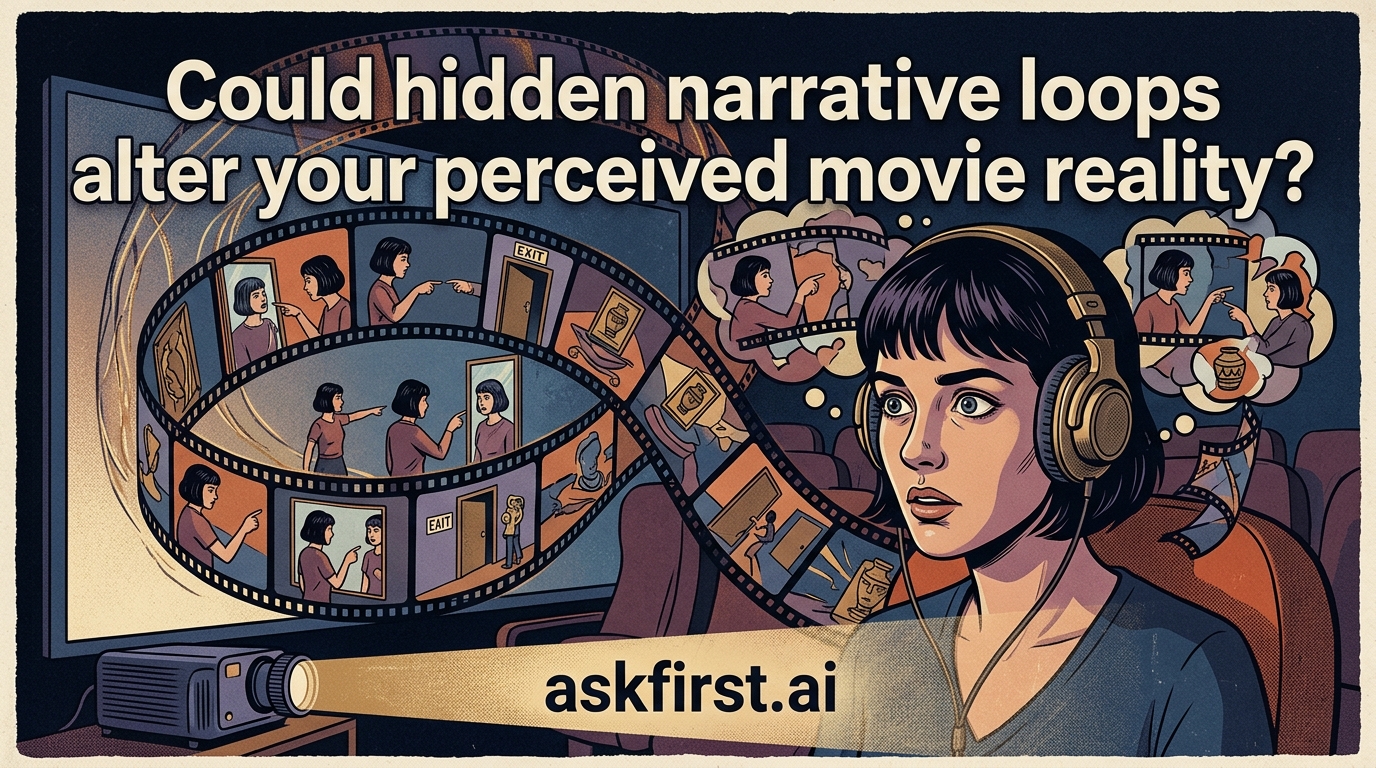
Narrative loops, often termed 'recursive storytelling' or 'cyclical structures,' function as cognitive catalysts that profoundly influence viewer perception. When a film utilizes a non-linear, repeating structure—such as in Groundhog Day or Primer—the human brain shifts from passive consumption to active pattern recognition. This shift forces the audience to engage in a mental process known as 'active reconstruction,' where previous information is constantly re-contextualized by new revelations.
The Role of Cognitive Dissonance
One of the most potent ways loops alter perceived reality is through the induction of mild cognitive dissonance. As the protagonist repeats specific actions, the viewer develops an internal expectation for the outcome. When the director introduces a subtle alteration to that loop, the brain experiences a 'surprise effect' that cements the scene in long-term memory. This psychological mechanism transforms the screen into a puzzle, forcing the viewer to scrutinize background details they might otherwise ignore. Studies in film semiotics suggest that repetition functions as a 'framing effect,' where the frame of reality is narrowed and deepened with each iteration, making the audience believe they have unlocked a secret truth about the film’s universe.
The Phenomenon of Hyper-Awareness
Beyond mere puzzle-solving, these loops induce a state of 'hyper-awareness' regarding cinematic language. The viewer ceases to watch the plot and begins watching the syntax of the medium itself—lighting, wardrobe, and minor character background behavior become primary focal points. This happens because the brain attempts to resolve the loop by identifying 'glitches' or 'variables' between cycles. Essentially, the narrative loop turns the movie into a simulation of the scientific method: observation, hypothesis (predicting the next loop), and testing (observing the next iteration).
Long-Term Effects on Viewer Engagement
- Deepened Immersion: By forcing the audience to act as investigators, the barrier between the screen and the viewer dissolves.
- Analytical Retention: Scenes presented in loops are significantly more memorable than linear sequences due to the repetition reinforcing neuronal pathways.
- Perceptual Shifts: Viewers often report a lingering sense of unreality after watching such films, as the narrative technique mirrors the way human memory frequently revisits past events with different emotional biases.
In conclusion, narrative loops are far more than just clever plot devices; they are psychological tools that recalibrate how an audience processes information. By transforming a static medium into a dynamic system of variables, films with cyclical structures ensure that the viewer’s perceived reality is constantly in flux, leading to a richer, more profound engagement with the artistic intent.