The Monochrome Origins: Why Cinema Began Without Color
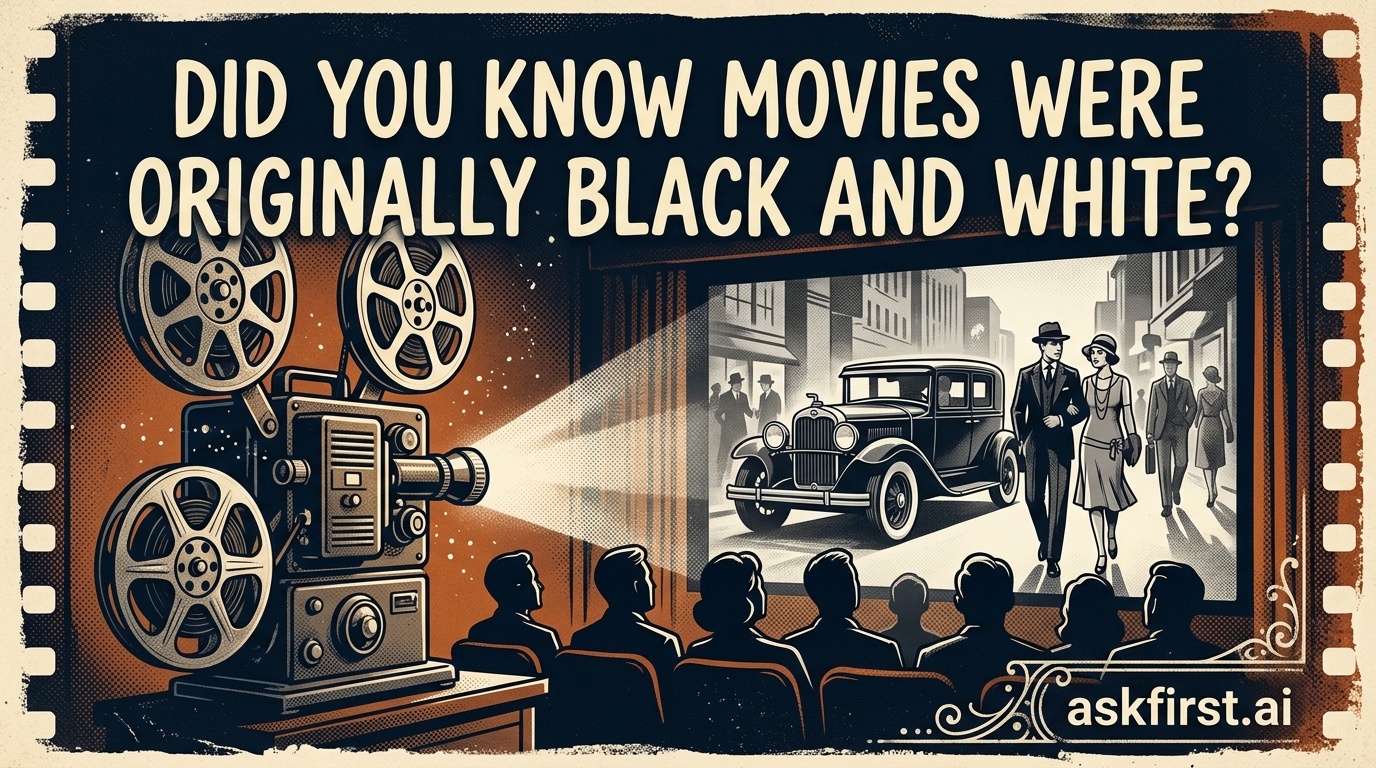
When modern audiences think of early cinema, the iconic flickering images of the silent era often appear in shades of grayscale. While it is a common belief that filmmakers simply lacked the technology for color, the reality of early motion pictures is far more complex, artistic, and inventive. The transition from black and white to color was not merely a mechanical upgrade; it was an artistic evolution.
The Technical Limitations of Early Film
The fundamental reason for the prevalence of black and white film in the late 19th and early 20th centuries was the chemical composition of early film stock. Early photography relied on silver halide crystals, which were naturally sensitive to light but incapable of distinguishing between different wavelengths to reproduce colors. The process required creating a negative and then printing that onto positive stock, a workflow that naturally resulted in high-contrast monochromatic images.
Ingenuity Through Hand-Painting
Despite these technical barriers, the drive for color was present from the very beginning. Filmmakers such as Georges Méliès, famous for his pioneering work in special effects, recognized the need for visual flair. Between 1897 and 1920, studios employed armies of workers to hand-paint individual frames of film. Each worker was responsible for a specific color on a frame, repeating the process for thousands of frames per reel. This painstaking labor resulted in vibrant, surreal movies like A Trip to the Moon. These hand-colored prints were the first true attempts to mimic the spectrum of human vision.
The Development of Tinting and Toning
Before chemical color photography became standardized, labs utilized tinting and toning techniques. Tinting involved dipping the film stock into dye to color the lighter areas, while toning replaced the silver in the image with metallic salts to color the darker parts. This was not always done for realism. Instead, directors used color to denote time of day or mood. Blue tinting often signaled night scenes, while sepia or amber tones suggested indoor settings or warmth. This semiotic use of color allowed audiences to follow narrative shifts without dialogue, bridging the gap between silent imagery and emotional resonance.
The Technicolor Revolution
True full-color reproduction did not become industry standard until the advent of the three-strip Technicolor process in the 1930s. This complex system used a beam-splitting prism to record the three primary colors onto three separate black-and-white film strips simultaneously. When combined, these produced a stunning, saturated palette that redefined Hollywood. Films like The Wizard of Oz (1939) used this contrast—starting in sepia and transitioning into vibrant Technicolor—to create a visceral emotional experience that effectively marked the end of the monochrome era as the dominant aesthetic for commercial blockbusters. While color eventually won, the legacy of monochrome lives on as a stylistic choice to evoke nostalgia, focus on lighting, and emphasize raw emotional depth.