Unveiling Renaissance Mysteries: Hidden Codes in Masterpieces
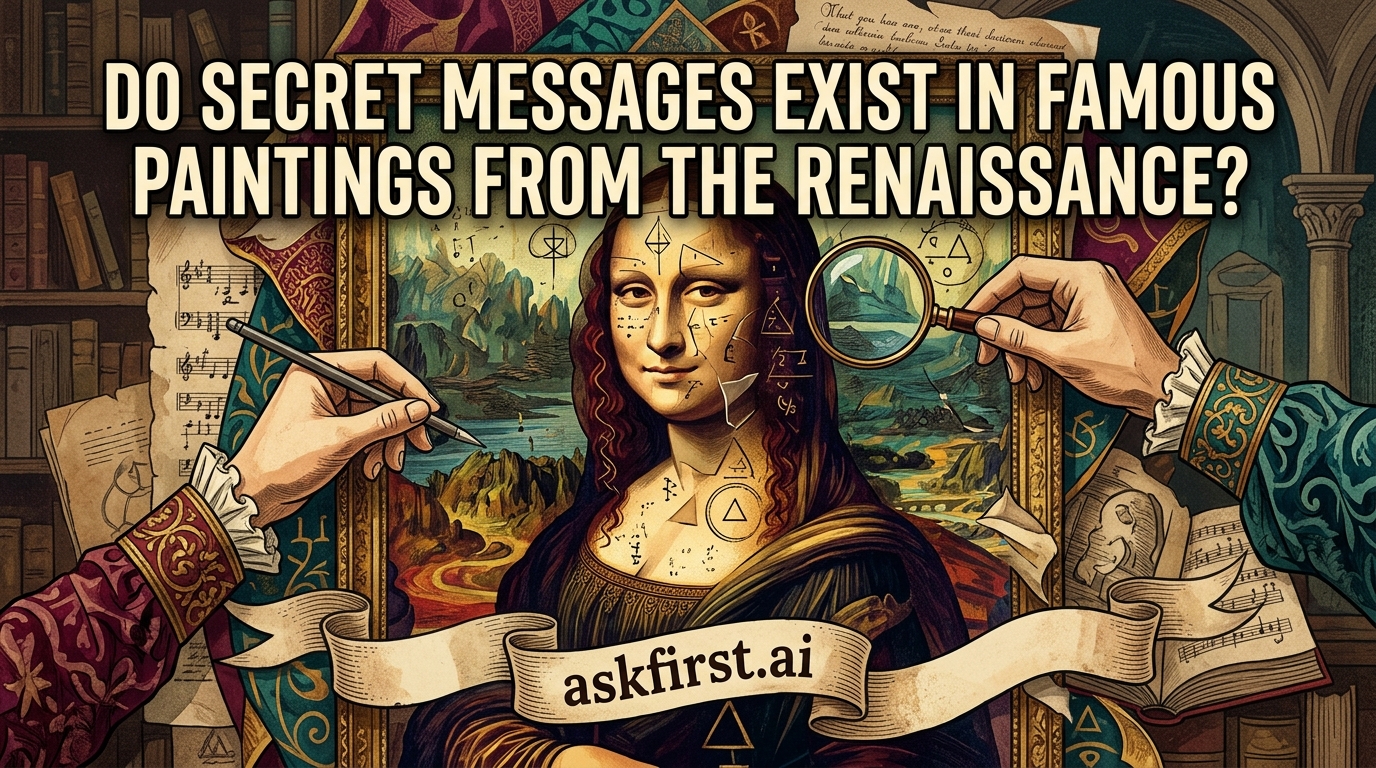
For centuries, art historians, cryptographers, and curious observers have peered into the depths of Renaissance masterpieces, searching for more than just aesthetic beauty. The era, defined by a revival of classical knowledge, alchemy, and humanism, was ripe with intellectual subversion. Artists were not mere painters; they were polymaths who often embedded layers of meaning accessible only to those with the right intellectual keys.
The Anatomy of Renaissance Hidden Symbols
Renaissance artists frequently employed visual allegory and iconology to communicate subversive ideas, political dissent, or personal philosophies that would have been censored if expressed overtly. This practice of encoding messages served several purposes:
- Protecting Intellectual Freedom: Philosophers and artists associated with the Neoplatonic movement often camouflaged occult or non-traditional religious beliefs within conventional biblical narratives.
- Client Agendas: Patrons often requested personalized symbols or allegories that showcased their lineage, virtues, or hidden aspirations.
- Professional "Easter Eggs": Many masters left behind self-portraits or signatures in obscure places as a testament to their identity and intellectual stature.
Famous Examples of Alleged Decoding
One of the most famous examples of potential hidden meaning is Sandro Botticelli’s Primavera. Rather than a simple celebration of spring, many scholars suggest it functions as a visual representation of Neoplatonic ideals. The figures are thought to represent the transformation of the human soul through divine love, an interpretation far removed from the work’s purely decorative appearance.
Similarly, Leonardo da Vinci’s The Last Supper has been a playground for speculation for decades. Beyond the artistic brilliance, observers have pointed to the placement of hands, the musical notation etched into bread rolls, and the distinct absence of the traditional halo. While many popular conspiracy theories remain unproven, the intentionality behind Leonardo’s precise geometry suggests that every placement of a hand or object was calculated to convey a narrative beyond the standard theological framework.
The Role of Anamorphosis and Perspective
Perhaps the most concrete evidence of "hidden" content is the use of anamorphosis—a distorted projection that requires the viewer to occupy a specific vantage point or use a reflective device to see the image clearly. Hans Holbein the Younger’s The Ambassadors (1533) serves as the ultimate proof. A bizarre, elongated shape sits at the base of the painting; when viewed from a sharp angle, it reveals itself as a human skull. This technique forced viewers to rethink the entire painting, transitioning from a display of worldly riches to a meditation on mortality (memento mori).
Scientific vs. Speculative Approaches
It is vital to distinguish between rigorous art historical analysis and modern projection. Historians look for primary sources—letters, contemporary diaries, and the prevailing intellectual climate of the artist’s court—to substantiate claims. Speculative theories, while fascinating, often lack this contextual grounding. Ultimately, the Renaissance was a period where art and knowledge were inseparable, ensuring that even if a "secret" is not there, the complexity of the thought behind the brushwork is truly profound.