The Hidden Science of Hollywood Hypnosis: Mastering the Trailer
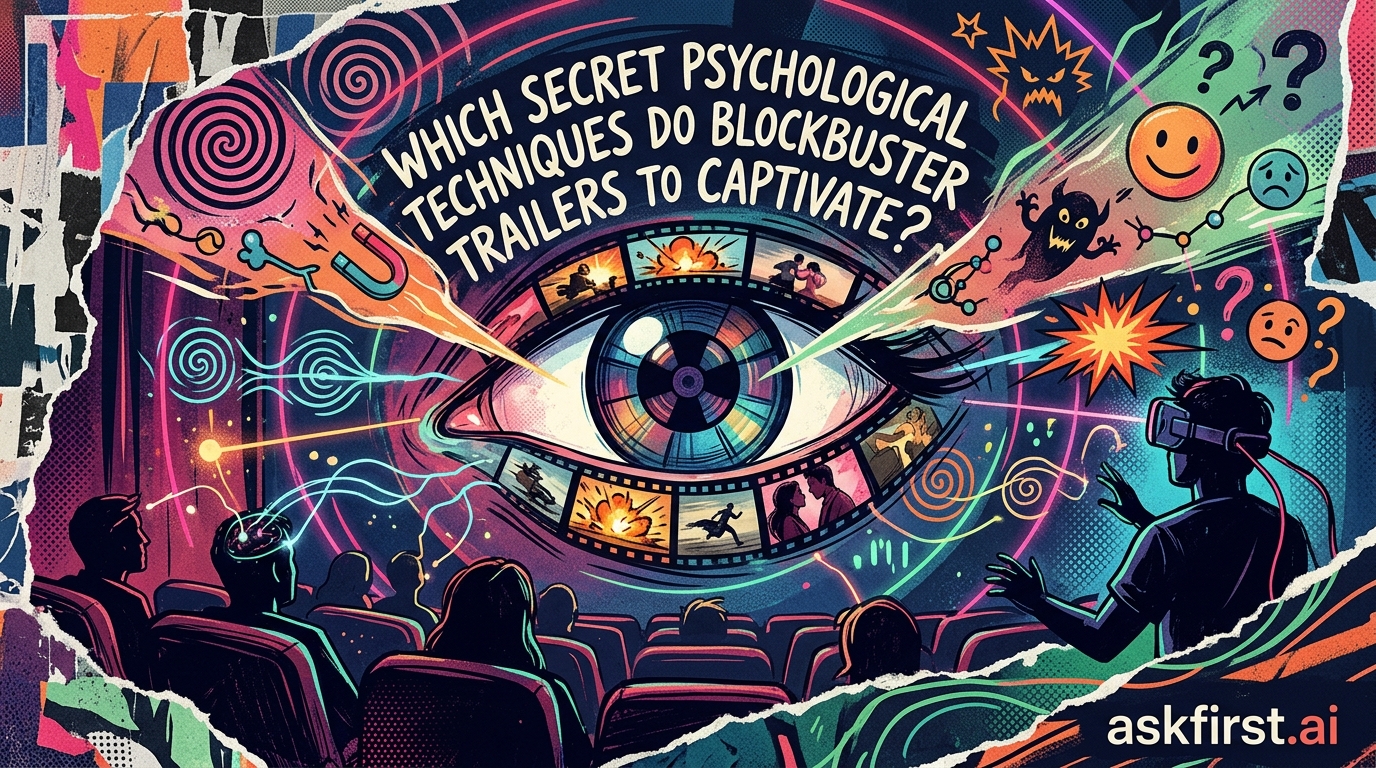
Movie trailers act as psychological precision tools designed to bypass rational decision-making and trigger immediate emotional responses. By leveraging sophisticated neurological shortcuts, editors turn two minutes of footage into an irresistible siren call. Understanding these techniques reveals the mechanics behind the hype.
The Power of the Curiosity Gap
At the core of every trailer is the curiosity gap. According to George Loewenstein’s information gap theory, when individuals realize there is a disparity between what they know and what they want to know, they feel a sense of deprivation. Trailers introduce a high-stakes narrative without providing the resolution. By showing fragments of a climax or a cryptic character conflict, the trailer creates an "itch" that only watching the full film can scratch. This effectively weaponizes human cognitive dissonance.
Auditory Anchoring and Affective Priming
Sound is arguably the most potent tool in the trailer editor’s arsenal. The industry standard utilizes "braams"—deep, brassy, low-frequency sounds popularized by films like Inception—to signal magnitude and impending doom. These sounds trigger a primal startle response, forcing the brain to pay attention to the screen. Furthermore, editors use auditory rhythmic syncing. When visual cuts align perfectly with percussive beats, the brain perceives higher production quality and increased stakes. This is known as affective priming, where the audio sets an emotional tone—tense, heroic, or melancholic—before the visual content even registers the plot.
The Narrative Truncation Technique
Trailers rely on narrative truncation, the art of removing context to emphasize intensity. A scene of a character crying might be spliced with an explosion in the next frame. Even though these moments are unrelated in the actual movie, the brain creates a false causal connection, interpreting the events as a singular, urgent narrative. This technique manipulates the viewer into believing the film is faster-paced or more chaotic than it actually is, maximizing the perceived entertainment value.
Exploiting Visual Saliency
Visual saliency refers to how specific stimuli stand out from their surroundings. Trailers utilize high-contrast imagery, rapid camera pans, and extreme close-ups to dominate the viewer's field of vision. By cycling through "hero shots"—moments of peak aesthetic beauty or extreme physical action—the trailer guarantees that at least one visual element will resonate with the viewer’s personal interests. This serves as a psychological "hook" that ensures even disinterested viewers find at least one aspect of the film visually compelling.
By layering these psychological triggers, Hollywood creates a sensory feedback loop that makes it nearly impossible to ignore the call to action. Whether through the calculated use of silence or the strategic deployment of a high-intensity score, trailers function as masters of persuasion, ensuring audiences are conditioned to anticipate the experience long before the opening credits roll.