The Myth of Monochrome: Unveiling the Origins of Cinematic Color
There is a deeply embedded cultural myth suggesting that early cinema was exclusively black-and-white until the mid-20th century. However, the history of film technology reveals a far more vibrant reality. The question of whether the first feature-length films utilized color technology yields a fascinating look at the ingenuity of early pioneers who refused to be limited by grayscale limitations.
The True Nature of Early Cinema
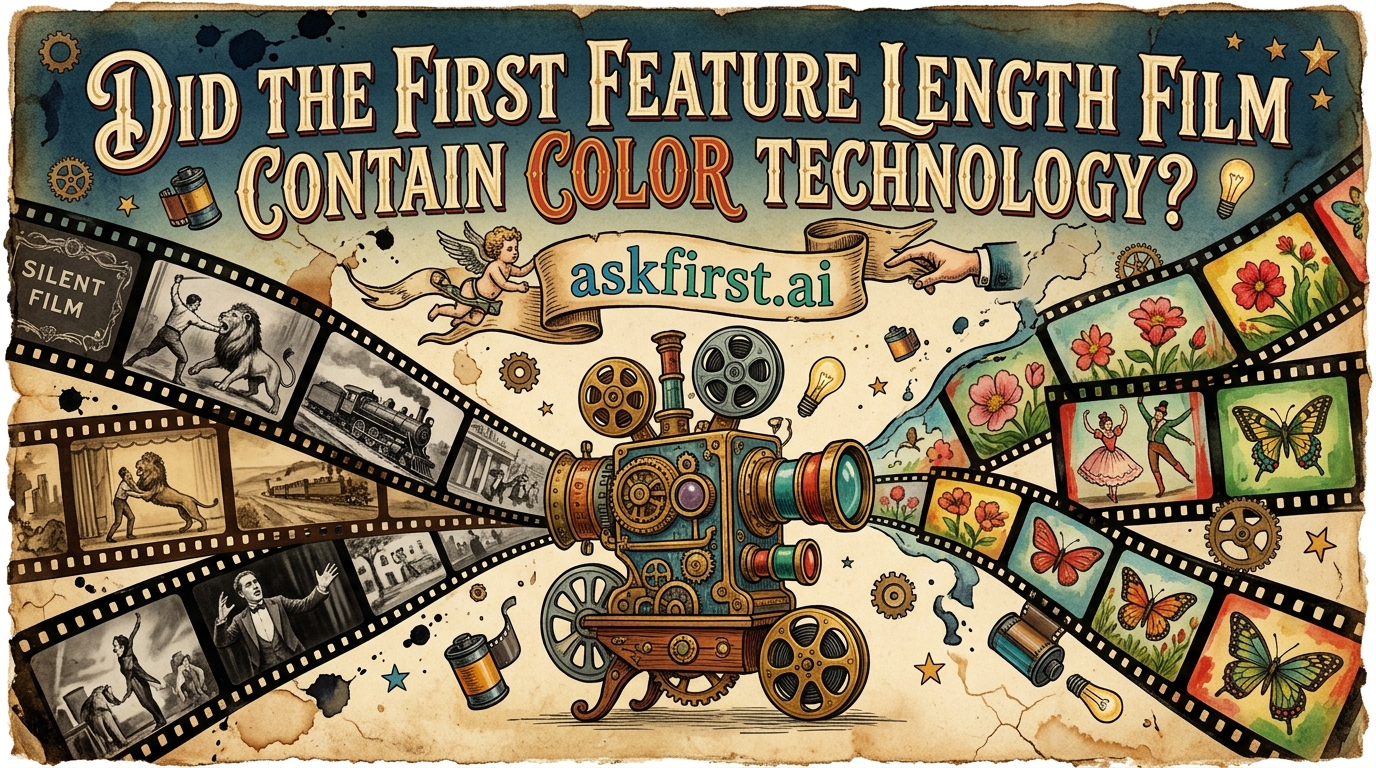
When addressing the evolution of feature-length films, it is crucial to define the technology of the era. The world's first feature-length narrative film, The Story of the Kelly Gang (1906), was captured on standard black-and-white celluloid. Yet, it would be a mistake to assume that audiences of that time viewed it in pure grayscale. Filmmakers of the early 20th century were obsessed with color, leading them to invent a variety of ingenious methods to bring life to the screen.
Hand-Painting and Stenciling
Before chemical color processes were perfected, the industry relied on manual intervention. Hand-coloring, where every individual frame was painted with translucent dyes by laborers—often women working in assembly-line environments—was the standard for high-budget productions. Pathé Frères, a dominant force in early cinema, refined this into the Pathécolor stenciling process. By using precision-cut stencils for different colors, they could mass-produce "color" films that mesmerized audiences globally. Films like The Passion Play (1903) utilized these methods to create visual spectacle.
Tinting and Toning: The Pre-Technicolor Era
Beyond manual painting, projectionists and labs employed chemical treatments to evoke emotion. Tinting involved dyeing the film base, giving a uniform color to the highlights of an entire sequence—blue for night, sepia for interiors, or red for fire. Toning was a more complex chemical process where the silver images themselves were replaced with colored pigments, affecting only the dark areas. These techniques provided a sophisticated visual language that predates the invention of subtractive color film by decades.
The Transition to True Color
It was not until the introduction of the Technicolor Process 4 (Three-Strip) in the 1930s, famously utilized in Becky Sharp (1935) and The Wizard of Oz (1939), that cinema achieved true-to-life, full-spectrum color. While the very first narrative features were technically monochromatic in their raw stock, they were almost never presented as such. The history of early cinema is one of constant, vibrant innovation. Filmmakers did not wait for the perfect invention to arrive; they forced the medium to speak in color through labor-intensive artistry, ensuring that the dream of a colorful silver screen was a reality from the very beginning.