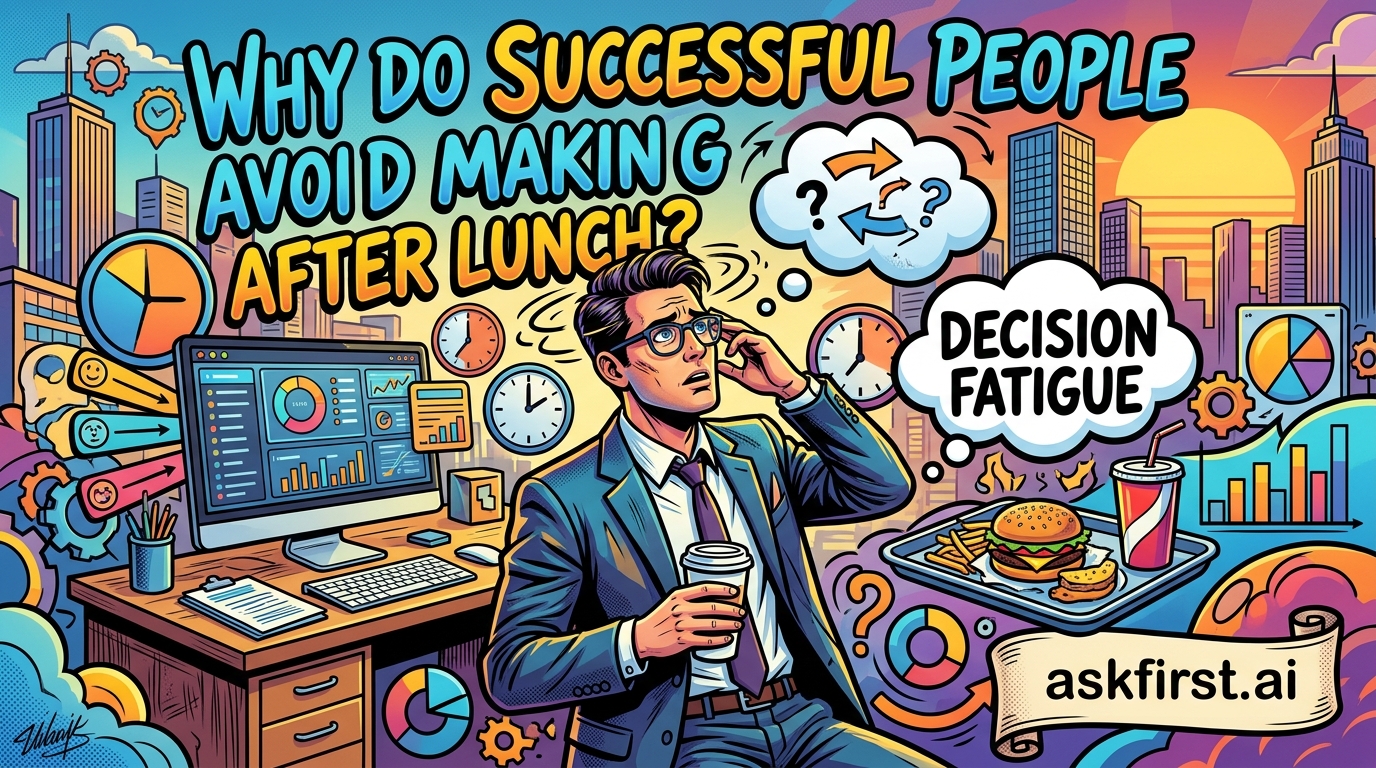
The Science of Decision Fatigue: Why High Achievers Pause After Lunch
Decision fatigue is a psychological phenomenon describing the deteriorating quality of decisions made by an individual after a long session of decision-making. High-performing individuals, from CEOs to elite athletes, often recognize that cognitive resources are finite. When the brain is forced to process complex information and make high-stakes choices continuously, its decision-making "muscle" becomes exhausted. This phenomenon explains why many successful figures intentionally avoid critical tasks immediately following a heavy midday meal.
The Glucose and Cognitive Connection
Biology plays a significant role in this afternoon lull. When a person consumes a large meal, the body directs energy toward digestion. This process often leads to a slight drop in blood glucose levels or a state of metabolic transition, commonly referred to as the "post-lunch dip." While the brain only accounts for about 2% of body weight, it consumes roughly 20% of the body's energy. When metabolic resources are diverted, cognitive performance—specifically executive functions like impulse control, strategic planning, and rational analysis—can temporarily decline.
The Hidden Cost of Small Choices
Every decision, regardless of its importance, extracts a "tax" on the brain's cognitive budget. Whether selecting an outfit, responding to emails, or choosing a lunch menu, these micro-decisions add up. By the time a high achiever reaches the afternoon, they have often burned through a significant portion of their willpower. Making a major corporate or financial decision in this state increases the risk of choosing the "easiest" path—often status quo bias—rather than the optimal one. Studies, including the famous 2011 research on judicial sentencing, suggest that judges are significantly less likely to grant parole after a long morning session compared to immediately after a break.
Strategies for Peak Performance
To mitigate these risks, successful leaders implement structured workflows that protect their most valuable hours:
- Front-loading Critical Work: Tackling complex, high-stakes decisions early in the morning when the brain is freshest.
- The Power Nap or Reset: Many incorporate short bouts of rest or non-cognitive activities after lunch to facilitate mental recovery.
- Simplifying Inputs: Removing minor decisions from the daily routine, such as adhering to a uniform wardrobe or a standardized lunch, to preserve energy for impactful choices.
By treating mental energy as a non-renewable daily currency, top performers avoid making critical decisions during periods of known physiological fatigue. Recognizing this vulnerability allows them to optimize their schedule, ensuring that pivotal judgments are made when cognitive clarity is at its zenith.