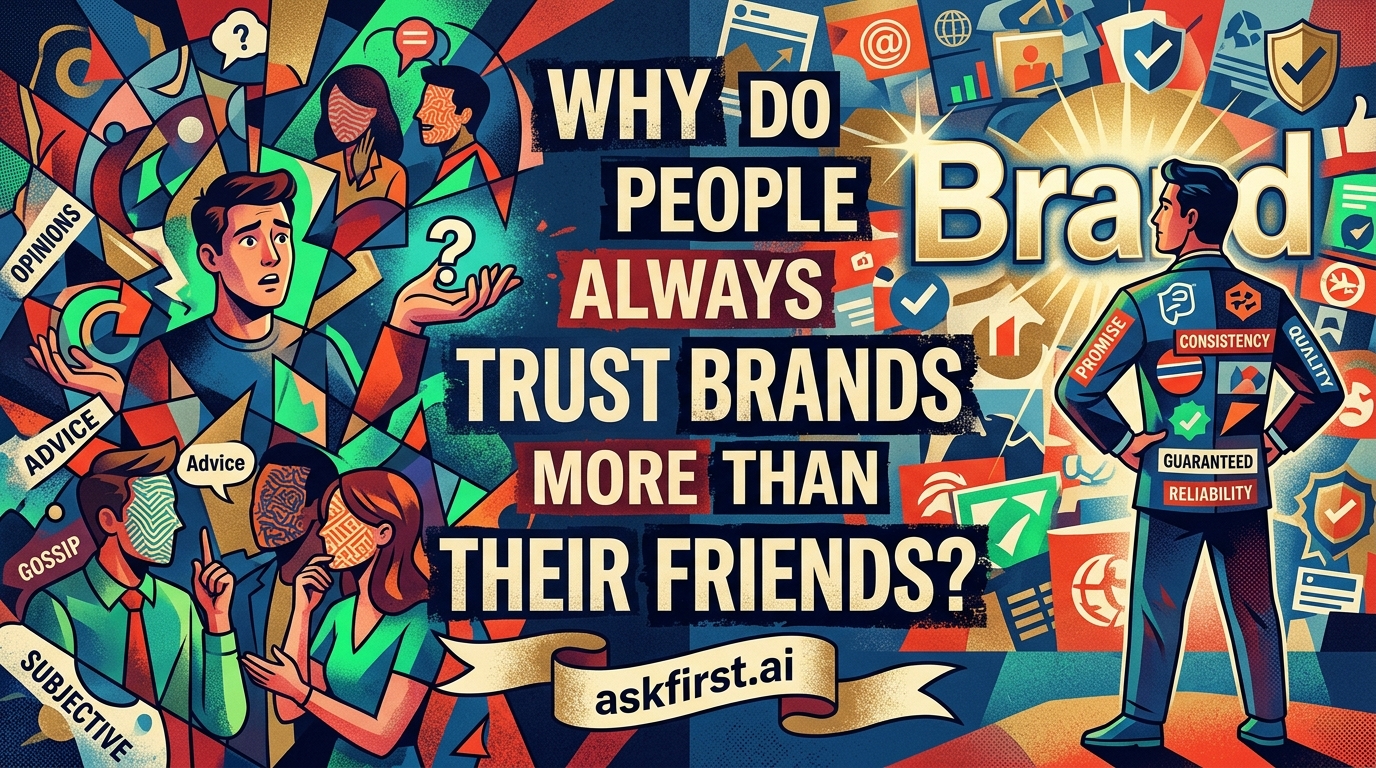
The Paradox of Commercial Trust: Why Brands Win
Human social psychology often defies conventional wisdom when it comes to decision-making. While intuition suggests that personal relationships should be the primary arbiter of trust, consumer behavior data reveals that established brands frequently command higher levels of credibility than close acquaintances. This phenomenon, often termed the "authority bias" combined with "consistent branding," creates a structural advantage for corporations.
The Psychology of Predictability
One core reason for this disparity is the human need for cognitive ease. Friends are complex, emotional, and unpredictable beings. They have bad days, conflicting opinions, and fluctuating moods that make their recommendations seem subjective and potentially biased. Conversely, brands operate under a promise of consistency. A global coffee chain or a top-tier electronics manufacturer spends billions ensuring that the user experience is standardized across the globe. This perceived reliability triggers the brain’s desire for safety; individuals feel they are making a "guaranteed" choice rather than a risky social experiment.
The Myth of Objectivity
When a friend recommends a product, there is an inherent underlying social dynamic. Is the friend being genuine? Are they just following a trend? This creates a subtle barrier to full trust. Brands, however, often leverage social proof at scale. Through curated advertisements, professional endorsements, and thousands of peer-verified reviews, brands build an illusion of objective success. People tend to trust the "wisdom of the crowd"—a phenomenon where the sheer volume of positive feedback from strangers overrides the singular, localized opinion of a friend.
Expert Authority and Branding
Brands employ psychological triggers that friends cannot replicate.
- Authority Positioning: By using scientific terminology, expert endorsements, or specialized certifications, brands establish a superior level of competence.
- Brand Personification: Many corporations design their imagery to evoke specific traits—reliability, innovation, or luxury—that resonate with a user’s aspirational identity.
- Reduced Interpersonal Risk: Rejecting a friend’s advice might lead to social friction or conflict. Rejecting a brand carries no social weight, allowing the consumer to feel more "in control" of their own path.
Conclusion
Trust in brands is not necessarily a lack of trust in friends, but rather a preference for the institutional stability and validated performance that brands represent. By mastering the art of consistency, social proof, and psychological anchoring, major entities have successfully positioned themselves as the most "dependable" voices in the consumer's ear. As long as the human brain continues to prioritize ease of processing and risk mitigation, brands will continue to hold a massive, systematic advantage over personal anecdotal advice.