The Silent Negotiator: Unlocking the Power of Body Language
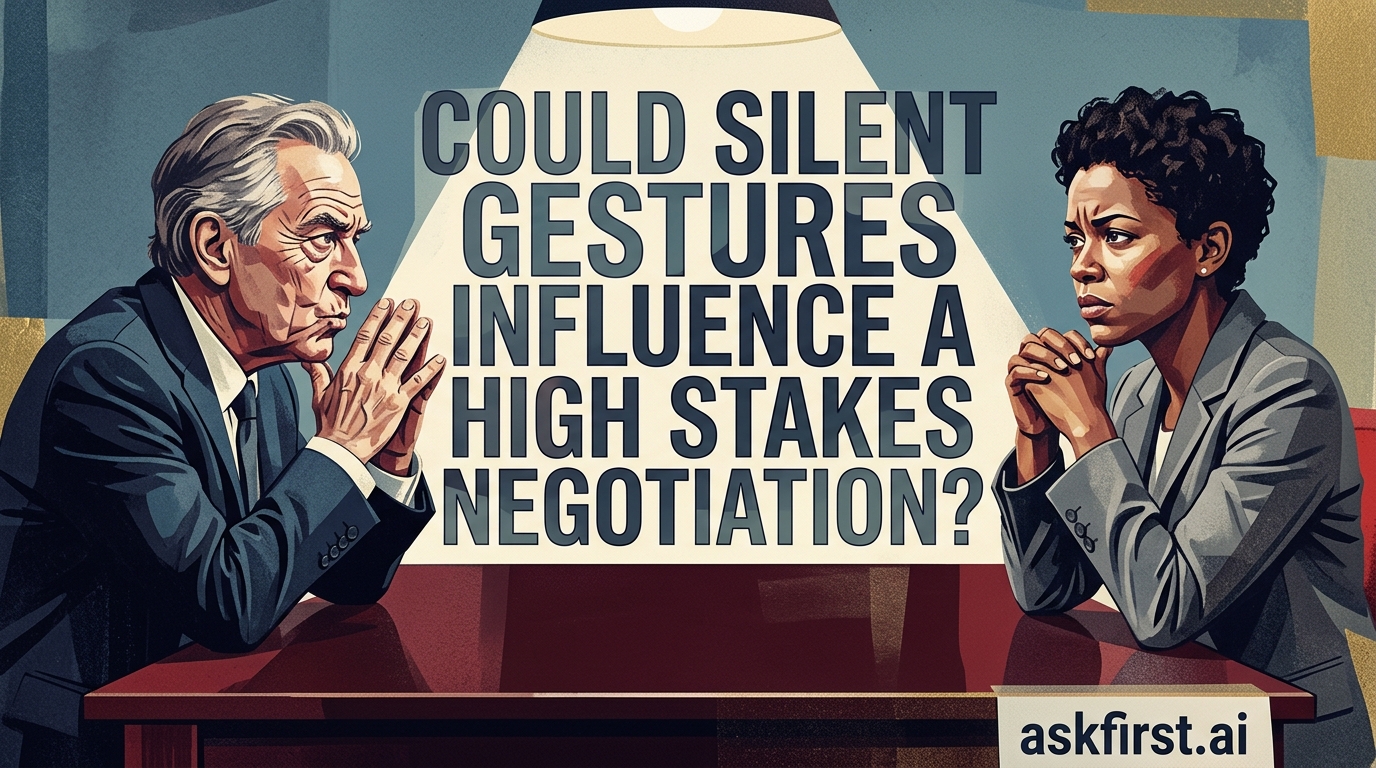
In the realm of high-stakes negotiations, where billions of dollars and careers hang in the balance, the most significant communications often happen without a single word spoken. Research indicates that over 70 percent of human communication is non-verbal, making silent gestures the hidden architecture of influence. Understanding these cues is not merely a soft skill; it is a strategic necessity for anyone seeking to gain an edge at the bargaining table.
The Psychology of Mirroring
One of the most potent silent tools is mirroring, or isopraxis. When a negotiator subtly mimics the posture, hand gestures, or speech patterns of their counterpart, it creates a subconscious sense of rapport and safety. This phenomenon relies on mirror neurons, which fire in the brain when we observe someone else performing an action, essentially putting both parties on the same neurological wavelength. By mirroring, a negotiator signals, "I am like you, and therefore, you can trust me."
The Dominance of Posture and Space
Non-verbal cues dictate the power dynamic long before terms are discussed. An expansive posture, where a negotiator takes up more space by leaning back or placing arms on the table, signals confidence and authority. Conversely, crossing arms or hunching forward can signal defensiveness or insecurity. According to research on "power posing" conducted by social psychologists like Amy Cuddy, adopting high-power poses for just two minutes before an interaction can alter hormonal levels, increasing testosterone and decreasing cortisol, thus making the negotiator feel and appear more powerful.
Micro-Expressions and Telling Truths
While conscious gestures can be managed, involuntary micro-expressions—fleeting facial movements lasting only a fraction of a second—often reveal true emotions that contradict spoken words. These expressions are universally recognizable regardless of culture. A slight tightening of the lips, a fleeting flash of fear in the eyes, or a subtle brow furrow can reveal hidden hesitation or deception. Being trained to detect these allows a negotiator to identify when a counterpart is masking their true position or is uncomfortable with a proposed term.
Silence as a Strategic Tool
Silence is perhaps the most underrated, yet powerful, "gesture." Using silence after asking a question or receiving an offer creates psychological discomfort in the other party. In many cultures, the natural human urge to fill silence leads individuals to speak more than they intended, often revealing crucial information or making unplanned concessions. The ability to sit comfortably in silence, maintaining steady eye contact without fidgeting, signals a high level of confidence and prevents the negotiator from bidding against themselves. By mastering these non-verbal levers, one transforms from a mere participant into a master strategist, capable of influencing the outcome of any high-stakes negotiation.