The Anatomy of High Earning Potential: Skills vs. Qualifications
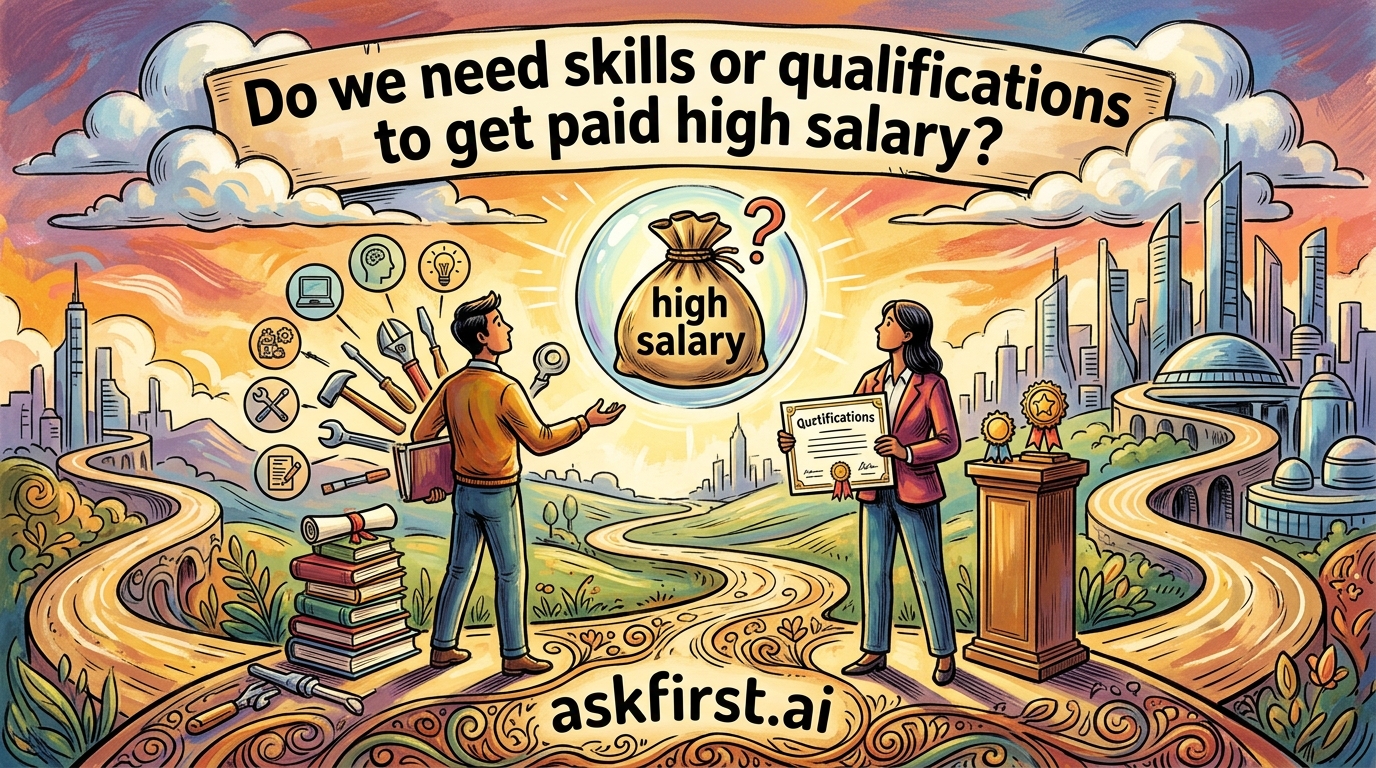
In the modern global economy, the debate between the necessity of formal qualifications (degrees, certifications) and practical skills (competencies, experience) is a central pillar of career strategy. While the traditional view suggested that a university degree was the sole gateway to high-income professions, the current labor market is undergoing a seismic shift toward a skills-based hiring model.
The Role of Formal Qualifications
Historically, qualifications served as a "signal" to employers, reducing the risk of hiring by verifying that a candidate possessed a baseline level of discipline, intelligence, and foundational knowledge.
- The Credentialing Premium: In fields like medicine, law, and structural engineering, qualifications are legally and ethically mandatory. You cannot practice surgery without a medical license, which requires a rigorous academic pathway.
- The Barrier to Entry: For many corporate roles, a degree acts as an automated filter in Applicant Tracking Systems (ATS). Without a bachelor’s degree, many candidates are filtered out before a human ever reviews their resume.
- Networking and Pedigree: Elite universities provide access to alumni networks, internships, and mentorships that can accelerate career progression, indirectly contributing to higher lifetime earnings.
The Supremacy of In-Demand Skills
While qualifications get your foot in the door, skills determine your ceiling. In the high-salary sectors of technology, digital marketing, and specialized trades, the ability to solve complex problems is valued far above a piece of paper.
High-Income Skill Categories
- Technical Proficiency: Proficiency in AI development, cloud architecture, data science, or cybersecurity often commands six-figure salaries regardless of academic background.
- Soft Skills (Human Capital): Negotiation, strategic leadership, emotional intelligence, and public speaking are "force multipliers." A highly qualified professional with poor communication skills will rarely reach executive-level compensation.
- Revenue-Generating Skills: Sales, copywriting, and business development are arguably the most reliable paths to high income. If you can directly attribute revenue growth to your actions, your salary potential becomes virtually uncapped.
The Intersection: The "T-Shaped" Professional
The most successful high earners are often "T-shaped" individuals. They possess a broad base of general knowledge (often supported by formal education) and a deep, specialized expertise in a niche, high-demand skill.
Practical Guide to Maximizing Earnings
- Identify Market Gaps: Research industries with a high labor shortage. Currently, roles involving large language model (LLM) integration and green energy transition are paying premiums.
- Build a Portfolio: In the absence of a prestigious degree, a robust portfolio of real-world projects acts as the best proof of competence.
- Continuous Upskilling: The "half-life" of a skill today is approximately five years. High earners treat education as a lifelong investment, not a one-time event.
Conclusion: The Verdict
Do you need qualifications? In some sectors, absolutely. Do you need skills? In all sectors, unequivocally. While qualifications provide the foundation, skills provide the leverage. The highest-paid individuals in 2026 are those who possess the agility to adapt, the specialized knowledge to deliver results, and the self-awareness to market their value effectively. If you must choose, focus on marketable skills first, and treat qualifications as the strategic garnish that validates your expertise.