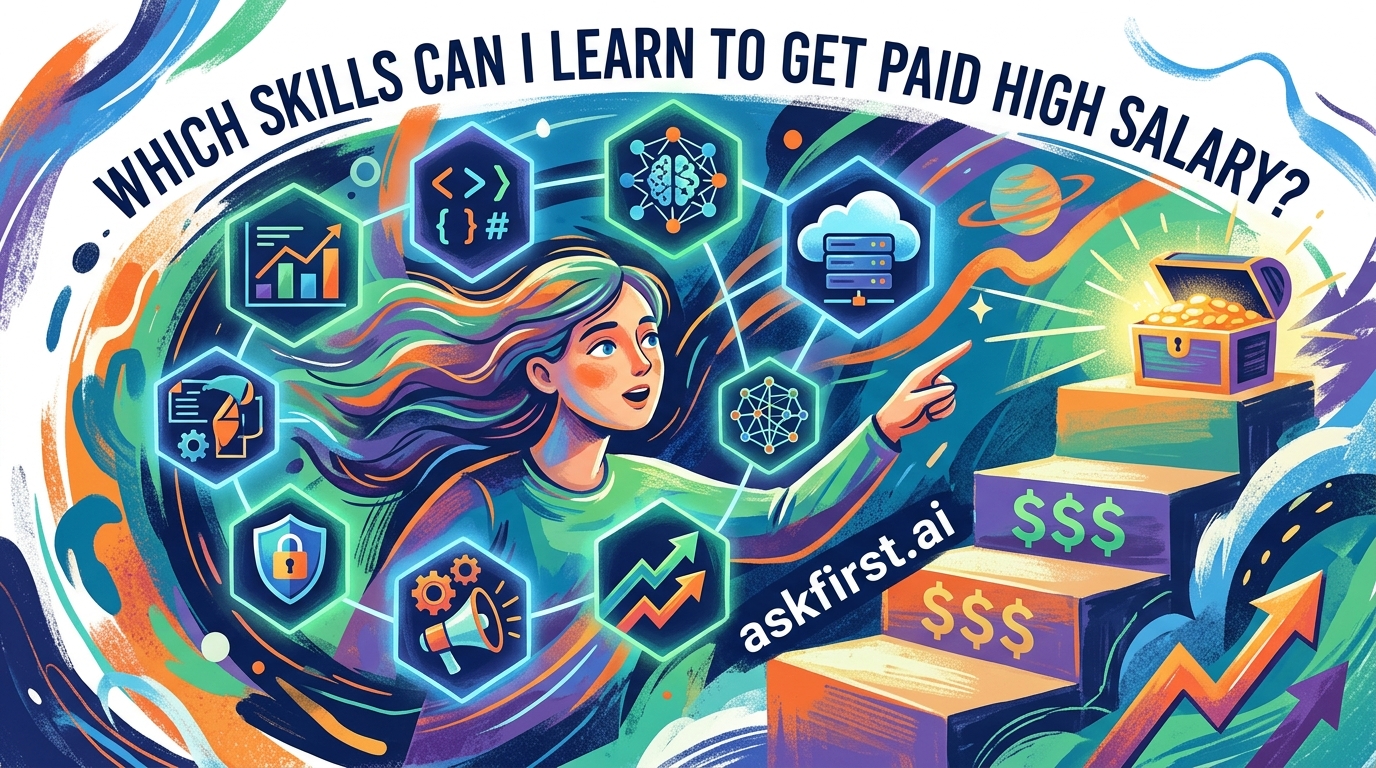
Mastering High-Income Skills: Your Blueprint for Financial Success
In the modern digital economy, salary is increasingly decoupled from tenure and tied directly to the scarcity and impact of your skill set. To command a premium salary in 2026, you must focus on competencies that solve complex, high-stakes business problems.
1. The Pillars of High-Income Skills
Artificial Intelligence and Machine Learning (AI/ML)
With the rapid evolution of generative AI, professionals who can build, integrate, and fine-tune Large Language Models (LLMs) are in the highest demand.
- Key Focus: Prompt engineering, Python programming, neural networks, and AI ethics.
- Why it pays: Companies are racing to automate operations; those who bridge the gap between AI theory and business utility are irreplaceable.
Cloud Architecture and Cybersecurity
As global infrastructure migrates to the cloud, the need for robust security has reached a fever pitch.
- Key Focus: AWS/Azure/GCP certification, zero-trust architecture, and threat intelligence.
- Why it pays: A single data breach can cost a firm millions. Security experts act as an insurance policy for shareholders.
Data Analytics and Business Intelligence (BI)
Data is the "new oil," but only if it is refined. Professionals who can translate raw data into actionable boardroom strategies are highly rewarded.
- Key Focus: SQL, Tableau, PowerBI, and statistical modeling.
- Why it pays: Data-driven decision-making reduces financial risk and increases profit margins.
2. The "Soft" Power Skills
Technical skills get you hired, but soft skills get you paid. These "power skills" are essential for leadership roles.
- High-Ticket Sales: The ability to persuade and close complex deals is a skill that never depreciates. Sales professionals often have uncapped earning potential through commissions.
- Strategic Communication: The ability to present complex technical findings to non-technical stakeholders (C-Suite executives) is a rare trait that commands executive-level compensation.
- Product Management: This is the nexus of technology, design, and business. A Product Manager who can shepherd a product from ideation to market success is a linchpin of any tech organization.
3. A Practical Guide to Skill Acquisition
To maximize your ROI, follow this structured learning path:
- Identify the Gap: Choose one technical skill (e.g., Python) and one soft skill (e.g., Public Speaking).
- Immersive Learning: Utilize platforms like Coursera, edX, or intensive bootcamps. Avoid passive consumption; focus on project-based learning.
- Build a Portfolio: Create a GitHub repository or a professional website showcasing your projects. Employers pay for proof, not certificates.
- Network Strategically: Use LinkedIn to connect with experts in your target field. Seek mentorship to understand the specific industry challenges.
4. Pros and Cons of High-Income Paths
- Pros: High financial independence, remote work flexibility, and career resilience during economic downturns.
- Cons: These roles often demand continuous learning (the "treadmill effect"), high-pressure environments, and significant initial time investment.
Future Trends
By 2030, the highest-paid individuals will likely be "Hybrid Generalists"—people who possess deep technical expertise in one area (like AI) while maintaining broad knowledge in business strategy and human psychology. Focus on becoming a "T-shaped" professional: deep expertise in one vertical, with a broad ability to collaborate across many.