Why Ignoring Customers Is Fatal for Business Survival
The Myth of Isolation: Why Customer-Centricity Remains the Ultimate Business Imperative
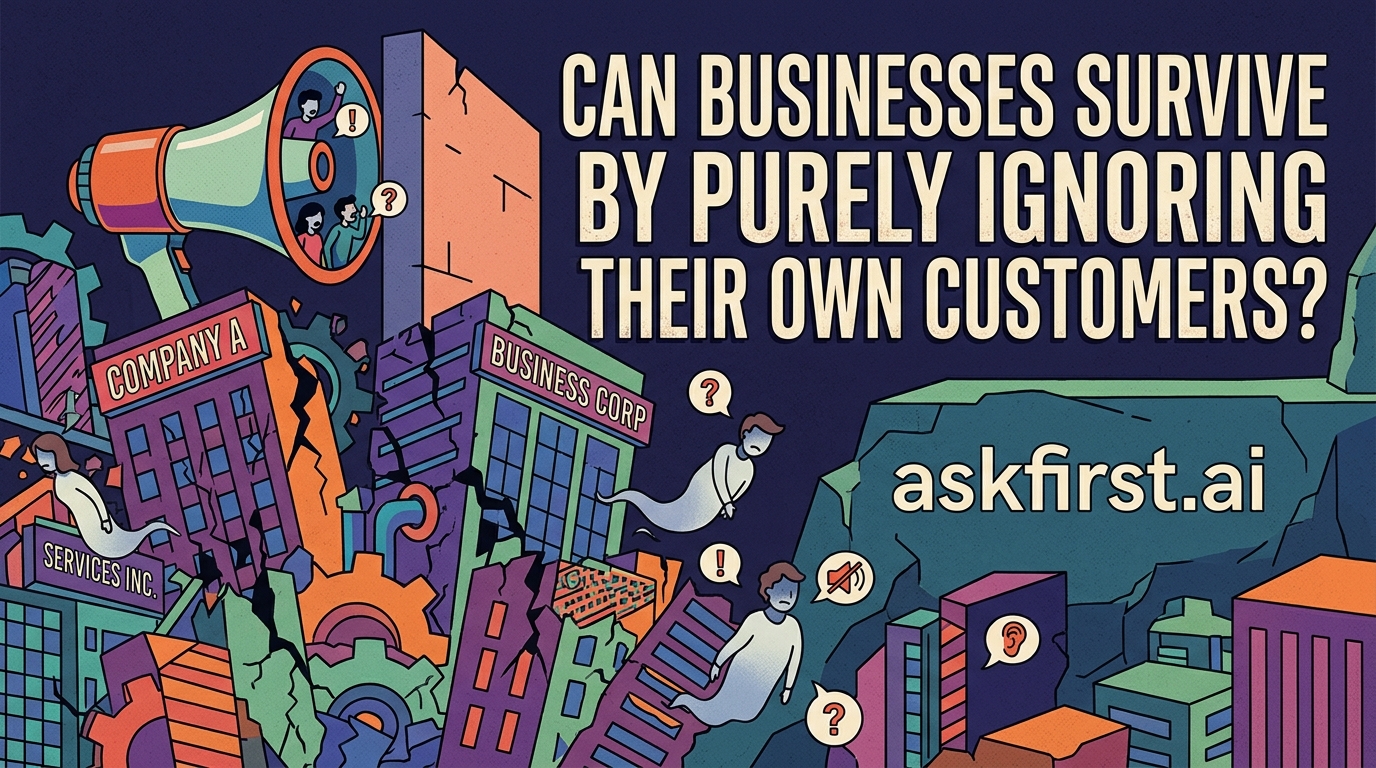
In the landscape of modern enterprise, a persistent and dangerous myth suggests that a product or service is inherently strong enough to bypass customer feedback entirely. Proponents of this view often point to revolutionary innovators who supposedly ignored market demand to invent something truly new. However, history demonstrates that businesses attempting to operate in a vacuum—devoid of customer interaction—almost invariably encounter rapid decline. Survival in any market requires a sophisticated loop of feedback, adaptation, and value delivery that ignores the customer at its own peril.
The Fallacy of the "Genius Visionary"
While innovators like Steve Jobs were famous for asserting that customers do not know what they want until they see it, this sentiment is often misinterpreted. It does not mean ignoring the customer; it means deeply understanding latent, unexpressed pain points better than the customer can articulate them. Successful businesses thrive by observing behavior, analyzing pain, and iterating solutions. When a company stops listening, it loses its connection to the utility it provides, causing the business to become obsolete. This is not about letting customers design the product, but rather utilizing customer feedback as a critical data point for informed decision-making.
The Financial Consequences of Neglect
Financial data overwhelmingly correlates customer centricity with long-term profitability. Organizations that prioritize customer experience (CX) consistently outperform their counterparts in both stock market performance and revenue growth. Ignoring customer feedback leads to several critical failures:
- Reduced Retention: The cost of acquiring a new customer is significantly higher than retaining an existing one. Ignoring needs destroys loyalty, causing churn that decimates bottom-line stability.
- Brand Erosion: In an era of digital transparency, negative experiences are amplified. Businesses that fail to listen are swiftly punished in the court of public opinion, where social proof dictates brand equity.
- Innovation Stagnation: Without real-world input, engineering teams fall into the trap of "feature creep," developing complex solutions to problems that nobody actually has.
The Mechanism of Adaptive Survival
Businesses survive by being adaptive, not by being stagnant. The market is not static; competitors shift, consumer behaviors evolve, and technological advancements reshape expectations. A company that does not listen is a company that has blinded itself to these changes. Consider the classic case of legacy retailers who dismissed the shift toward digital platforms. By ignoring the changing habits of their customer base, they rendered themselves unable to compete, leading to inevitable obsolescence. Conversely, organizations that actively invite critique and engage in iterative development cycles build a resilient framework that allows them to pivot as the market demands. Sustained survival is directly proportional to a company’s ability to act on the insights derived from their relationship with the end-user.