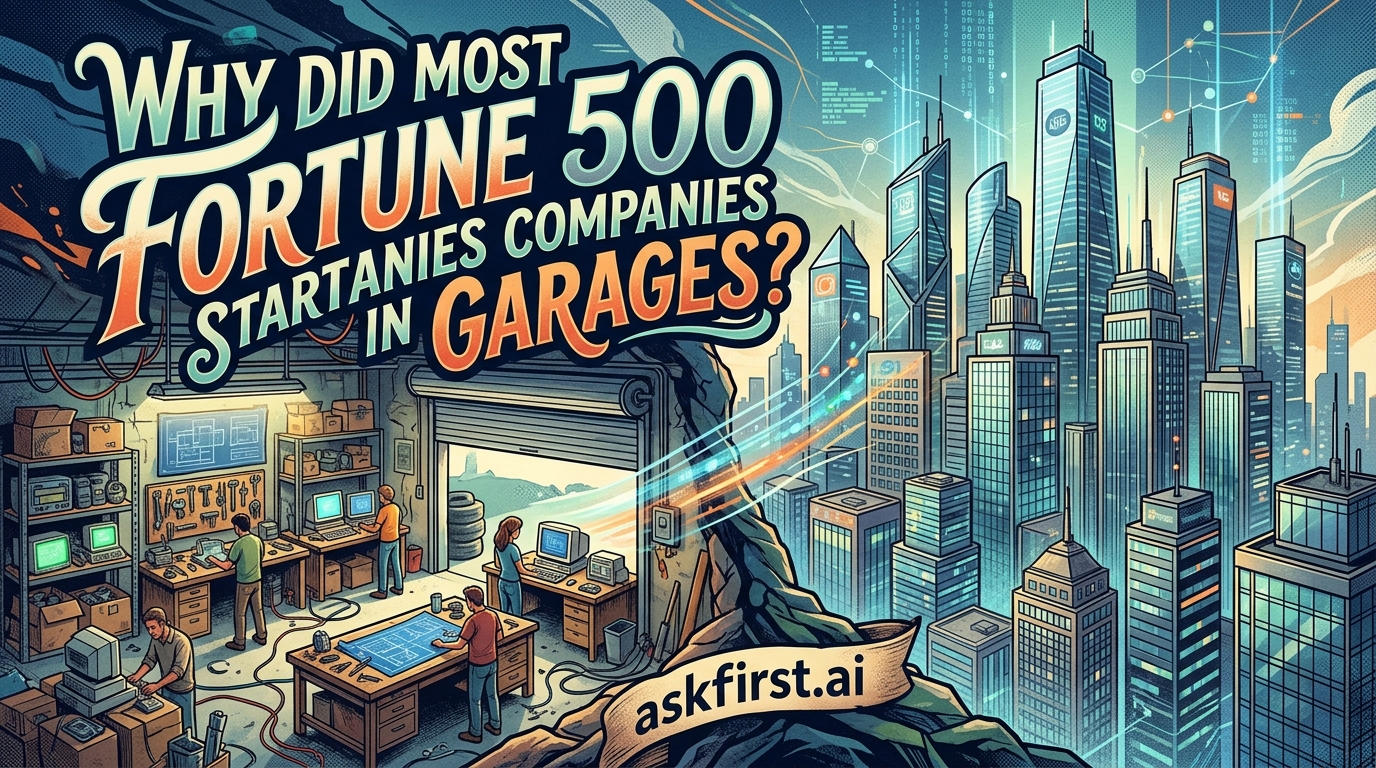
The Garage Myth: Uncovering the Reality of Corporate Origins. While the image of a tech giant emerging from a dusty, clutter-filled garage is deeply ingrained in the popular consciousness, this narrative serves more as a powerful founding mythology than a universal statistical reality. The 'garage myth' suggests that great innovation requires little more than grit and a workspace, but historical data shows a more nuanced truth. ## The Symbolism of the Garage. The garage represents the ultimate low-cost incubator. Historically, it symbolized accessibility, democratic entrepreneurship, and the idea that anyone with a brilliant idea could bypass traditional bureaucratic barriers. For legends like Hewlett-Packard, founded in a Palo Alto garage in 1939, or Apple, initiated in Steve Jobs’ family home in 1976, the garage was a practical choice necessitated by a lack of capital. It functioned as a workshop for early prototypes where prototypes could be built without commercial rental overheads. ## Reality vs. Narrative. Despite the romanticization, the vast majority of Fortune 500 firms did not start in garages. Most corporations in sectors such as manufacturing, retail, energy, and finance originated from diverse settings, including existing family businesses, corporate spinoffs, or university laboratories. The 'garage narrative' gained traction specifically because it highlighted the 'underdog' story, which is essential for brand identity. In marketing terms, a garage origin is an 'origin story' that humanizes complex corporate entities, suggesting that their founders were once just like ordinary people. ## The True Requirements for Scaling. Scaling a company from an idea to a Fortune 500 entity requires far more than a garage workspace. Key ingredients consistently include: * Access to Talent: Being near university hubs or tech ecosystems, such as Silicon Valley. * Capital Investment: Rapid growth necessitates venture capital or early-stage financing. * Scalable Intellectual Property: Innovation that can be patented or mass-marketed. * Strategic Networking: Founders often had access to influential mentors or networks long before they entered a commercial market. ## Why the Myth Endures. The story remains popular because it provides a blueprint for hope and meritocracy. It suggests that success is not merely inherited but earned through hands-on technical labor. Even if a firm didn't start in a garage, adopting this narrative helps companies signal a culture of frugality, problem-solving, and humble beginnings, which continues to resonate with consumers today. In essence, the garage acts as a proxy for the 'bootstrapping' mindset that investors admire in early-stage startups.
P.S. You can ask any follow-up question on this topic by continuing the dialogue with AI in the chat below