The Olfactory Connection to Wellness
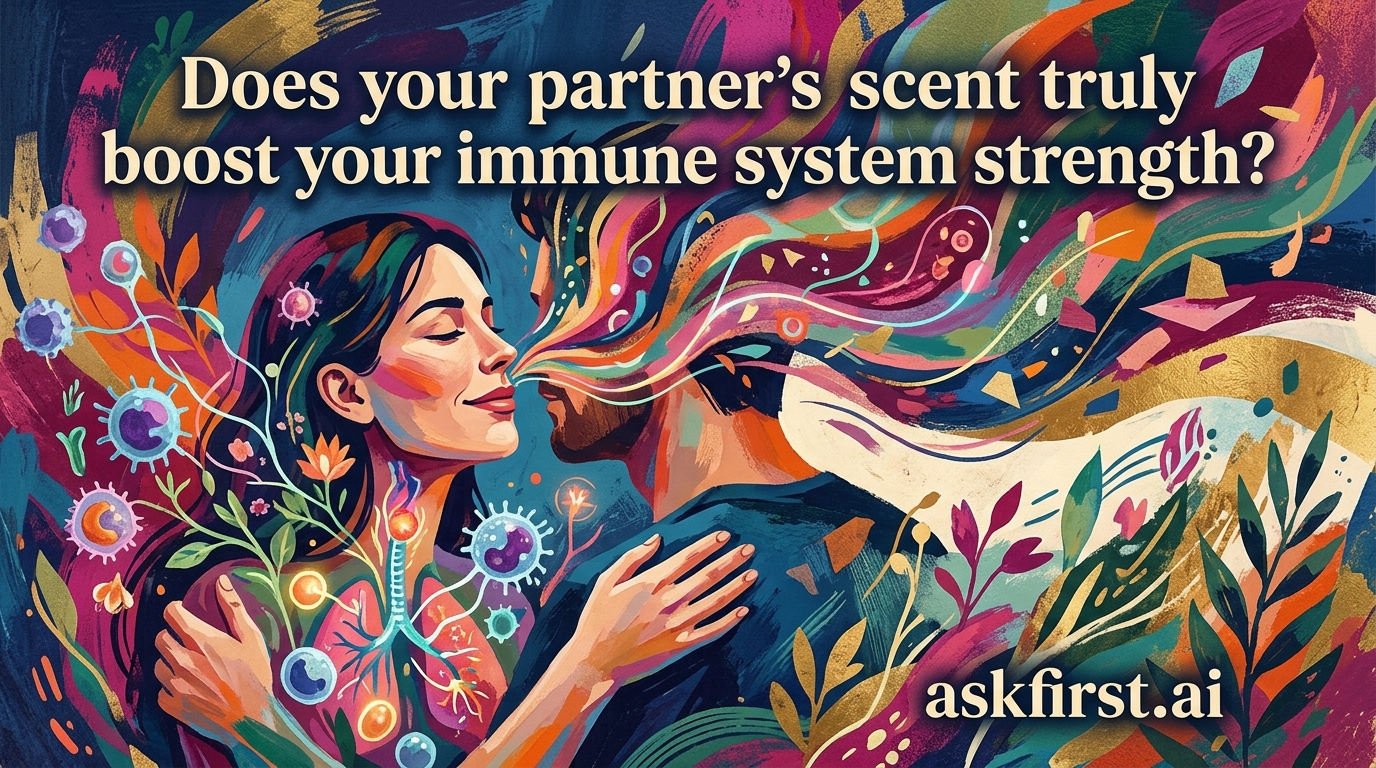
Recent investigations into human biology reveal a fascinating, often overlooked dimension of romantic intimacy: the biological influence of a partner's scent on the recipient's immune health. While the idea might sound like folklore, evolutionary biology and psychoneuroimmunology suggest that olfactory stimuli are far more potent than previously understood. Through the mechanism of pheromone perception and the activation of the limbic system, a partner's unique scent can modulate physiological states, potentially enhancing immune resilience.
The Science of Chemosignaling
Human beings are constantly engaged in subconscious chemosignaling. Every individual possesses a unique chemical "signature" determined in part by their Major Histocompatibility Complex (MHC). This set of genes is crucial to the immune system, responsible for recognizing foreign pathogens. Research indicates that individuals are often attracted to partners with MHC profiles different from their own, a mechanism likely evolved to provide offspring with a more robust immune repertoire. When inhaling a partner's scent, the brain processes these chemical cues through the olfactory bulb, which has a direct highway to the amygdala and hippocampus. This bypasses the conscious cognitive centers, directly influencing emotional regulation and hormonal output.
Psychological Buffering and Cortisol
One of the most documented effects of a partner's scent is its ability to reduce cortisol, the body’s primary stress hormone. Chronic stress is an immunosuppressant; high levels of cortisol over prolonged periods dampen the production of lymphocytes and other infection-fighting cells. By providing a sensory signal of safety and social bonding, a partner's scent acts as a "psychological buffer." When an individual is stressed, exposure to the familiar, comforting aroma of their significant other can lower heart rate and reduce cortisol secretion. By mitigating the physiological cascade of stress, the immune system is granted the bandwidth to function more efficiently and effectively.
Mechanisms of Immune Regulation
- Reduction of Inflammation: Lowering chronic stress via olfactory comfort decreases systemic inflammation, which is vital for preventing autoimmune exhaustion.
- Hormonal Balancing: Oxytocin, often called the 'cuddle hormone,' is released in response to familiar, comforting social cues. Oxytocin has been shown in various clinical studies to possess anti-inflammatory properties and support faster wound healing.
- Sleep Quality Improvement: A partner’s scent is often linked to feelings of relaxation, which promotes deeper, more restorative sleep cycles. High-quality sleep is the cornerstone of a functional immune system, as it is during these phases that cytokines (proteins that fight infection) are produced.
Debunking the Myths vs. Reality
It is important to approach this topic with scientific nuance. Does sniffing a partner's shirt provide an instant, magical immunity boost equivalent to a vaccine? Certainly not. However, the cumulative effect of a healthy, low-stress, and socially supported lifestyle—facilitated in part by the sensory comfort of a partner—contributes significantly to the body’s overall resilience. Science differentiates between 'immune boosting' (a common but imprecise term) and 'immune optimization.' In this context, the scent acts as a modulator that keeps the system from overreacting to stress and ensures that the body remains in a state of 'allostasis'—the process of achieving stability through physiological change.
Evolutionary Utility
From an evolutionary perspective, the ability to recognize and feel comforted by a partner's scent served as an essential tool for social cohesion. Tribes or small groups that relied on close, protective bonds were more likely to survive threats. Those who felt physiological comfort through the scent of their allies were better able to maintain their physical health and, by extension, their vitality. In the modern, isolated world, these ancient sensory pathways remain active. The comfort derived from a partner's smell is a biological vestige of the critical importance of human connection to survival.
Practical Implications for Modern Living
Understanding this connection highlights the importance of sensory environments in home life. Creating a space that feels safe, comforting, and familiar is not just an aesthetic choice; it is a health strategy. For those in long-term relationships, recognizing that scent is a legitimate health-promoting stimulus can lead to a greater appreciation of the sensory aspects of intimacy. Engaging with these cues is a non-invasive way to regulate the nervous system, lower the impact of daily stressors, and maintain a higher baseline of physical well-being. Ultimately, while scent is only one variable in the complex equation of immunity, its role as a bridge between psychological comfort and biological robustness is undeniably significant.