The Secret Language of the Forest
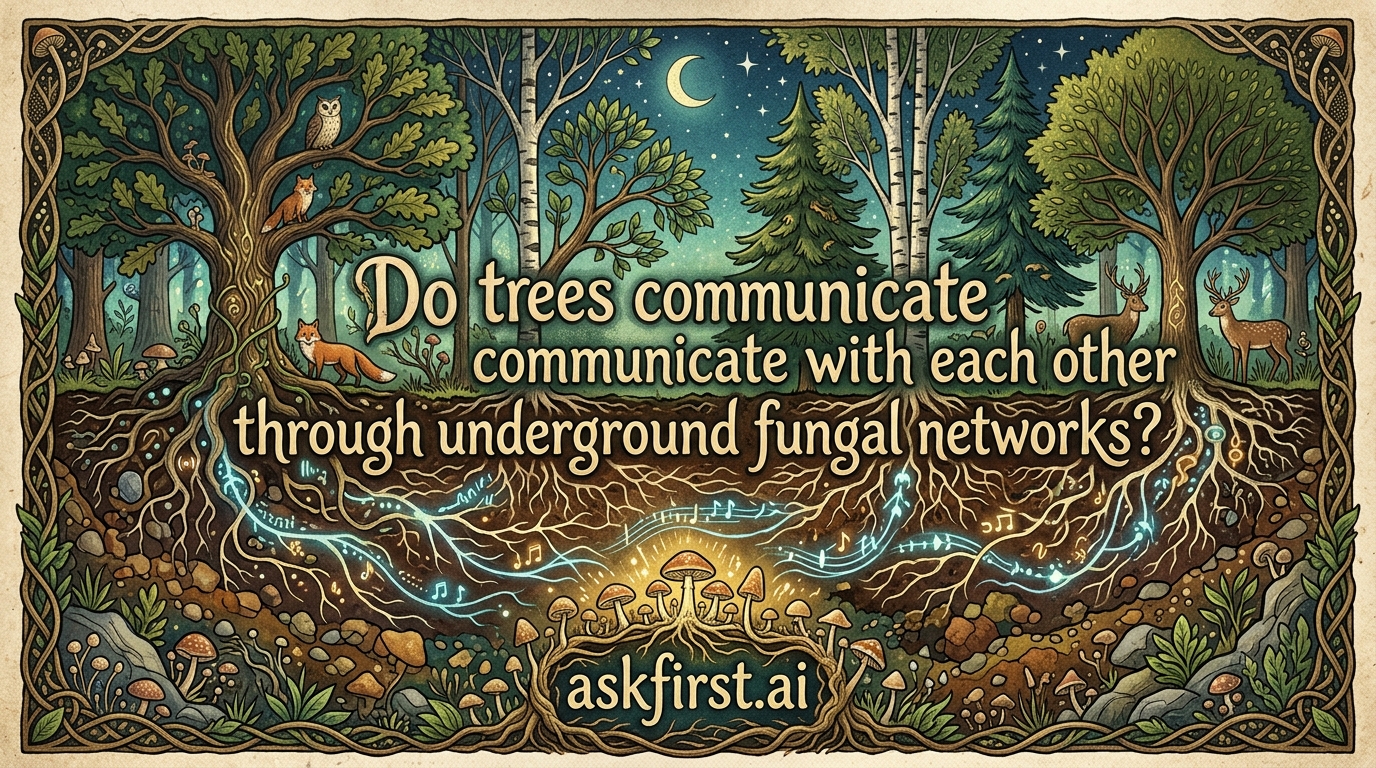
Recent scientific breakthroughs have fundamentally shifted the perception of forests from a collection of solitary individuals competing for sunlight into a complex, cooperative society. Often referred to as the 'Wood Wide Web,' this intricate system relies on mycorrhizal networks—symbiotic associations between fungi and plant roots. This underground infrastructure allows trees to exchange nutrients, share information, and even support their neighbors in ways that resemble human social structures.
How the Mycorrhizal Network Functions
At the heart of this phenomenon are mycorrhizal fungi. These organisms form a symbiotic relationship where they colonize the root systems of trees. The fungus gains access to carbon-rich sugars produced by the tree through photosynthesis, while the tree receives essential minerals like phosphorus and nitrogen that the fungi effectively scavenge from the soil. However, the true marvel occurs when these fungal filaments, or hyphae, connect the root systems of multiple trees together, creating a vast, interconnected grid across the forest floor.
Nutrient Sharing: The Forest Economy
Research has demonstrated that trees do not merely coexist; they actively share resources. Larger, older trees—frequently called 'Mother Trees'—act as central hubs in these networks. Studies have shown that when a tree is shaded or struggling to receive enough sunlight, it can receive carbon transfers from larger trees in the network. This resource allocation ensures that the younger generation survives, fostering a resilient forest ecosystem. It is an economic system based on mutual support rather than pure competition.
Chemical Signaling and Defense
Beyond resource distribution, trees utilize this network to transmit 'early warning' signals. When a tree is attacked by insects or pathogens, it releases chemical distress signals into the mycorrhizal network. Neighboring trees can intercept these warnings and trigger their own internal immune responses. For instance, they may begin producing high levels of tannins or other bitter compounds that make their leaves unpalatable to encroaching pests. This collective defense mechanism significantly increases the survival rate of the entire community compared to trees growing in isolation.
The 'Mother Tree' Concept
Ecologist Suzanne Simard coined the term 'Mother Trees' to describe the highly connected, elderly trees that exert the most influence over the forest dynamic. These trees serve as the focal points of the fungal grid. Data suggests that these elders can recognize their kin, sending them extra resources and reducing their own root competition to allow the younger trees to thrive. When a Mother Tree eventually declines, it often offloads its remaining carbon and nutrients into the network, fueling the next generation of saplings.
Why This Matters for Conservation
Understanding the Wood Wide Web changes how humans approach forestry and conservation. Traditional logging practices that involve 'clearcutting' or removing large, older trees can inadvertently collapse the entire communication and support system of the forest. Without these central hub trees, the remaining forest becomes fragmented, vulnerable to pests, and less capable of climate adaptation. Preservation efforts now focus on protecting these ancient individuals to maintain the structural integrity of the soil's fungal architecture.
Limitations and Scientific Nuance
While the concept of the Wood Wide Web is scientifically supported, researchers emphasize that it is not a direct analog to human communication. Trees do not 'speak' in sentences; rather, they exchange information through electrical pulses, biochemical signals, and nutrient diffusion. There is an ongoing scientific debate regarding the extent of this cooperation versus the inherent competition for resources. Some researchers argue that the fungal network is primarily a mechanism for fungal survival, with the tree benefits being a byproduct. Nevertheless, the reality of inter-plant communication is firmly established, confirming that forests are far more social than anyone imagined a century ago.
Summary of Key Findings
- Interconnectivity: Fungal threads connect trees into a collective, forest-wide network.
- Resource Allocation: Healthy, dominant trees support struggling saplings through carbon transfers.
- Defense Mechanisms: Trees communicate pest attacks, allowing neighbors to preemptively boost their defenses.
- Ecological Stewardship: The role of 'Mother Trees' is vital for forest resilience and health.
By viewing the forest as an integrated, talking, and feeling community, the mystery of the natural world deepens. Trees do not just stand as silent monuments; they are active, engaged participants in a sprawling, silent, underground conversation that keeps the planet’s lungs breathing.