The Olfactory Connection to Emotional Regulation
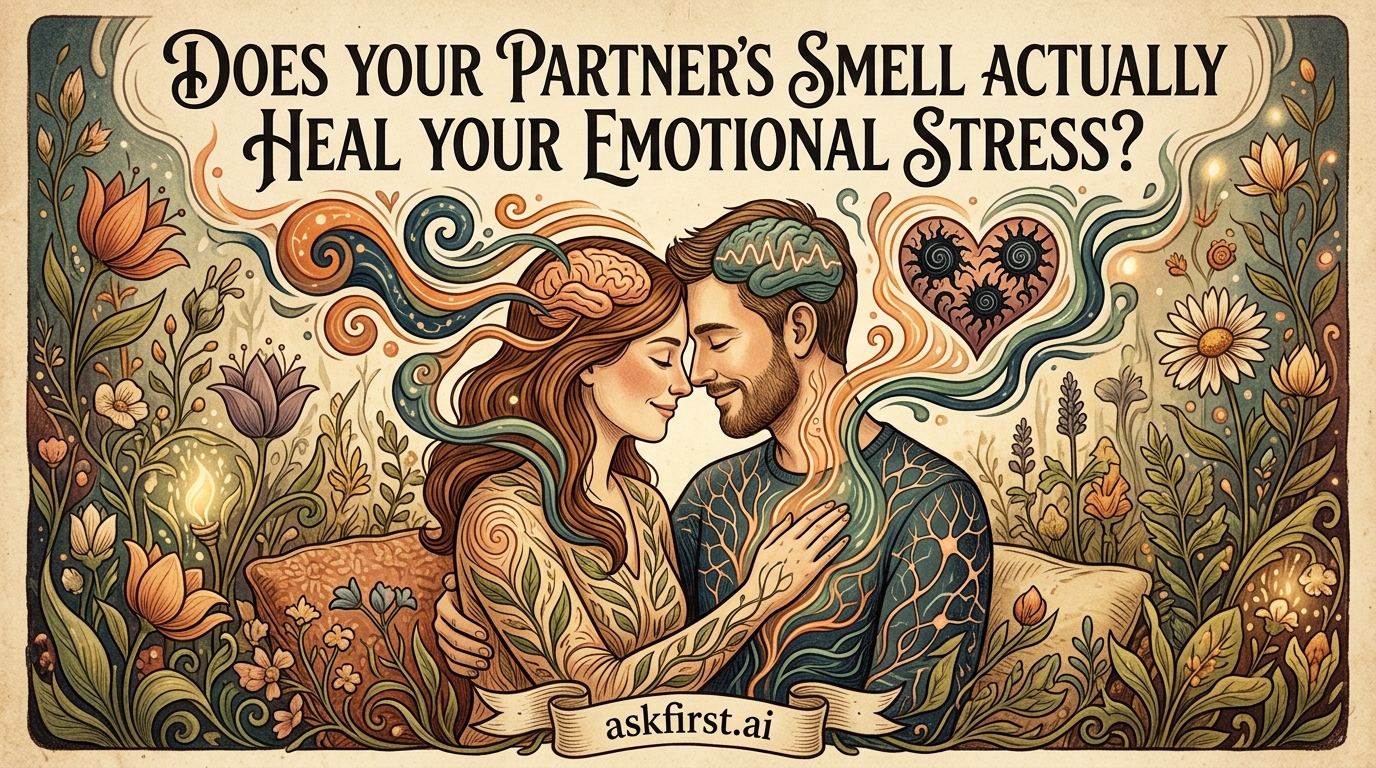
The phenomenon of human scent perception goes far beyond mere hygiene; it acts as a silent, invisible bridge between emotional states and biological stress responses. Recent research in the field of olfactory psychology suggests that exposure to a partner's scent can function as a significant buffer against cortisol, the body’s primary stress hormone. This biological reaction is rooted in the complex architecture of the human limbic system, where smells bypass the analytical centers of the brain to trigger immediate emotional and physical responses.
The Science of Pheromones and Social Bonding
At the core of this experience lies the detection of chemosignals. Humans release chemical compounds through skin oils and sweat that contain distinct information about their emotional states. When a partner encounters these signals, the brain processes them through the olfactory bulb, which has direct pathways to the amygdala—the region responsible for fear and emotional processing. Studies have shown that when individuals are presented with a shirt worn by a romantic partner, even without visual or auditory confirmation, the brain experiences a downregulation in the HPA (hypothalamic-pituitary-adrenal) axis. This leads to a measurable reduction in systemic stress markers.
- Cortisol Reduction: Research indicates that cortisol levels in women significantly decrease when they are exposed to the scent of their romantic partners, especially in unfamiliar or high-stress environments.
- The Comfort Factor: This effect is not merely placebo. The brain associates the partner's unique scent with safety, predictability, and emotional support, effectively recalibrating the nervous system toward a state of homeostasis.
Why Familiarity Equals Safety
Human beings are social creatures evolved to rely on attachment figures for protection. The sensory input of a partner's scent acts as a proxy for physical proximity. When one is away from a loved one, the scent of a worn garment provides a 'sensory anchor' that triggers the release of oxytocin, often referred to as the 'cuddle hormone.' This chemical reaction is instrumental in lowering heart rate and blood pressure, creating a feeling of security that counters the 'fight or flight' response common in high-stress situations.
Psychological and Evolutionary Mechanisms
From an evolutionary perspective, the ability to identify and respond to the scent of a long-term partner facilitates social cohesion. It allows for the maintenance of a pair bond across distance or time, ensuring that the regulatory benefits of the partnership remain even during physical separation. The brain essentially categorizes this specific smell as a 'safety signal,' overriding external stressors. This is a profound example of how human biology prioritizes social connection as a survival mechanism.
Practical Applications for Emotional Health
Understanding this biological mechanism offers powerful tools for managing day-to-day emotional well-being:
- Sensory Anchoring: Maintaining an item of clothing that carries a partner's scent can serve as a non-pharmacological tool to soothe nerves before major presentations or high-pressure events.
- Emotional Regulation: Couples separated by travel or demanding careers can utilize this olfactory connection to stay tethered emotionally, utilizing the scent as a reminder of the secure base provided by the relationship.
- Mindful Awareness: By intentionally noticing the scent of a loved one during moments of calm, individuals can 'train' their brains to associate that smell with relaxation, creating a pre-conditioned stress-relief mechanism.
Dispelling the Myth of 'Just Smell'
Many skeptics view scent as a peripheral sense in human behavior, yet scientific consensus continues to show that the olfactory system is deeply intertwined with cognitive function. Unlike vision or hearing, which are filtered by complex layers of conscious perception, scent triggers immediate, visceral, and pre-conscious reactions. This is why a simple smell can bypass intellectual defenses to change an emotional state in milliseconds.
Conclusion: The Future of Affective Science
As neuroscience continues to unravel the mysteries of human attachment, the role of scent will likely be elevated from a romantic novelty to a clinical focus in emotional regulation studies. The evidence is clear: your partner’s smell is not just a scent; it is a profound biological regulator of your internal environment. By harnessing this natural tool, humans can better navigate the complexities of their emotions, proving that love truly is felt in the air we breathe.