The Eternal Nature of Honey: Fact or Myth?
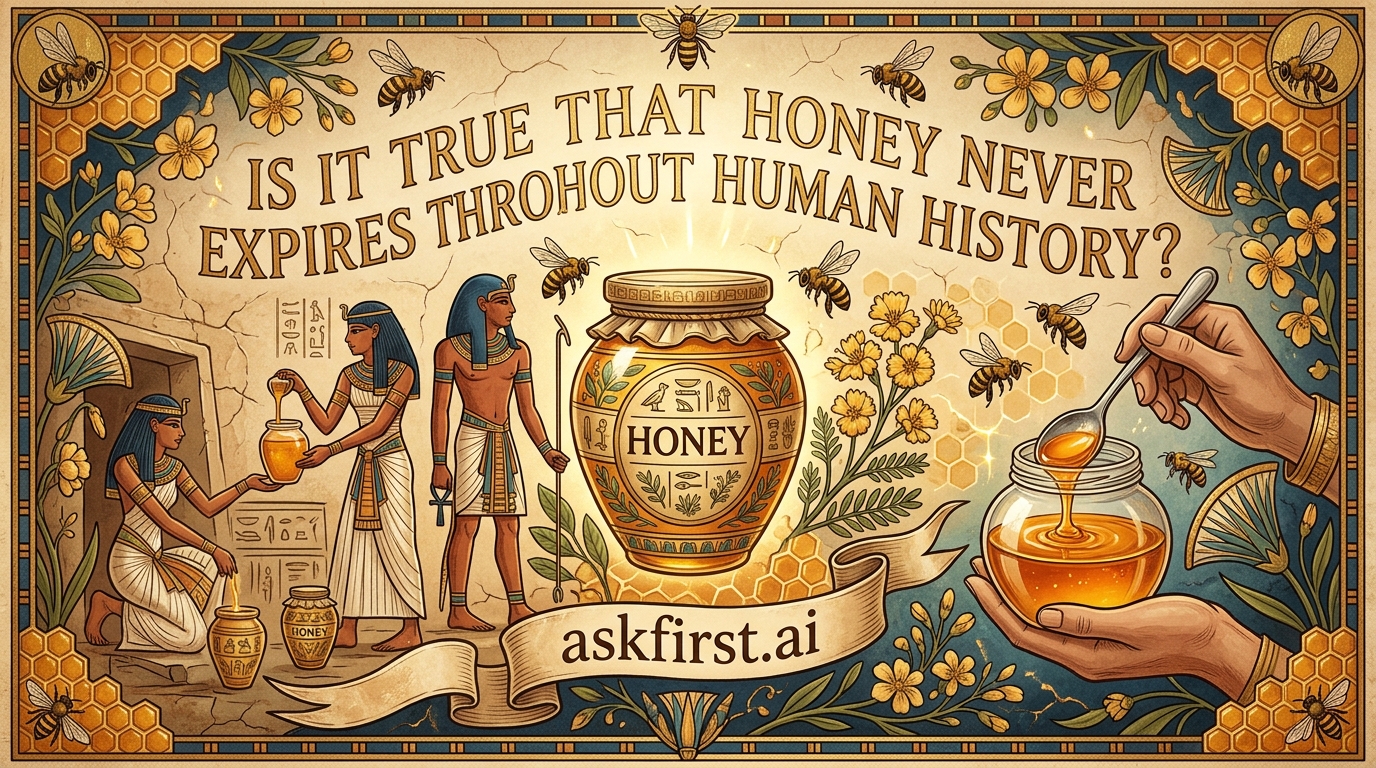
The notion that honey serves as nature’s only immortal food is one of the most fascinating topics in culinary science and history. Archaeological discoveries have frequently fueled this narrative, such as the famous unearthing of three-thousand-year-old honey in Egyptian tombs, which remained surprisingly edible. While the concept of 'immortality' sounds like science fiction, the chemical properties of honey create a hostile environment for the biological processes that usually lead to food spoilage.
The Science of Preservation
The secret behind honey’s shelf life lies in a trifecta of physical and chemical factors. First, honey is naturally acidic, typically possessing a pH between 3 and 4.5. This level of acidity is sufficient to inhibit the growth of most bacteria and microorganisms that cause decay. Second, honey is extraordinarily low in moisture. Most bacteria require a water activity level higher than 0.6 to survive, but honey’s sugar content is so concentrated that it essentially sucks the water out of any bacteria that might land on it through a process called osmosis, effectively dehydrating and neutralizing them.
Third, and perhaps most importantly, bees contribute a unique enzyme called glucose oxidase. When bees mix this enzyme with nectar, it breaks down into hydrogen peroxide, which acts as a powerful antimicrobial agent. This chemical defense system is built into the product itself from the moment it is manufactured in the hive.
The Role of Physical Sealing
Bees are natural masters of packaging. During the harvesting process, bees fan their wings over the nectar to evaporate excess water, reducing the moisture content to below 18 percent. Once the honey is cured, they seal the honeycomb with a layer of beeswax. This airtight seal creates an environment where moisture cannot get back in, which is crucial because honey is hygroscopic—it attracts moisture from the air. If honey is exposed to humidity, it can absorb water, rise above its safe moisture threshold, and eventually ferment due to airborne yeast. Therefore, while honey itself does not spoil, it requires proper storage to maintain its integrity.
Can Honey Expire or Degrade?
While honey does not 'expire' in the traditional sense of becoming dangerous to consume, it certainly undergoes physical changes. The most common transformation is crystallization. Over time, glucose molecules bond together and form crystals, turning the liquid into a thick, gritty substance. Many people mistakenly discard crystallized honey, believing it has gone bad, but this is a completely natural physical reaction. A gentle, indirect heating process, such as placing the jar in warm water, will return it to its original liquid state.
Furthermore, the color and flavor profile of honey can shift over years due to oxidation and temperature fluctuations. If stored in a clear jar on a sunny windowsill, honey may lose some of its delicate floral aromatics and darken in color. To ensure the longest shelf life, it is recommended to keep honey in an airtight, opaque container in a cool, dark place.
The Asterisk: Safety Considerations
There is one major caveat to the 'forever food' claim. Honey should never be fed to infants under 12 months of age. Even though honey is incredibly stable against most microbes, it can contain dormant Clostridium botulinum spores. While these spores are harmless to the mature digestive system of an adult, they can thrive in an infant's developing gut, leading to a rare but serious condition called infant botulism. This is not a sign that the honey has expired, but rather a standard safety precaution regarding natural agricultural products.
Conclusion: A Legacy of Sweetness
The idea that honey is immortal is essentially a scientific truth, provided the product remains sealed from ambient moisture. It represents a remarkable intersection of biology and chemistry, showcasing how an insect-driven process can produce a substance that survives the passage of centuries. By understanding the interaction between acidity, low water content, and enzyme activity, one can appreciate honey not just as a pantry staple, but as an engineering marvel of the natural world. Whether one is eating honey harvested last month or perhaps from a jar tucked away in the back of the pantry for a decade, the core properties remain consistent, proving that nature is indeed capable of creating products that stand the test of time.