The Psychology of the Digital Itch
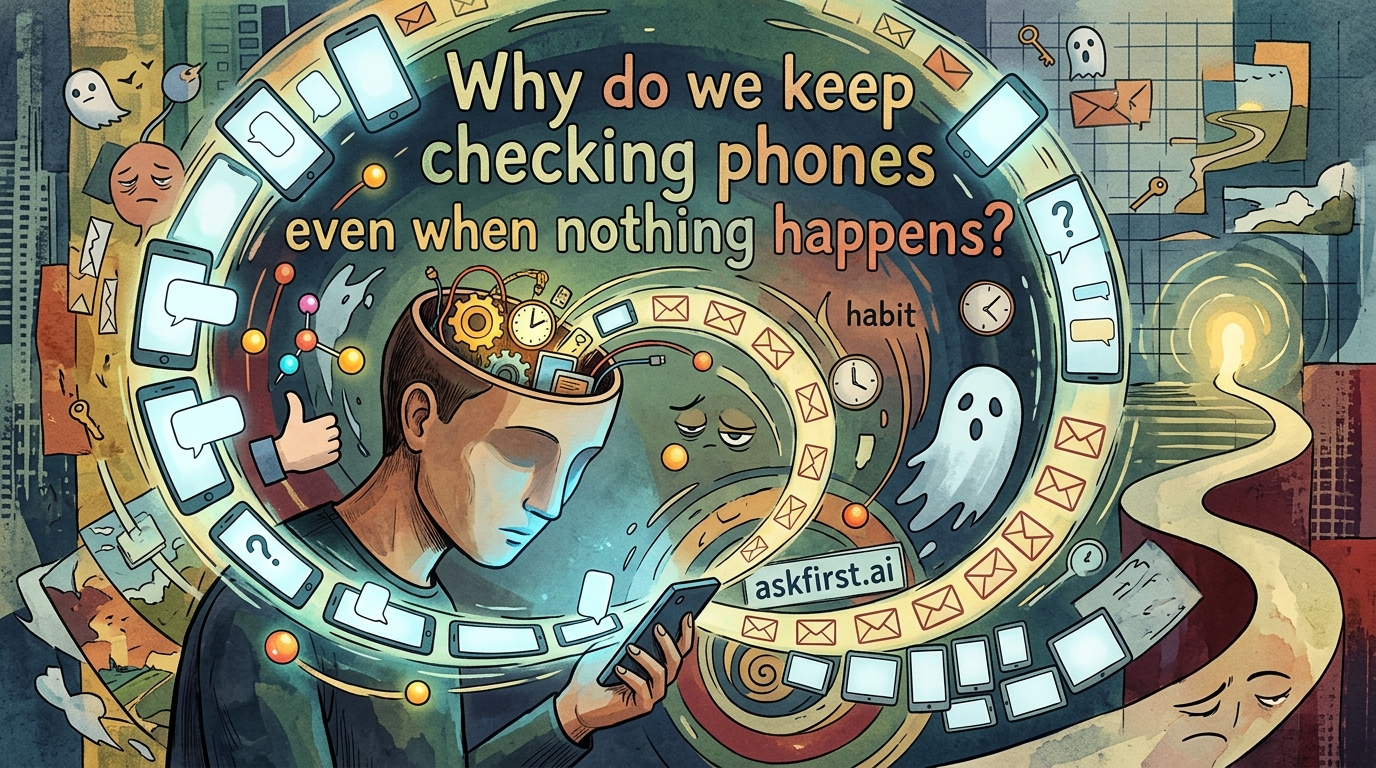
The phenomenon of habitual phone checking—often termed 'micro-checking'—is a hallmark of modern human behavior. Even when the device remains silent, the impulse to unlock, swipe, and scan remains overwhelming. This is not merely a sign of poor self-discipline; it is a complex intersection of neuroscience, behavioral conditioning, and evolutionary biology. To understand why the brain demands this constant engagement, one must look at the hidden mechanisms governing human attention.
The Variable Reward System
At the core of this habit lies the variable reward schedule, a psychological concept famously pioneered by B.F. Skinner in his studies on operant conditioning. When an individual checks their phone, they are engaged in a high-stakes lottery. Most of the time, the check yields nothing (an extinction event). However, on rare occasions, it yields a social validation—a 'like,' a message, or an interesting piece of news. This inconsistency is far more addictive than a consistent reward because it keeps the brain in a state of high-alert anticipation. The brain releases dopamine not necessarily during the reward itself, but during the anticipation of the reward, effectively turning the phone into a digital slot machine.
Fear of Missing Out (FOMO) and Social Anxiety
Human beings are hardwired for social connectivity. Evolutionarily, staying informed about the 'tribe' was a matter of survival. Missing out on social cues or group updates could lead to social ostracization, which, in our ancestors, carried the threat of death. Today, this instinct has been hijacked by technology. The subconscious mind interprets a phone check as a way to maintain social standing. Even if no notification appears, the act of checking serves as a self-soothing ritual, momentarily easing the anxiety that one might be disconnected from the flow of social information.
Cognitive Offloading and Habit Loops
Modern smartphones serve as tools for cognitive offloading. We offload memory, navigation, and social maintenance to our devices. Over time, the brain begins to view the phone as an extension of the self. Charles Duhigg, in his work on habit formation, describes the 'habit loop' as consisting of a cue, a routine, and a reward. For many, the 'cue' has become subconscious—a moment of boredom, a stressful thought, or even a transition between tasks. The 'routine' is the reach for the pocket. The 'reward' is the fleeting sense of agency or distraction provided by the screen. Because this loop is reinforced thousands of times, it bypasses conscious deliberation entirely, becoming a motor-memory habit.
The Role of Micro-Boredom
In contemporary life, silence and stillness have become increasingly rare. We are conditioned to avoid the discomfort of boredom at all costs. The smartphone provides an immediate 'filler' for these tiny pockets of downtime—waiting for an elevator, standing in a checkout line, or sitting in traffic. By checking our phones, we actively avoid internal reflection or observation of the present moment. This avoidance is reinforcing; we learn that if we feel a slight pang of emptiness or boredom, the phone acts as an immediate anesthesia. Over years, the tolerance for boredom diminishes, making the phone check feel like a necessity for maintaining mental equilibrium.
Neurological Rewiring and Neuroplasticity
Continuous, repetitive micro-checking can induce structural changes in how the brain processes attention. Studies on sustained attention show that the 'switching cost'—the time and cognitive energy required to refocus on a deep task after being interrupted by a phone check—is significant. By constantly interrupting our own focus to check an empty screen, we are inadvertently training our brains to struggle with deep, sustained concentration. This is a manifestation of neuroplasticity; the brain is becoming exceptionally efficient at scanning, filtering, and switching, but less adept at deep, meditative thinking.
Breaking the Cycle
Understanding the mechanics of this habit is the first step toward regaining autonomy. Strategies to mitigate the urge include:
- Friction Creation: Increasing the physical steps required to unlock the phone (e.g., hiding apps in folders, turning off all non-human notifications).
- Mindful Replacement: Intentionally labeling the urge to check the phone as a 'boredom alert' and choosing to look at the environment instead.
- Environment Design: Keeping the phone in a separate room during periods of focused work to eliminate the environmental cue.
By transforming the act of checking from an unconscious reflex into a conscious decision, we can regain control over our cognitive resources, proving that we are the masters of our tools rather than the subjects of their programming.