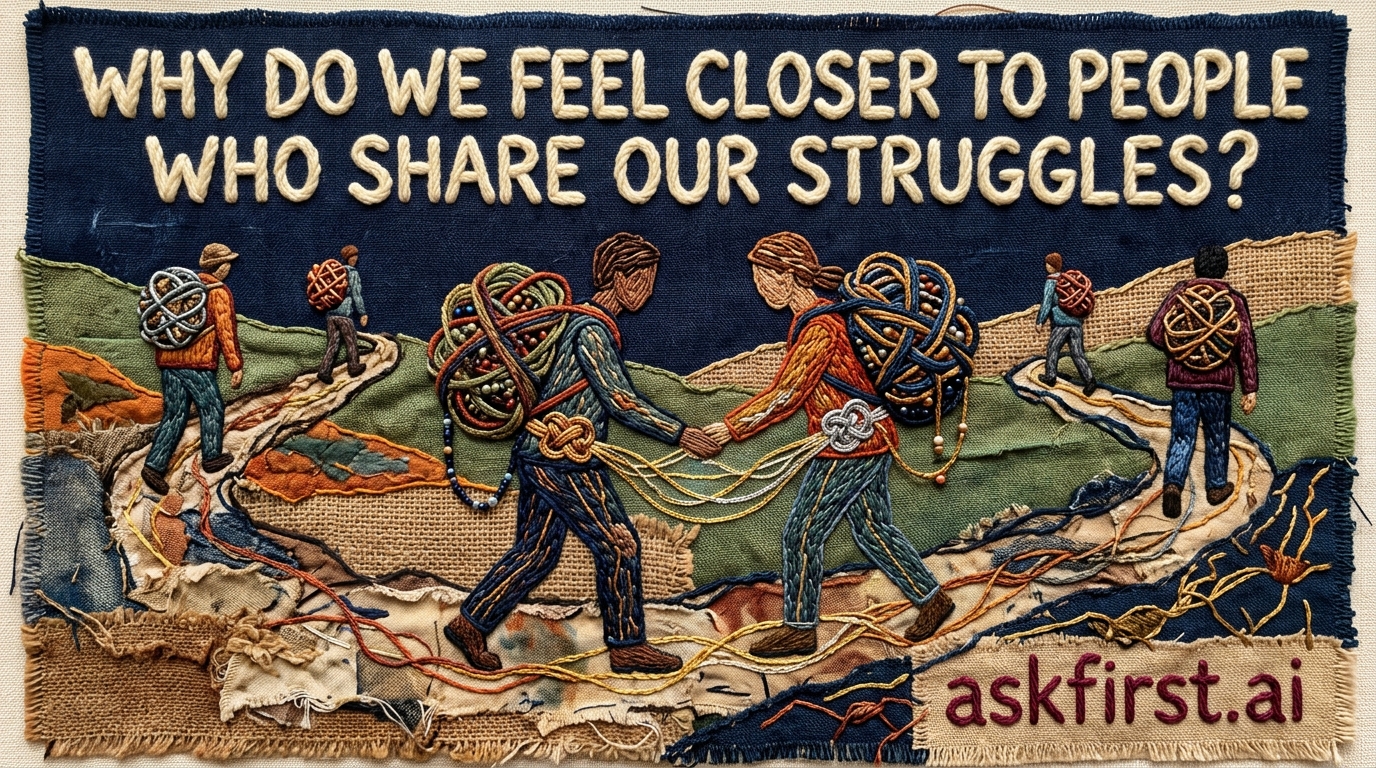
The Psychology of Shared Adversity: Why Vulnerability Builds Bridges
Humans are fundamentally social creatures, yet the most profound connections often arise not from shared joys, but from shared hardships. This phenomenon, often termed the 'vulnerability-trust loop,' is a cornerstone of evolutionary psychology and social dynamics. When individuals traverse difficult terrains together, the barriers that typically guard the ego begin to dissolve, paving the way for deep, authentic bonding that superficial interactions cannot replicate.
The Biological Basis of Bonding
At the neurochemical level, the experience of shared struggle triggers the release of oxytocin, frequently dubbed the 'cuddle hormone.' While commonly associated with physical touch or parenting, oxytocin plays a critical role in social bonding and group cohesion. When individuals encounter stress together, the brain signals a need for coalition. By validating each other's experiences, the brain rewards this social cooperation with neurochemical reinforcement, making the other person appear more trustworthy and reliable. This is an ancient survival mechanism; in ancestral environments, those who stuck together through famine or predation were significantly more likely to survive and propagate.
The Concept of Social Decrypting
Sociologists refer to the process of sharing struggles as 'social decrypting.' In normal daily life, social interactions are often filtered through a series of scripts and facades designed to maintain professional or social decorum. We present our best selves, hide our insecurities, and maintain emotional distance. However, when a crisis or struggle emerges, these scripts fail. The necessity to navigate a problem creates a state of raw honesty.
- Breaking the Facade: Struggles act as a catalyst for authenticity. When the facade drops, individuals are forced to show their 'true' selves.
- Reciprocal Disclosure: Once one person shares a struggle, it creates a psychological permission slip for the other to do the same.
- Validation Loops: The moment someone says, 'I understand, I have been there too,' it fulfills a primal human need to be seen and understood.
The Theory of Transmuted Pain
One of the most fascinating aspects of shared struggle is the concept of transmuted pain. Psychologists have noted that when two people work together to overcome a burden, the nature of the emotional memory associated with that event shifts. It changes from a memory of trauma or hardship into a memory of victory and teamwork. The 'other' person is no longer just a colleague or acquaintance; they become a co-pilot. This shift in memory categorization creates a permanent link in the psyche where the person is forever associated with strength and resilience rather than the original distress.
Mitigating the "Loner" Bias
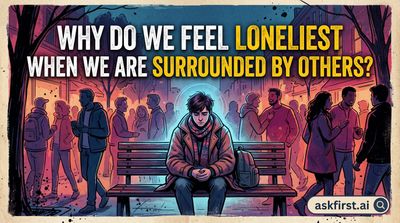
Human beings often suffer from a 'loner bias,' believing that their specific struggles are unique, isolating, and insurmountable. This feeling of uniqueness can be alienating. Discovering that someone else shares these specific challenges provides immediate cognitive relief. It reframes the struggle from an internal, character-based failure to an external, situational challenge. This cognitive reframing reduces anxiety and fosters an immediate sense of 'in-group' status.
- Community Building: Shared struggle transforms a random collection of individuals into a cohesive unit or team.
- Empathy Expansion: By observing how another person manages similar obstacles, individuals learn new coping mechanisms, further increasing the perceived value of that relationship.
- Reduced Friction: In a friendship forged through trial, there is often less 'social friction' because the foundation of the relationship has already been stress-tested.
The Dark Side vs. The Light Side
While shared struggle is powerful, it is essential to distinguish between healthy bonding and trauma bonding. Healthy bonding through shared challenges involves mutual support, growth, and the pursuit of a common goal. Trauma bonding, conversely, is an unhealthy attachment to an individual based on the repetition of a cycle of abuse and intermittent reinforcement. Genuine connection requires a shared desire to improve, move forward, and maintain mutual respect throughout the difficulty.
Practical Application in Modern Life
In an increasingly digital age where surface-level connectivity is at an all-time high, deep bonds are becoming rarer. To cultivate strong relationships, one does not necessarily need to search for catastrophe. Instead, one can look for 'micro-struggles.'
- Collaborative Learning: Tackling a difficult new skill with a friend creates a low-stakes environment for shared struggle.
- Honest Discourse: Moving conversations beyond small talk into the realm of real-world challenges and aspirations builds the same neurological pathways as larger crises.
- Community Initiatives: Volunteering for difficult projects creates a sense of shared purpose that effectively mirrors the evolutionary bonding mechanisms described.
In conclusion, the proximity we feel to those who share our trials is not an accident of fate, but a profound result of human evolutionary design. We are wired to seek refuge in one another when the world gets difficult. By embracing our vulnerability and seeking out others who are navigating similar paths, we do more than just make friends; we build the social architecture necessary for a resilient and meaningful life.