The Illusion of Recollection: Unraveling False Memories
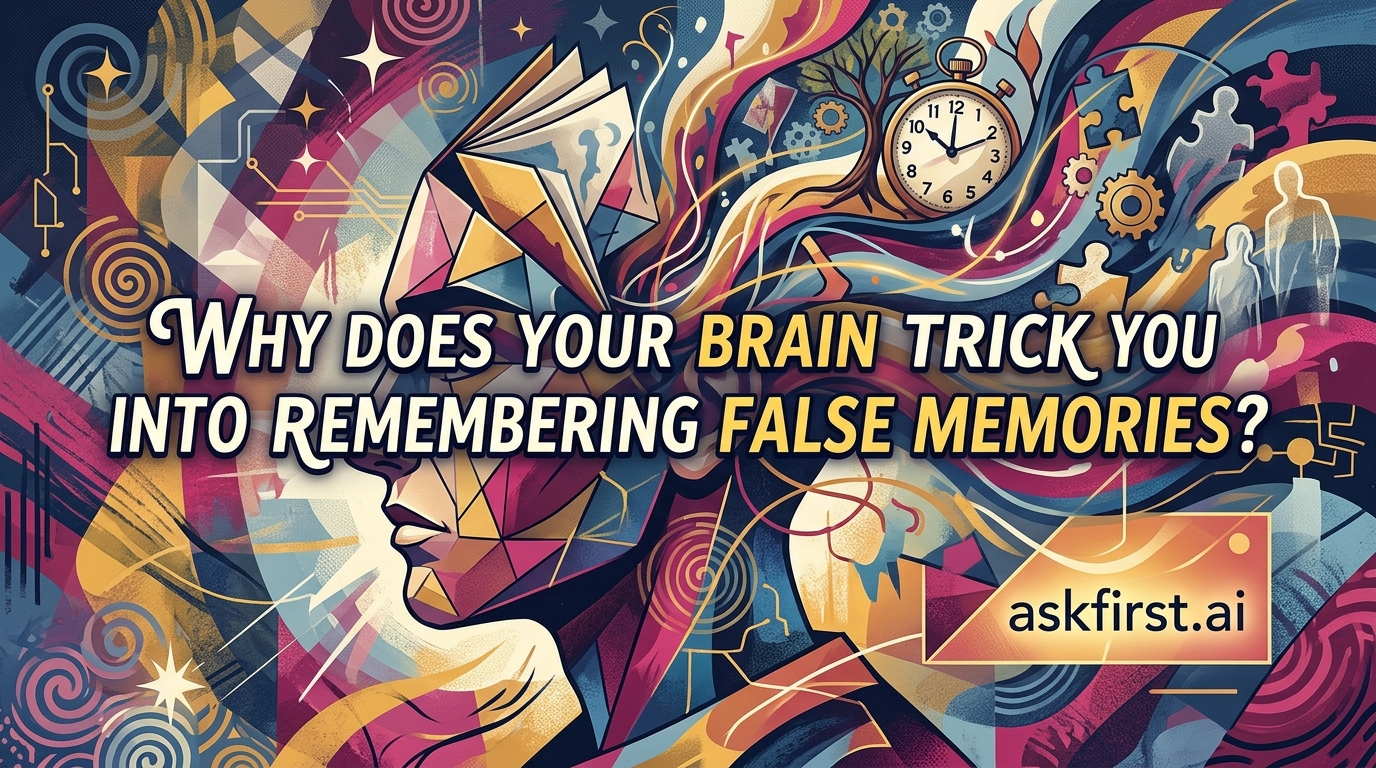
Human memory is often conceptualized as a reliable recording device, similar to a high-definition video camera. However, scientific consensus reveals a vastly different reality: memory is a reconstructive process, not a reproductive one. The brain does not play back a static file; instead, it reassembles fragments of information, influenced by current emotional states, expectations, and external suggestions. This leads to the fascinating, yet sometimes startling, phenomenon of false memories.
The Mechanics of Memory Distortion
At the core of memory fallibility is the concept of source monitoring. The brain stores the 'what' of an event—the content—separately from the 'where' or 'when' of the event—the source. When these markers become misaligned, the brain may attribute a thought, a dream, or a piece of misinformation to a real past experience.
- Schemas and Scripts: The brain utilizes mental templates called schemas to organize information efficiently. If an event contradicts a schema (e.g., expecting a library to be quiet but experiencing a loud argument), the brain may subconsciously 'correct' the memory later to align with the expected social script.
- The Misinformation Effect: As famously demonstrated by psychologist Elizabeth Loftus, leading questions can rewrite memory. By simply changing a verb—such as asking how fast cars were going when they 'smashed' versus 'hit'—the perceived intensity of the event is permanently altered in the witness's mind.
The Biological Imperative of Flexibility
Why would the brain evolve a system that is prone to inaccuracy? The answer lies in adaptive utility. The goal of human memory is not to preserve an archival history of every mundane moment, but to serve as a guide for future survival. By prioritizing the gist of an experience over specific details, the brain remains flexible. This allows humans to apply past lessons to new, slightly different circumstances. For instance, remembering that a specific plant caused an allergic reaction is more important than recalling the exact lighting conditions of the day it happened. The 'trick' of a false memory is often the byproduct of the brain trying to synthesize disparate experiences to create a cohesive narrative for future navigation.
Common Triggers for False Memories
- Suggestibility: Peer pressure or influential authority figures can inadvertently plant ideas that the brain then incorporates into autobiographical history.
- Emotional Intensity: Paradoxically, highly emotional events can lead to both flashbulb memories and significant distortions. The focus on a central, stressful object (like a weapon or an accident) often leaves the peripheral details—such as the color of a person’s shirt—highly susceptible to 'filling in' via imagination.
- The Imagination Inflation Effect: Repeatedly imagining an event creates a neural representation that becomes increasingly difficult to distinguish from reality. The more detailed the imagination, the more 'real' the memory feels to the brain.
The Mandella Effect and Collective Falsehoods
Beyond individual slips, social environments can propagate collective false memories. The 'Mandela Effect' occurs when a large group of people shares an identical, incorrect memory—such as the spelling of a popular children's book series or a specific iconic movie line. This phenomenon highlights how cultural consensus and linguistic priming can override individual sensory experience, creating a shared reality that defies historical fact.
Protecting the Integrity of Recollection
While complete immunity to memory distortion is likely impossible due to the biological architecture of the hippocampus and prefrontal cortex, awareness serves as the best defense.
- Cultivate Skepticism: Recognize that vividness is not synonymous with accuracy. A memory can feel 'real' and still be entirely fabricated.
- Cross-Verification: Whenever possible, verify high-stakes memories against external records, such as photographs, journals, or other witnesses, rather than relying solely on the feeling of certainty.
- Mindful Reconstruction: Understand that reflecting on a memory changes it. Every time a memory is accessed, it becomes malleable, allowing new information to be stitched into the tapestry of the past.
In summary, the brain’s ability to create false memories is a testament to its creative power. It is an organ designed for synthesis, pattern recognition, and future planning. While this sometimes results in the unintentional distortion of personal history, it is a small price to pay for the incredible cognitive flexibility that allows human beings to learn, adapt, and evolve in a complex world.