The Neurobiological Mechanics of Stress and Impulse
The human brain is an evolutionary masterpiece, yet it often operates on ancient programming that conflicts with modern life. When the body encounters a stressor—whether a looming deadline or social anxiety—the brain shifts its metabolic resources. The phenomenon of seeking instant gratification during these moments is a classic example of the struggle between the primitive limbic system and the sophisticated prefrontal cortex.
1. The Hijack: Limbic System vs. Prefrontal Cortex
The brain functions via a delicate balance between the limbic system (the emotional and survival center) and the prefrontal cortex (the executive function center responsible for planning and impulse control). Under acute or chronic stress, the hormone cortisol floods the brain. High levels of cortisol have been shown to literally inhibit the connectivity of the prefrontal cortex. As executive function wanes, the brain becomes reactive rather than proactive, seeking immediate relief from discomfort. This transition is not a lack of willpower; it is a physiological surrender to the survival drive.
2. The Role of Dopamine and Emotional Regulation
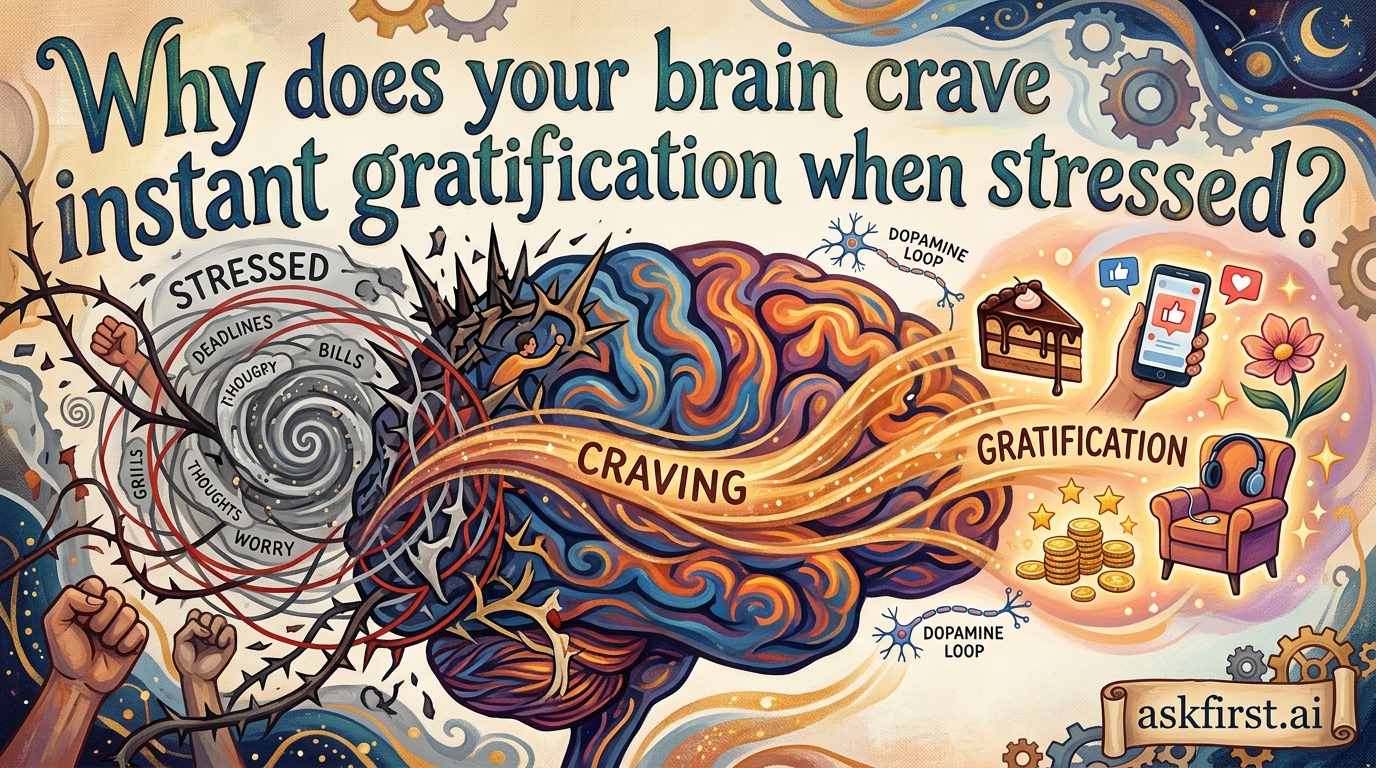
Instant gratification—scrolling social media, consuming sugar, or impulsive shopping—triggers a quick release of dopamine in the ventral striatum. In a stressed state, the brain views these activities as a temporary anesthetic. Because the prefrontal cortex is offline, the capacity to perform 'cost-benefit analysis' for long-term goals disappears. The brain is effectively seeking 'cheap dopamine' to soothe the nervous system in real-time. This mechanism is essentially a shortcut for self-regulation.
3. Evolutionary Persistence of 'Fast Rewards'
From an evolutionary psychology perspective, there was once a logical reason to prioritize the immediate over the distant. In an ancestral environment, a calorie-dense meal discovered today might disappear tomorrow. Therefore, consuming as much as possible immediately was a survival advantage. Stress signals often triggered this 'feast-now' mentality to ensure energy reserves. Today, while we do not face famine, our brain still interprets high-stress environments as resource-scarce environments, pushing the individual to grab immediate, easy, and caloric rewards.
4. The Loop: Why We Return to Bad Habits
This behavior creates a cycle often referred to as the stress-reward feedback loop. When a person experiences stress, they perform an impulsive action to gain relief. The brain then associates that specific action with stress reduction. Over time, the neural pathways for this behavior become reinforced. In future stress events, the brain suggests the same shortcut. Breaking this loop requires intentional cognitive restructuring: mindfulness training can strengthen the prefrontal cortex, allowing the individual to 'pause' before the impulse takes over.
5. Practical Strategies to Reclaim Control
- The Five-Minute Rule: When the urge for instant gratification strikes, commit to waiting just five minutes. Often, the cortisol spike will subside, allowing the rational brain to come back online.
- Environment Design: Reduce 'friction' for good habits and increase 'friction' for impulsive ones. If stress triggers phone scrolling, keep the phone in a different room during high-pressure tasks.
- Physiological Reset: Engage the parasympathetic nervous system via controlled breathing. Deep, rhythmic breathing reduces cortisol levels, directly neutralizing the urge to seek impulsive external comfort.
Conclusion: Moving Toward Conscious Regulation
Understanding that this craving is a biological 'glitch' rather than a character flaw is the first step toward mastery. By acknowledging that stress compromises executive function, individuals can implement external guardrails to prevent impulsive decisions. By nurturing the prefrontal cortex through rest, proper nutrition, and intentional pauses, one can move from being a slave to neurochemistry to becoming a master of intentional focus. This transformation does not happen overnight, but through consistent practice, the neural architecture of resilience can be rebuilt, allowing for better choices even amidst the most intense pressures.