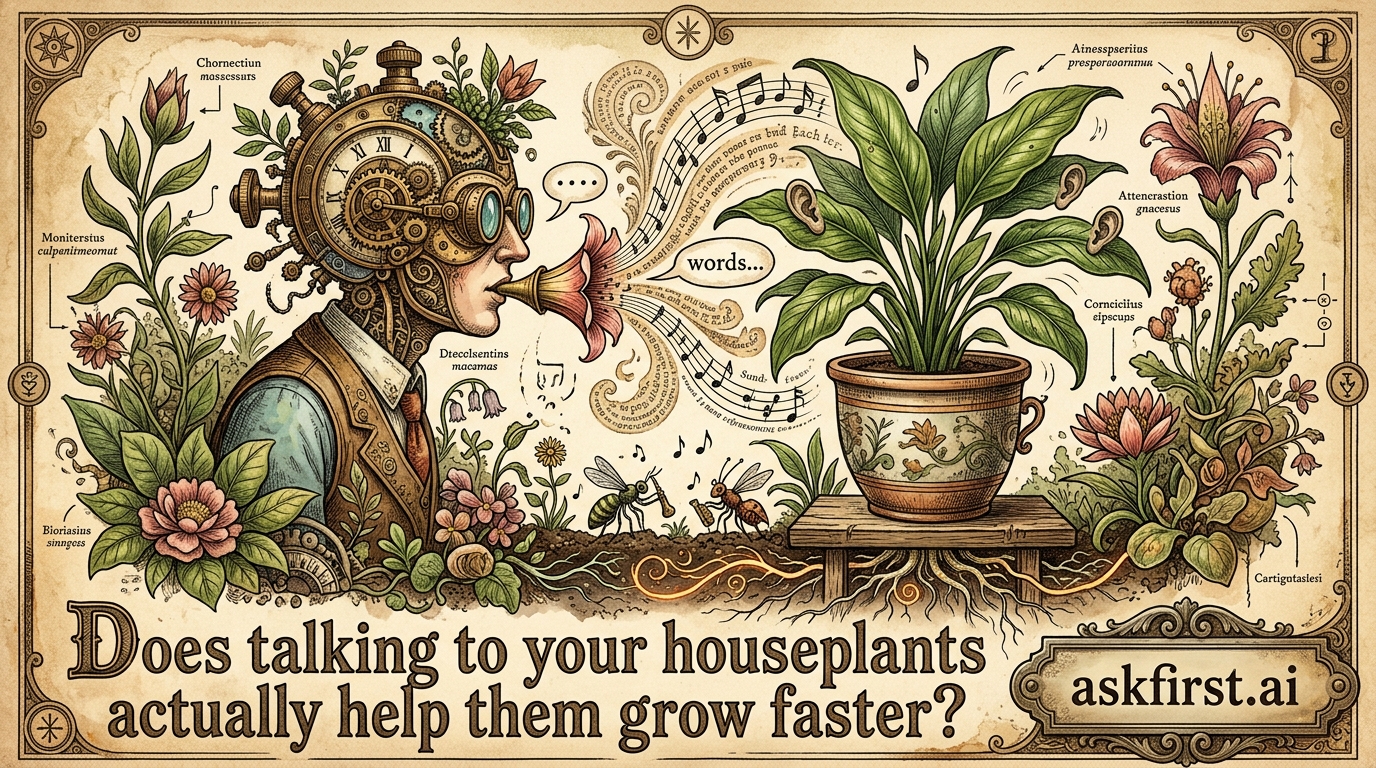
The Science Behind the Sound: Can Plants Hear You?
For decades, the idea that speaking to houseplants promotes growth has drifted between charming urban myth and fringe botanical theory. While it might sound like the plot of a fantasy novel, the biological reality of how plants interact with sound waves is a fascinating field of study known as plant bioacoustics. While plants do not possess brains, nervous systems, or ears, they are remarkably sensitive organisms that exist in a constant state of vibrational awareness. Researchers have found that plants respond to acoustic signals by altering their gene expression and metabolic processes.
Mechanical Vibrations and Mechanoreceptors
At the core of the discussion is the role of mechanical vibrations. When a person speaks, they produce sound waves—pressure oscillations that travel through the air. Plants are covered in mechanoreceptors, which are essentially specialized cell structures capable of sensing physical movement, touch, and vibrational changes. Studies, such as those conducted at the University of Western Australia, have indicated that plants can perceive these vibrations through their cell membranes.
When a plant 'hears' a specific frequency, it can trigger a defensive or growth-oriented response. For example, some studies have shown that plants exposed to the sound of chewing caterpillars or buzzing bees trigger chemical defenses, such as increasing the production of mustard oils or volatile organic compounds. If sound can trigger defense, can it also trigger growth?
The Role of Carbon Dioxide and Airflow
One of the most pragmatic explanations for the 'talking to plants' phenomenon is simple physics rather than telepathy. When a person speaks to a plant, they are physically standing near it. This proximity increases the localized concentration of carbon dioxide (CO2). Plants require CO2 for photosynthesis; therefore, by leaning in and breathing near your plant, you are inadvertently providing a small, localized boost of the gas necessary for metabolic fuel. Furthermore, the gentle airflow created by vocalization and human presence can stimulate the plant’s thigmotropism—a growth response to physical stimuli—which often results in sturdier, more resilient stems.
What the Research Suggests About Frequency
Not all sounds are created equal. Scientific experiments have tested various frequencies on crops to observe growth rates. In several peer-reviewed studies:
- Low-Frequency Sounds: These vibrations are thought to mimic the natural rhythms of the environment, potentially helping to move nutrients within the plant’s xylem and phloem more efficiently.
- High-Frequency Sounds: Conversely, some high-frequency noise has been associated with stress responses.
It is essential to clarify that plants do not 'understand' English, Spanish, or any human language. They do not comprehend compliments or feel love. However, the rhythmic nature of human speech might create a beneficial vibrational environment if the frequency is consistent and moderate.
Busting the Myth: It Is Not About Emotion
There is a prevailing belief that plants grow better because they respond to the 'love' or 'positive energy' projected by the speaker. From a scientific perspective, this is not a measurable biological process. A plant will not grow faster because it appreciates your tone; it will grow faster if the environment is optimized. If you talk to your plants, you are almost certainly checking on them more often. This lead to a 'care bias.' You are more likely to notice dry soil, pests, or nutrient deficiencies because you are paying close attention to the plant while speaking to it. Thus, the improved health of the plant is likely a byproduct of increased human observation rather than the speech itself.
Practical Tips for Plant Health
If you want to maximize your plant's growth, rather than relying on conversation, focus on the factors that truly matter:
- Consistent Light Exposure: Understand the specific light needs of your variety (low light vs. direct sun).
- Soil Hydration: Avoid waterlogging by using containers with proper drainage.
- Nutrient Management: Provide appropriate fertilizers during the growing season.
- Environmental Stability: Keep your plants away from direct drafts or fluctuating temperature zones.
Conclusion
So, does talking to your houseplants help them grow? While there is no empirical evidence to suggest that plants 'enjoy' your conversation, the act of speaking to them creates a beneficial feedback loop. You become more attentive, you provide carbon dioxide through your breath, and you create a environment of care. Whether it is the vibration of your voice or the increased level of attention you provide, your plants certainly do not suffer from the interaction. If talking to your flora brings you joy and encourages you to be a more vigilant gardener, then keep talking. Your garden will surely thank you for the extra time, if not the actual words.