The Harmony Between Sonic Preference and Human Psyche
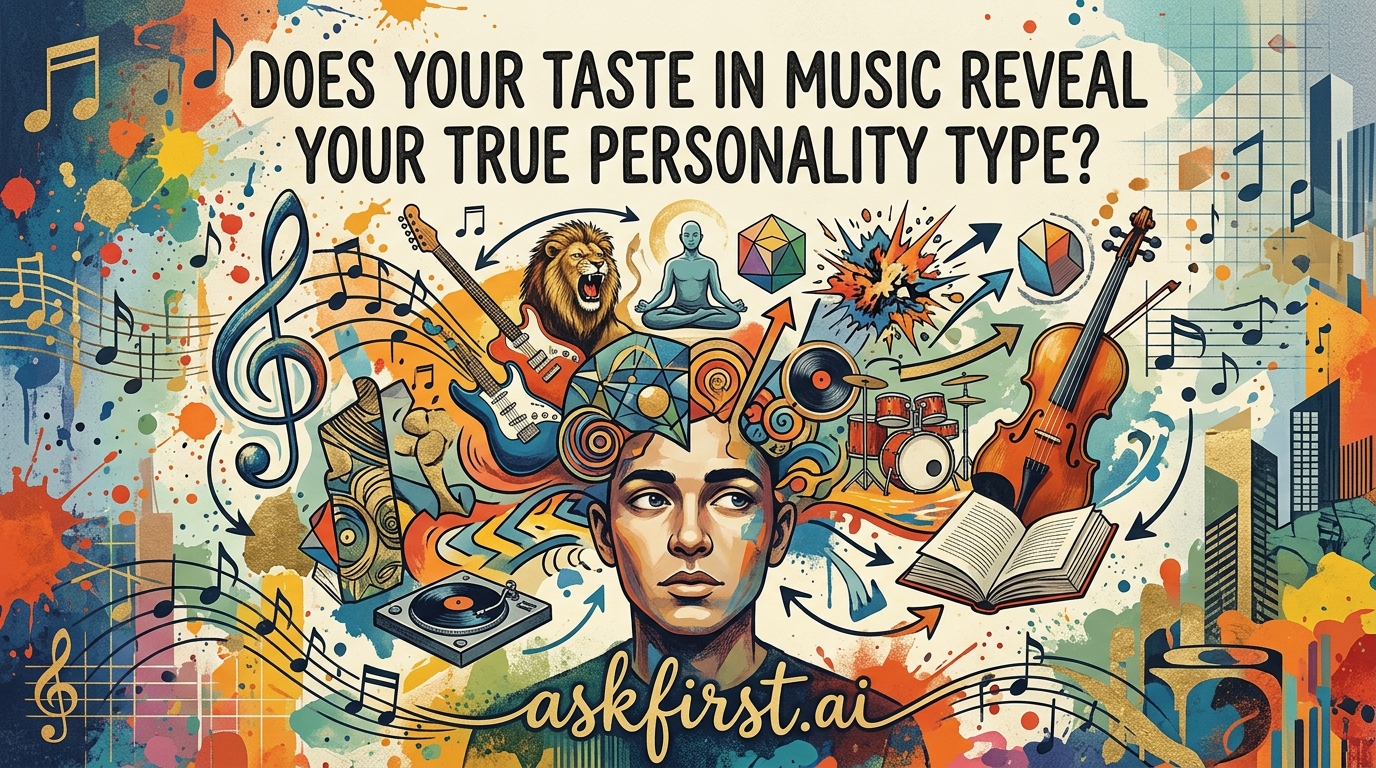
For decades, psychologists and musicologists have scrutinized the relationship between auditory preferences and individual personality traits. The central question remains: is the music one selects a mere aesthetic choice, or is it a blueprint of the subconscious mind? Scientific consensus suggests that music acts as a powerful prism, refracting personality characteristics such as Openness, Extraversion, and Neuroticism into audible patterns.
The OCEAN Model of Personality
To understand this connection, researchers often utilize the Big Five Personality Traits (OCEAN): Openness, Conscientiousness, Extraversion, Agreeableness, and Neuroticism. Extensive data analysis, most notably studies conducted by the University of Cambridge, has shown that specific genre preferences correlate strongly with these traits:
- Openness to Experience: High scorers in this trait often gravitate toward complex, intricate, and non-mainstream genres. This includes classical, jazz, and experimental electronic music. These individuals seek intellectual stimulation and novelty, favoring music that challenges conventional structures.
- Extraversion: Those who rank high on the extraversion scale typically prefer high-energy, rhythmic, and danceable music. Pop, R&B, and upbeat EDM are staples here, as these styles align with a desire for social interaction and sensory engagement.
- Agreeableness: Individuals who prioritize empathy and social cohesion often enjoy upbeat, harmonious, and positive music. Genres like soft rock, acoustic pop, and soul often resonate with those who value emotional connection and tranquility.
- Neuroticism: While the correlation is more complex, some evidence suggests that those higher in neuroticism may use music as a self-regulation tool. Darker, more intense, or emotionally cathartic styles—such as heavy metal or melancholic ballads—can serve as a mechanism to process high levels of emotional volatility.
The Mechanisms of Musical Association
Why does music reveal personality? It functions through three primary psychological levers: cognitive style, emotional regulation, and self-identity signaling.
Cognitive Style: Research suggests a distinction between 'empathizers' (who focus on emotional content) and 'systemizers' (who focus on structure and rules). Empathizers tend to favor mellow, unpretentious music that evokes emotion, whereas systemizers gravitate toward music with high complexity and intellectual depth.
Emotional Regulation: Music is a versatile tool for mood management. When individuals encounter high-stress environments, their choice of music often reveals their coping strategy. Choosing music that mirrors one's emotional state—a phenomenon known as 'isopraxic effect'—allows for a sense of validation, while selecting music to counteract a mood reveals the capacity for self-regulation.
Social Identity Signaling: Music acts as a cultural badge. Adolescents and adults alike use their musical taste to signal membership to certain groups. By choosing a specific genre, an individual is making a statement about their values, their social circles, and how they wish to be perceived by others.
Challenging the Stereotypes
It is vital to distinguish between a correlation and a hard identity rule. Musical preference is not stagnant; it is fluid, shaped by life experiences, geographic upbringing, and neuroplasticity. Furthermore, modern algorithmic music platforms like Spotify or YouTube have introduced a variable known as 'recommendation bias.' When software dictates what a user hears, the traditional link between internal personality and external music choice becomes blurred. People often grow into the music that the algorithm suggests, which challenges the idea that music taste is purely an innate manifestation of personality.
Conclusion: The Ever-Changing Score
Ultimately, while music preference serves as an accurate psychological indicator, it is not a deterministic one. It is a reflection of the self at a specific juncture in time. As the human psyche evolves, so too does the soundtrack of our lives. When examining the link between personality and song, one must recognize that we are not just what we listen to; we are the listeners who adapt, grow, and choose to find meaning in the waves of sound that resonate with our shifting inner reality. Musical taste provides a fascinating window into the self, yet it remains just one piece of the vast, intricate puzzle that constitutes human identity.