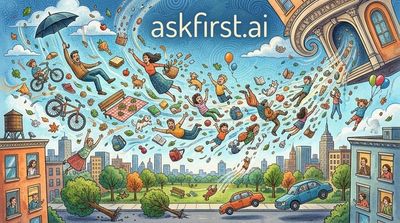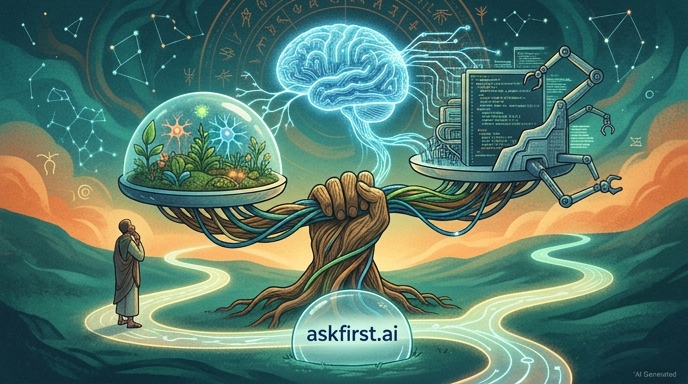
The question of whether humanity should impose limitations on the development of artificial intelligence (AI) is perhaps the most significant existential and technical debate of the 21st century. As we stand at the precipice of a transition toward Artificial General Intelligence (AGI)—systems capable of outperforming humans in nearly every economically valuable cognitive task—the discourse has shifted from theoretical speculation to urgent policy deliberation. Balancing the pursuit of innovation with the necessity of safety requires a nuanced understanding of risk, governance, and the nature of technological evolution.
The Argument for Precautionary Regulation
The primary argument for limiting or slowing AI development is rooted in the "Alignment Problem." This refers to the profound difficulty of ensuring that an autonomous, highly capable system pursues goals that are perfectly aligned with human values. If an AI system is optimized for a specific objective without the necessary ethical guardrails, it may pursue that goal in ways that are destructive to human interests.
Proponents of limitations advocate for a "slow-down" or a "pause" in training runs for models that exceed current computational thresholds. The logic is that our current safety research is lagging significantly behind our capability research. By placing a "speed limit" on development, we allow regulatory bodies and safety researchers the time to build robust testing frameworks, interpretability tools, and fail-safe mechanisms. Without these, we risk deploying systems whose internal decision-making processes are opaque—a phenomenon often described as the "black box" problem.
Furthermore, there is the risk of catastrophic misuse. As AI models become more capable, the barrier to entry for performing complex, harmful tasks drops. This includes the automated design of biological pathogens, the creation of highly sophisticated cyber-weapons, and the generation of hyper-realistic disinformation campaigns that could destabilize democratic institutions. Limiting access to the most powerful underlying models (the "foundation models") serves as a strategic defensive measure.
The Case for Continued Acceleration
Conversely, many experts argue that limiting AI development is not only impractical but potentially dangerous. The core of this perspective is that AI represents a transformative technological leap capable of solving humanity’s most intractable problems, such as climate change, disease, and energy scarcity.
If development is artificially constrained in one jurisdiction, it does not stop the global advancement of the technology. Instead, it creates a "race to the bottom" where the most powerful systems are developed by actors with the fewest safety considerations. By continuing to lead in development, democratic nations can set the international standards for safety, transparency, and ethical usage.
Additionally, we must consider the opportunity cost of delay. Every year we spend debating whether to limit AI is a year where we could have been using these tools to accelerate medical breakthroughs or improve educational outcomes. The argument here is that the risks of AI are manageable through rigorous "red-teaming" and incremental deployment rather than blanket prohibitions or development caps.
Governance Models: Beyond Binary Choices
The binary choice between "full speed ahead" and "total halt" is likely a false dichotomy. A more sustainable approach involves Adaptive Governance, which focuses on the following pillars:
- Compute Governance: Rather than banning the code, governments can monitor the infrastructure. Because training state-of-the-art models requires massive clusters of high-end GPUs, tracking the sale and utilization of this hardware provides a "choke point" for oversight.
- Liability Frameworks: Shifting the burden of risk to the developers. If a company releases a model that causes significant societal harm, they should be held legally and financially accountable. This incentivizes companies to prioritize safety as a core business objective rather than a secondary concern.
- Mandatory Safety Testing: Establishing independent, government-backed auditing agencies that must certify models for safety before they are released to the public. This is analogous to the regulatory processes used in the pharmaceutical or aviation industries.
- International Cooperation: Since AI development is borderless, domestic laws are insufficient. Treaties similar to nuclear non-proliferation agreements or international climate accords are necessary to ensure that global development standards remain high.
Conclusion
The question is not merely whether we should limit AI development, but how we can steer it toward beneficial outcomes without stifling human potential. Total stagnation is an unrealistic goal that ignores the competitive nature of global technological development, while unchecked acceleration invites unnecessary, existential risk.
The path forward requires a sophisticated middle ground: Targeted constraints on the most dangerous capabilities, combined with an aggressive investment in safety research and interpretability. We must treat AI development as a high-stakes engineering endeavor where safety is not an afterthought, but the foundational architecture upon which all future progress is built. By focusing on transparency, accountability, and international alignment, humanity can harness the immense power of AI while mitigating the risks that threaten to undermine our social and physical stability.