The Neural Architecture of Selective Attention
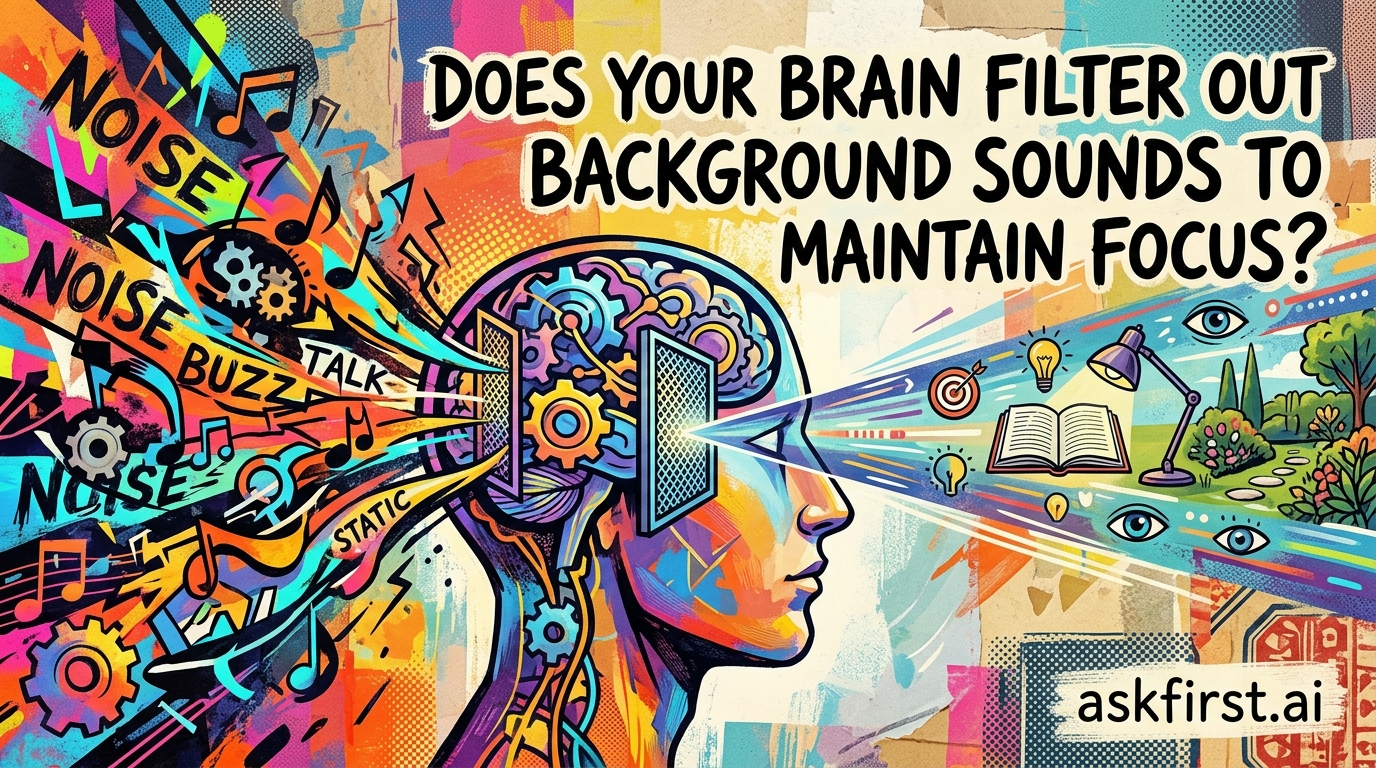
The human brain is a marvel of evolutionary engineering, functioning as a high-fidelity biological computer that constantly processes an overwhelming deluge of sensory data. Among its most critical tasks is the ability to maintain focus amidst a noisy environment, a feat accomplished through a sophisticated mechanism known as 'selective attention.' Far from a passive receiver, the brain acts as an active gatekeeper, orchestrating a complex dance of neural suppression and amplification to ensure that vital information reaches the conscious mind while extraneous auditory clutter is systematically relegated to the background.
The Thalamic Gatekeeper: How Filtering Begins
At the center of this filtering process lies the thalamus, a structure often described as the brain's primary relay station. The thalamus serves as a sensory switchboard, receiving raw auditory signals from the ears and determining which data deserves 'bandwidth' for cortical processing. Research indicates that when a person engages in deep concentration, the thalamus decreases its sensitivity to predictable or repetitive auditory stimuli, such as the hum of an air conditioner or distant traffic. By attenuating these neural pathways before the signals reach the auditory cortex, the brain effectively turns down the volume on the world, allowing for a focused cognitive state.
Sensory Gating and the Cocktail Party Effect
The phenomenon often associated with this filtering is the 'Cocktail Party Effect.' This term describes the remarkable human ability to focus on a single conversation in a crowded room, ignoring all other competing sounds. This is facilitated by 'sensory gating,' a pre-attentive process that filters out redundant stimuli in the first few milliseconds of sensory processing. Neuroscientists have observed that through EEG studies, the P50 component—a brief neural spike—demonstrates how the brain habituates to repetitive sounds. If the brain did not possess this filtering capacity, every minor sound, from the ticking of a clock to the rustle of paper, would demand equal cognitive resources, leading to rapid mental exhaustion and an inability to perform complex tasks.
The Role of Top-Down Modulation
Filtering is not merely a reactive process; it is profoundly influenced by 'top-down' modulation. This means that the prefrontal cortex—the seat of executive function and planning—sends signals downward to the sensory processing areas. When a person possesses a high degree of motivation or goal-oriented focus, the prefrontal cortex essentially tells the auditory system, 'ignore everything except the task at hand.' This explains why, when deeply immersed in a hobby or an intellectual pursuit, individuals often fail to hear their names being called. The brain has prioritized the visual or conceptual feedback of the task over the input from the auditory environment.
Factors Influencing the Filtering Mechanism
Not all brains filter sound with the same efficacy. Several factors can modulate this performance:
- Cognitive Load: When a task requires extreme mental effort, the brain's filtering capacity increases. Conversely, when a task is simple or boring, the brain may relax its filter, allowing background sounds to become distracting.
- Emotional Salience: The brain is wired to prioritize sounds with survival significance. Even in deep focus, the brain will instantly drop its filter for sounds like a sudden loud bang, a baby crying, or one's own name. These 'arousal' sounds bypass the standard filter because they trigger an immediate fight-or-flight response.
- Sleep and Health: Sleep deprivation impairs the thalamic gating mechanism. A tired brain struggles to filter, explaining the heightened sensitivity to noise and increased distractibility often experienced after a poor night's sleep.
The Limits of Biological Noise Cancellation
While the human filtering system is robust, it is not limitless. Sustained exposure to chaotic auditory environments can lead to 'cognitive fatigue.' Even if the brain successfully filters out background noise, the metabolic cost of maintaining that filter is high. This is why working in quiet environments is generally more sustainable for complex cognition. When the 'signal-to-noise ratio'—the ratio of relevant task-related information to irrelevant background noise—becomes too low, even the most focused brain eventually loses its ability to sustain concentration.
Practical Implications for Modern Productivity
Understanding these mechanisms highlights why practices such as 'deep work' are so effective. By proactively reducing background noise via white noise machines or noise-canceling headphones, individuals alleviate the burden on the brain's filter. When the external environment is quiet, the brain does not have to expend the neural energy required to suppress extraneous sounds, effectively freeing up more processing power for the primary task. Ultimately, the brain does filter sounds to maintain focus, but it thrives best when that biological filter is supported by a consciously curated environment.