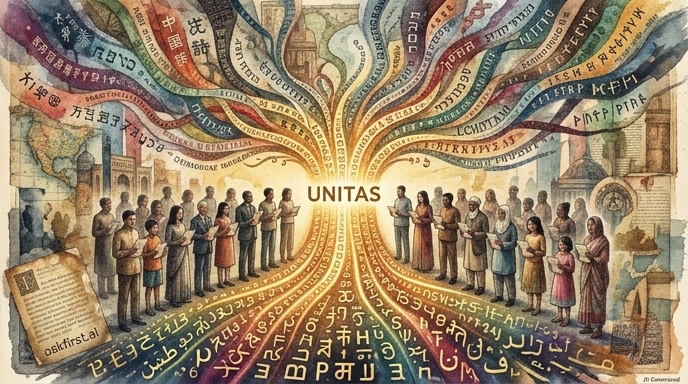
The hypothetical scenario of a single global language replacing all others—often referred to as linguistic homogenization—is a subject of profound debate among linguists, sociologists, and anthropologists. While proponents of a universal tongue argue that it would eliminate barriers to communication and foster global unity, the reality is far more complex. The disappearance of thousands of languages would trigger a catastrophic loss of human cognitive diversity, cultural heritage, and ecological knowledge.
The Erosion of Cognitive Diversity and "Linguistic Relativity"
The Sapir-Whorf hypothesis, or the principle of linguistic relativity, suggests that the structure of a language influences its speakers' worldviews and cognition. Each language acts as a unique lens through which reality is perceived. For instance, languages with different systems for describing time, spatial orientation, or emotional states force their speakers to pay attention to specific nuances of the world.
If a single language were to dominate, we would lose the "cognitive flexibility" that comes from navigating multiple linguistic frameworks. Concepts that are intricately linked to specific cultural vocabularies—such as the German Schadenfreude (taking pleasure in others' misfortune) or the Japanese Komorebi (sunlight filtering through trees)—might become untranslatable or lose their depth. When a language dies, the specific way of thinking that it facilitates often dies with it, leading to a narrowing of the human intellectual horizon.
The Loss of Cultural Identity and Heritage
Language is the primary vehicle for culture. It is not merely a tool for communication; it is a repository of history, folklore, music, and social norms. When a language is replaced, the oral traditions, poetic forms, and unique rhetorical styles tied to that language are frequently discarded.
Consider the loss of indigenous languages, which often contain vast stores of ecological wisdom. Many endangered languages possess highly specific taxonomies for local flora and fauna, describing properties of plants or animal behaviors that have not yet been documented by modern science. A global language would likely favor the dominant culture’s scientific and social paradigms, effectively erasing centuries of indigenous observation and traditional knowledge. The homogenization of language inevitably leads to the homogenization of cultural expression, resulting in a global monoculture where unique regional identities are subsumed into a singular, flattened narrative.
The Sociopolitical and Economic Implications
From a functionalist perspective, a single global language would theoretically streamline international trade, diplomacy, and education. The costs associated with translation, interpretation, and language learning would vanish, potentially accelerating global integration. However, this creates a new set of power dynamics. The language that becomes the "global standard" would inherently possess immense political and economic leverage.
If one language becomes the sole medium of power, those who are not native speakers of that language—or those whose cultural background does not align with the logic of that language—would face systemic disadvantage. We already see this today with the dominance of English in academia and technology; those who do not speak it fluently are often excluded from the highest levels of global discourse. A total replacement would turn this disparity into a permanent caste system, where the "global language" serves as an exclusive gatekeeper to success.
The Impact on Human Evolution and Adaptability
Biologically, diversity is a survival mechanism. This principle holds true for human society as well. A single language is a "single point of failure." If a language is tied to a specific set of cultural assumptions, it may lack the vocabulary or conceptual frameworks to solve problems that arise outside of that cultural context.
Furthermore, language acts as a buffer against total cultural collapse. If a specific society faces a crisis, the existence of different linguistic and cultural groups provides alternative strategies for survival. By forcing humanity into a monolithic linguistic structure, we would be stripping away the "cultural redundancy" that has allowed humanity to adapt to vastly different environments over the millennia.
The Illusion of Unity
Finally, it is a fallacy to assume that a single language would lead to a world without conflict. History is replete with wars fought between groups that shared a common language, including civil wars and ideological conflicts within nations. Conflict is rarely caused by the inability to understand the other side's words; rather, it is driven by competing interests, unequal resource distribution, and ideological friction. A universal language might actually make it easier for authoritarian regimes to impose control, as dissent could be more easily monitored and suppressed across a population that lacks the "secret" of a minority language.
In summary, while the dream of a "universal language" sounds like a bridge to global harmony, it would likely result in a profound impoverishment of the human experience. We would lose the vibrant tapestry of human thought, the deep wisdom of ancestral traditions, and the essential diversity that drives innovation. Instead of seeking a single language, the preservation of linguistic diversity should be viewed as an essential component of protecting the future of human intelligence and cultural resilience.