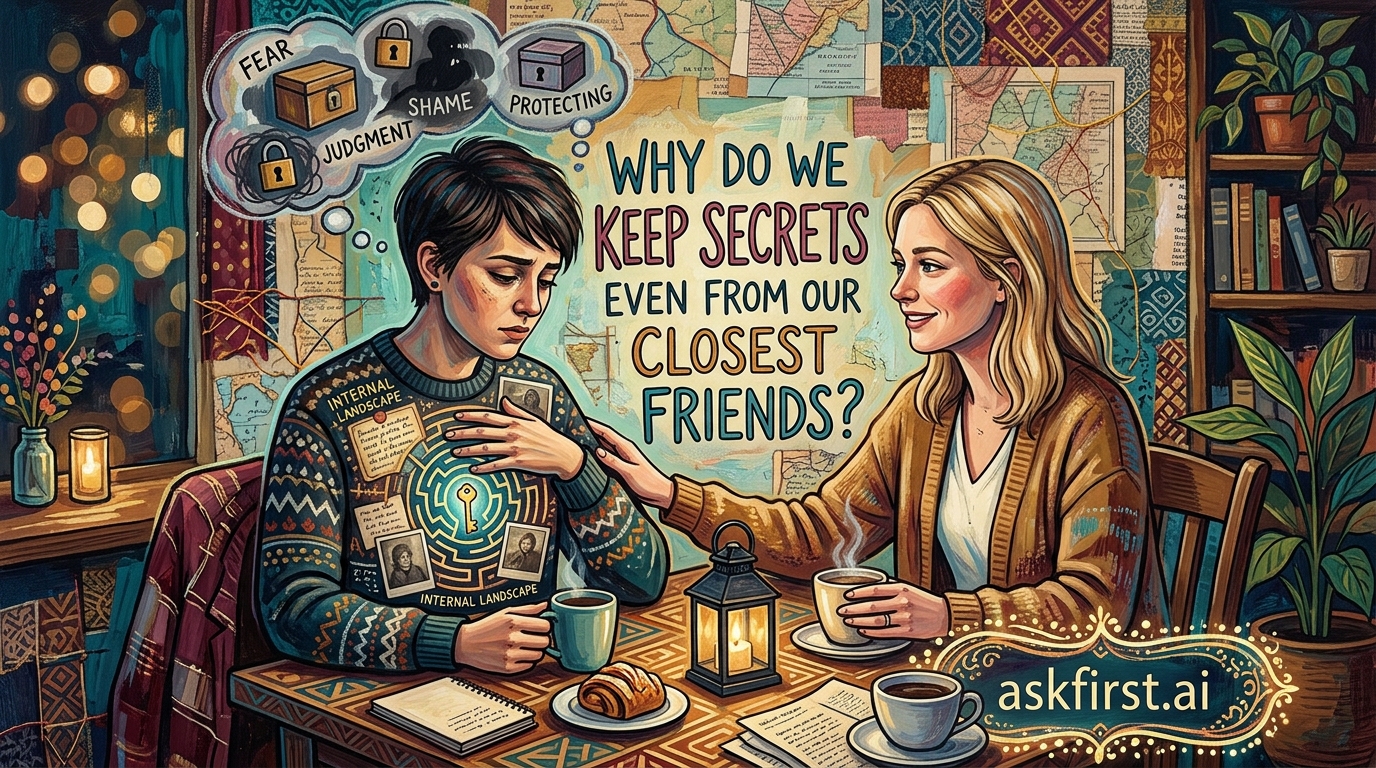
The Evolutionary and Psychological Necessity of Secrecy
Human beings are inherently social creatures, yet the act of withholding information remains a cornerstone of individual identity. Keeping secrets from those closest to us is not necessarily an act of betrayal or deceit; rather, it is a complex psychological mechanism designed to preserve personal boundaries, autonomy, and social standing.
The Protective Shield: Psychological Autonomy
At the core of the human experience lies the desire for agency. Psychologists suggest that secrets act as a private sanctuary. By maintaining aspects of the self that are unshared, individuals assert a sense of unique identity that exists independently of external validation. This phenomenon, often termed 'psychological territory,' allows people to experiment with thoughts, ambitions, or memories without the influence or judgment of others. When an individual keeps a secret, they effectively draw a perimeter around their internal world, ensuring that even if they are vulnerable to their friends, they remain the ultimate gatekeepers of their own narratives.
Fear of Judgment and the Preservation of Relationships
One of the most profound reasons for silence is the fear of altering the relational dynamic. Friends, even the closest ones, carry expectations. When a secret involves information that might conflict with the perceived values or standards of a peer, the individual may fear that revealing this truth will lead to criticism, disappointment, or a permanent shift in the friendship's hierarchy. In many cases, silence is a protective act—not just for the self, but for the relationship itself. By withholding certain truths, individuals often feel they are preventing unnecessary friction, allowing the bond to continue in a state of stability.
The Cognitive Load of Concealment
Research in behavioral science, such as the studies conducted by Michael Slepian at Columbia University, highlights that the burden of a secret is often felt more in the concealment than in the actual content. However, the brain manages this load by categorizing information into layers. Some secrets are held to avoid the 'cost' of revealing them—socially, emotionally, or professionally. Interestingly, humans are evolutionary wired to navigate complex social hierarchies. In early tribal societies, possessing unique information could be a strategic advantage. While our modern context has shifted, this remnant of competitive social dynamics influences how we prioritize information distribution today.
Why Secrets Are Not Always Negative
It is a common myth that secrecy is inherently deceptive. In fact, many experts argue that a healthy degree of secrecy is essential for long-term relational longevity. Key benefits include:
- Boundaries: Maintaining distinct inner lives prevents the phenomenon of 'enmeshment,' where two individuals lose their separate identities.
- Self-Regulation: Processing personal secrets helps individuals test their own values before externalizing them to others.
- Safety: Some information serves to protect the emotional well-being of others (so-called 'prosocial lies'), sparing friends from information that provides no tangible benefit to them.
The Role of Self-Concept and Identity Development
From a developmental perspective, the capacity to keep a secret is a sign of cognitive maturity. Children typically struggle with keeping secrets, but as individuals progress into adulthood, the ability to discern which information to share and which to withhold is a key marker of emotional intelligence. This differentiation process allows for the cultivation of a multifaceted identity. If a person shares every passing thought, ambition, or fear, the distinction between the 'self' and the 'other' begins to blur. Therefore, holding secrets is, in a sense, a commitment to one's own internal growth.
Navigating the Balance
While secrecy can be a source of stress, it is also a fundamental human right. The key to healthy social interaction lies in the distinction between privacy and deception. A secret kept to maintain healthy autonomy is a tool of self-preservation; a secret kept to exploit or manipulate others is the foundation of distrust. Understanding the distinction is vital for anyone looking to foster deep, enduring friendships.
In conclusion, the tendency to withhold information from our closest companions is a multi-dimensional strategy that facilitates personal growth, emotional regulation, and the preservation of intimacy. By understanding the psychology behind the silence, individuals can view their internal worlds with more compassion, recognizing that a guarded heart is often simply an autonomous one, capable of being a more secure and steady partner in friendship over the long run.