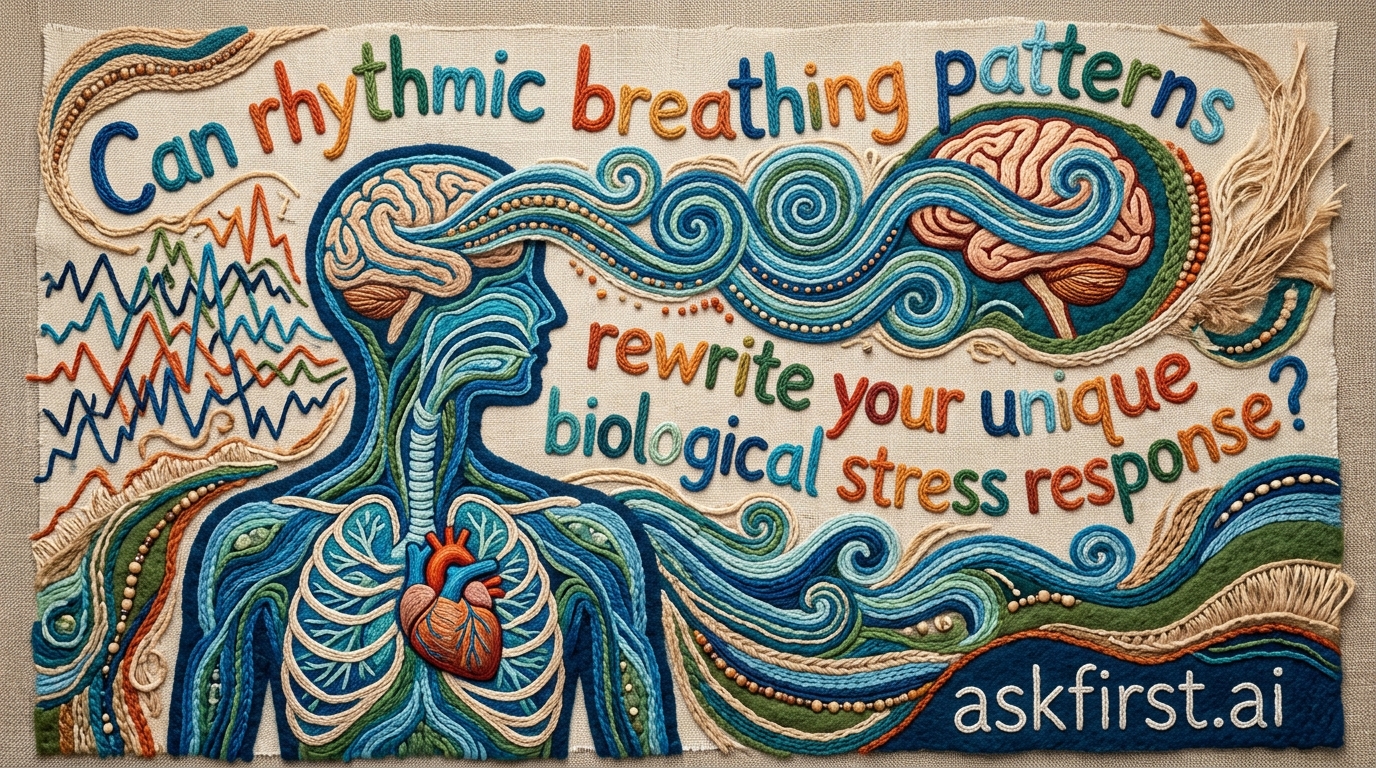
Mastering Biology: Can Rhythmic Breathing Rewrite Your Stress Response?
Biological stress responses are often perceived as fixed, hard-wired systems inherited through evolution. However, modern neuroscience and psychophysiology suggest that these systems are remarkably plastic. By utilizing rhythmic breathing, individuals can actively modulate the autonomic nervous system (ANS) to essentially 'reprogram' how the body reacts to stressors.
The Physiology of the Breath-Brain Connection
At the core of this phenomenon lies the vagus nerve, the primary component of the parasympathetic nervous system. Rhythmic, slow breathing—specifically techniques that prioritize an elongated exhale—stimulates the vagus nerve, sending a direct signal to the brain that the environment is safe. This mechanical action triggers the release of acetylcholine, a neurotransmitter that slows the heart rate and decreases blood pressure.
According to research published in journals like Frontiers in Psychology, consistent practice of slow, controlled breathing increases heart rate variability (HRV). Higher HRV is a definitive marker of physiological resilience, indicating that the body can transition smoothly between the sympathetic 'fight-or-flight' state and the parasympathetic 'rest-and-digest' state. Over time, the brain begins to associate these specific rhythms with safety, effectively lowering the baseline threshold for what triggers an acute stress response.
Rewriting the Neural Pathways
Chronic stress causes the amygdala, the brain's emotional processing center, to become hyper-responsive. Rhythmic breathing acts as a tool to dampen this overactivity. By consciously shifting the breathing cadence, the prefrontal cortex—the logical, executive control center—asserts influence over the emotional brain.
- Cognitive Recalibration: Regular practice creates a 'top-down' regulatory loop where the brain learns to prioritize internal physiological feedback over external environmental threats.
- Structural Adaptation: Repeatedly engaging in calm breathing patterns strengthens the neural architecture associated with emotional regulation, making it easier to maintain composure under pressure.
Techniques for Neurological Shift
To achieve this biological rewrite, the technique must be rhythmic and consistent rather than sporadic.
- Resonant Frequency Breathing: Aiming for a rate of approximately 5.5 to 6 breaths per minute. This cadence synchronizes the respiratory, cardiovascular, and autonomic systems, creating a state of coherence.
- Extended Exhalation: Focusing on an exhale that is twice as long as the inhale. This specifically targets the inhibitory pathways of the ANS.
Conclusion
The biological stress response is not a static destiny. By treating the breath as a remote control for the nervous system, individuals can consciously reshape their physiological reactions. This practice facilitates a transition from reactive survival modes to proactive states of equilibrium, proving that the body's most ancient mechanisms are amenable to intentional, rhythmic intervention.