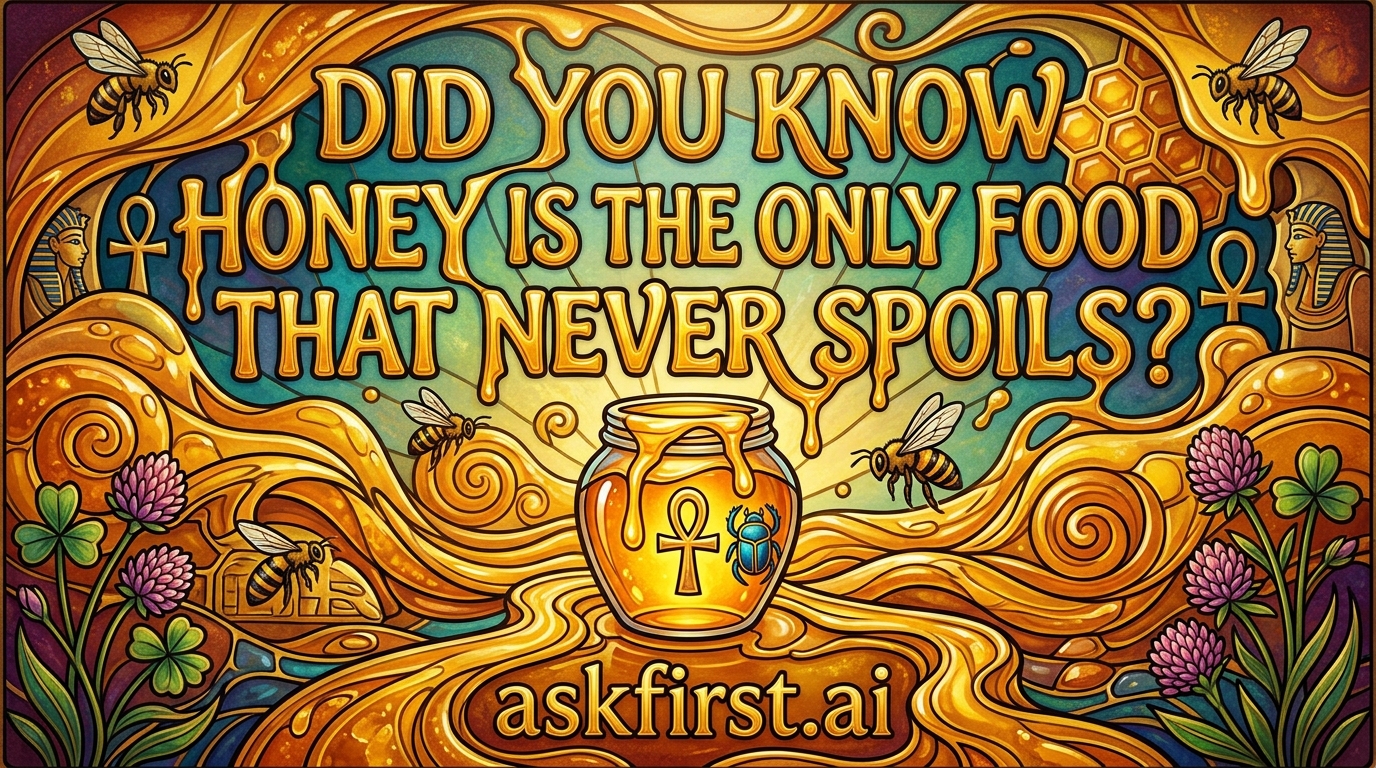
The Eternal Nectar: Why Honey Remains Edible Forever
Honey has long been celebrated as one of the most remarkable substances on Earth, often described as the only food that truly never spoils. While the notion that it remains edible for eternity is largely accurate, the underlying science involves a fascinating combination of chemistry, biology, and precise environmental conditions. Understanding this phenomenon reveals why ancient jars of honey found in Egyptian tombs—some over 3,000 years old—are still theoretically consumable today.
The Chemical Fortress of Honey
The secret to honey’s longevity lies in several intrinsic factors that create an environment hostile to microbial life. These factors work in synergy to preserve the substance indefinitely:
- Low Moisture Content: Honey is naturally hygroscopic, meaning it contains very little water in its raw state. Most bacteria and microorganisms require moisture to survive and reproduce; because honey acts as a desiccant, it effectively dehydrates any microbes that attempt to infiltrate it.
- High Acidity: Honey possesses a pH level typically ranging from 3.0 to 4.5. This acidic environment inhibits the growth of bacteria and other pathogens, acting as a natural preservative.
- The Hydrogen Peroxide Connection: During the nectar-processing phase, honeybees add an enzyme called glucose oxidase to the nectar. As the honey cures, this enzyme reacts with glucose to produce gluconic acid and hydrogen peroxide. The latter acts as a potent antibacterial agent, shielding the honey from spoilage.
Not Quite Alone: Other Eternal Foods
While honey is the most famous example, it is technically not the "only" food that can last indefinitely. Certain other items possess similar survival capabilities when stored correctly:
- Salt: As a mineral rather than an organic compound, pure sodium chloride is completely inert and does not support bacterial life.
- White Rice: When stored in a cool, dry, oxygen-free container, white rice can remain perfectly edible for decades.
- Dried Beans: Much like honey, the absence of moisture keeps these legumes stable for years.
- Pure Maple Syrup: If kept sealed, its high sugar content mirrors the preservative qualities of honey.
The Role of Proper Storage
It is important to note that honey’s "everlasting" status depends on the seal. If honey is exposed to moisture in the air, its water content will increase, potentially allowing yeast to ferment and spoil the product. Furthermore, while honey does not rot, it may crystallize. Crystallization is a natural physical change where glucose separates from the water, turning the liquid gold into a solid, sugary paste. This is not a sign of spoilage; it is simply a change in texture. Heating the jar gently in a water bath can return the honey to its liquid state without damaging its nutritional integrity.